
EG Bus merger endangers employment status of 7,000 state bus company workers
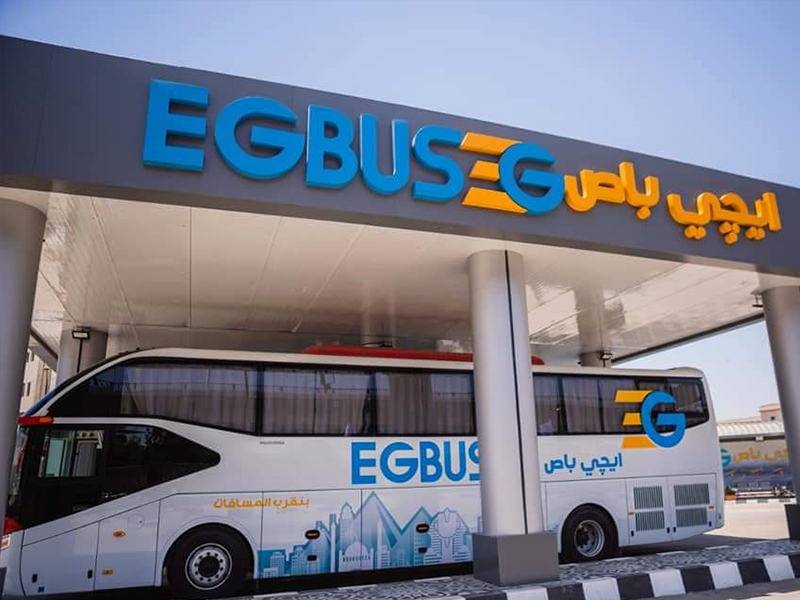
Over 7,000 workers at three state-owned bus transport companies face an uncertain future, as sources anticipate that a merger of the firms will see over two-thirds of their current workforce either laid off or offered different jobs elsewhere in the state sector.
East Delta Bus Company, West and Mid Delta Bus Company and Upper Egypt Bus Company, are to be merged into a single entity, EG Bus, to be run by an executive board made up of private sector members appointed by the government.
In a meeting of the three general assemblies of the old companies on January 9, labor sources who attended the meeting told Mada Masr that attendees agreed to embark upon a merger to create EG Bus, which will need only 3,000 out of the 10,200 employees currently working for the three bus companies. Sources also confirmed that the attendees formed a committee to decide upon the fates of nearly 7,200 workers who will be out of a job.
The government began to seek a private operator for EG Bus in 2021, in an effort to stem losses from the original companies that have been estimated at LE1 billion, according to Public Enterprise Minister Hisham Tawfiq. The move came amid an overhaul of the state public sector that includes a program of share sales in some companies, public-private partnerships in others and regulatory and structural changes to bring the state business sector closer in line with the private sector.
Yet, no private sector bidders came forward to claim the management contract for EG Bus, despite the government extending the deadline for offers several times. The tender was ultimately called off, and Tawfiq announced this month that he would recruit a new board of directors for EG Bus directly from the private sector.
A merger committee has been tasked with determining what will happen to employees of the three companies after the merger, according to the source. For the 7,200 who could lose their jobs, labor sources said the best-case scenario is that they are offered alternative jobs elsewhere in the public transport sector.
Referral to retirement with financial compensation is the worst-case scenario, said one labor source, since, legally speaking, workers under the official retirement age of 60 will not be entitled to a monthly pension.
The workers’ fears are justified, according to Abdel Ghaffar Maghawry, a legal advisor for the pensioners union, who told Mada Masr that the social insurance and pension law only addresses retirement at the age of 60 and only provides early pensions on the condition that the employee has worked with the company for at least 20 years.
A similar situation took place at the National Cement Company, which was liquidated in October 2018 due to recurring losses, said Maghawry. The state cement producer dismissed some 2,200 workers, many of whom were below the legal retirement age, which resulted in year-long negotiations with the government on gratuity payments that the laborers are yet to receive.
For years, many of Egypt's public sector companies have floundered despite attempts to counter endemic inefficiency. Long-floated plans to size down the state sector were accelerated in 2016 when Egypt and the International Monetary Fund agreed on an economic structural adjustment program along with a US$12 billion loan facility.
The 2016 agreement included a share offering program in a number of government companies, along with recommendations for public sector reform and a raft of austerity measures.
Public Enterprise Minister Hisham Tawfiq has undertaken a comprehensive overhaul of the public sector, which is reportedly burdened with LE40 billion in debt, presiding over the liquidation of the National Cement Company and the Egyptian Navigation Company.
In 2020, Egypt secured another loan of $5.2 billion from the IMF, which has since advised sizing the state sector down still further. The fund recommended the state review and reconsider the rationale for its participation — whether via the Armed Forces or the public business sector — in each area of the economy, and that it withdraw from sectors in which there is no public mandate for its involvement, in order to create more space for private sector activity.
A statement from the Cabinet in November 2021 quoted a study it prepared proposing a set of mechanisms to “empower the private sector,” including identifying sectors in which the state will retain a presence and others that it will exit entirely, a move Hani Tawfiq, the former president of the Foreign Direct Investment Association, has described to Mada Masr as “unprecedented.”
أخبار ذات صلة

Despite repeated denials, United Company of Pharmacists takes steps to acquire stake in 19011 pharmaceutical chain
United may be considering further staff layoffs as part of a potential plan to restructure 19011

The impact of coronavirus on ride-hailing services: A story of narrowed livelihoods
Drivers for Uber and Careem have suffered a drastic loss of income during the pandemic

What does news that Amazon will come to the Middle East mean for consumers?
Customs restrictions may hinder the expansion of products, but Egypt might witness logistical improvements
Amazon in talks to acquire Souq.com for US$1 bn
Amazon is in negotiations to acquire the Dubai-based online retailer Souq.com for a reported US$1 billion.
Your support is the only way to ensure independent, progressive journalism survives.
You have a right to access accurate information, be stimulated by innovative and nuanced reporting, and be moved by compelling storytelling. Subscribe now to become part of the growing community of members who help us maintain our editorial independence.
Join us