
Editor in chief: Al-Mashhad handed 1st penalties under new bylaws for report on police racketeering for amendment referendum
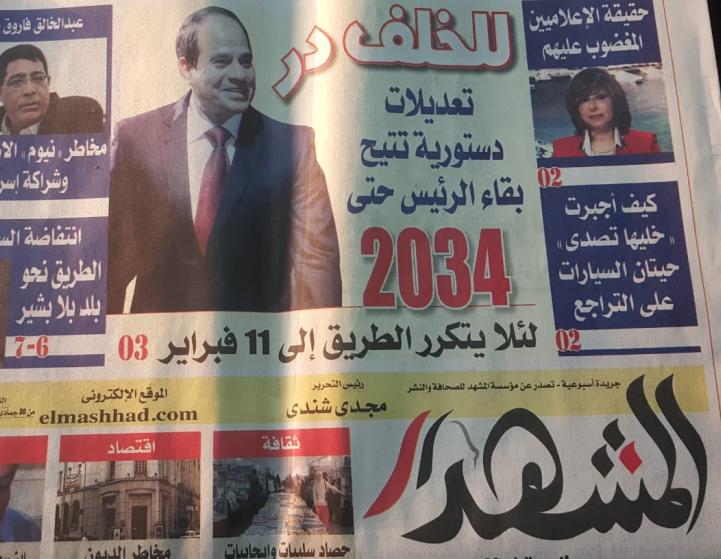
Less than a week after the Supreme Media Regulatory Council issued the executive bylaws outlining penalties for outlets that violate its rigid statutes, the first suspension and substantial fine was handed down to a media organization on Thursday.
Magdy Shendy, the editor in chief of Al-Mashhad newspaper, told Mada Masr that he received a letter on Thursday from the SMRC, informing him that the outlet must pay a LE50,000 fine and that access to the website on Egyptian internet service providers would be blocked for six months.
The SMRC action comes for what it says in the letter are violations of “public morals,” “ethics,” and “written traditions” that occurred when Al-Mashhad published a “pornographic picture” and offensive comments that “defamed the honor of a female TV presenter and a number of female artists.”
Shendy, however, told Mada Masr that the newspaper has not published any illicit content, asserting that the regulatory council’s actions, which were taken without prior notice, are tied to the newspaper’s political coverage of the constitutional amendments that would allow President Abdel Fattah al-Sisi to extend his term in office until 2034 and expand the powers of the military and the executive branch.
Last Sunday, Al-Mashhad ran a multi-part report documenting evidence that Basatin Police Station officers extorted business owners for money to buy Ramadan meals to be handed out in exchange for votes in the April 23 referendum, a common practice to drive up voter turnout in past elections.
“The only reason for the decision is our stance on the constitutional amendments,” Shendy told Mada Masr.
The editor in chief also defended the legitimacy of the reporting. “We are committed to journalistic ethics. We don’t publish sensational news, and we don’t publish unverified news,” he said.
The controversial media violation bylaws, which were issued on Monday months after the leak of a controversial draft, include penalties such as the temporary suspension of an outlet’s publishing or broadcasting license and blocking website access, as well as disciplinary actions, such as requiring outlets to publish an official apology or pay steep fines.
Several figures have faced blowback for their opposition to the proposed constitutional amendments. Samir Sabry, a lawyer who claims to have filed over 2,700 public interest cases in his 40-year career, filed lawsuits to strip MPs Haitham al-Hariri and Khaled Youssef of their membership in Parliament, over alleged sexual misconduct and breach in morality. Both Hariri and Youssef have announced their opposition to the constitutional amendments.
Authorities were preparing for dissent as they planned the rollout of the amendments, as documented in a report published by Mada Masr in December. Sources in the president’s office, the General Intelligence Service (GIS) and Parliament described to Mada Masr the extensive coordination to extend Sisi’s stay in office. According to the report, meetings had been held on a nearly daily basis at the GIS headquarters between intelligence officials and the president’s office in order to finalize the amendments and the date of the referendum through which they will be passed. The same sources told Mada Masr that Mahmoud al-Sisi, the president’s son — who currently holds a senior position within the GIS — is the person heading these meetings, under the supervision of GIS head Abbas Kamel, who took part in several of the meetings.
Security sources had conveyed to a senior political party leader, who spoke to Mada Masr at the time, that the security apparatus would not tolerate dissent on any scale regarding the amendments.
The first of six national dialogue sessions on the proposed amendments opened on Wednesday without any meaningful arguments made against the amendments. Parliament’s Constitutional and Legislative Affairs committee prepared a list of 720 apparently hand-picked participants for the sessions, which a source in Parliament’s general secretariat told Mada Masr will not include any dissenting voices. Wednesday’s session included media figures and TV presenters selected by the Supreme Media Regulatory Council.
After publishing the Basatin report, Shendy said that he received phone calls from “mediators,” who attempted to convince him to remove the report from the website. However, he refused.
After receiving the letter, the editor in chief tried to communicate with the several figures in the regulatory council, including its head, Makram Mohamed Ahmed, but he did not receive a response.
This is not the first time Al-Mashhad has been subjected to restrictions. Since it began publishing in January 2012, the paper has had to switch printers several times, from Al-Ahram to Akhbar al-Youm before ultimately using a private printing house, due to the government’s restrictions on printing, according to Shendy.
However, this did not put an end to the interference, as Al-Mashhad began to face restrictions in distribution, which is handled through Akhbar al-Youm. Shendy said that at one point the total distribution of printed issues decreased from 85% to 30%, because of what he described as intended negligence in distribution.
“Two issues were not distributed at all because of the headlines,” he added.
In a Facebook post, Journalists Syndicate board member Mohamed Saad Abdel Hafiz wrote that he and other members would request that the syndicate board refer the head of council to internal investigation for violating the law and the Constitution, by implementing what he called “defective and legally disputed bylaws” against Al-Mashhad.
The recently elected head of Journalists Syndicate, Diaa Rashwan, who has been a staunch critic of reports critical of the government in his former position as head of State Information Services, said in a statement on Tuesday that the syndicate will discuss the bylaws, “in light of the remarks made by the former syndicate board that were approved on January 8 and sent to the Supreme Media Regulatory Council.”

أخبار ذات صلة
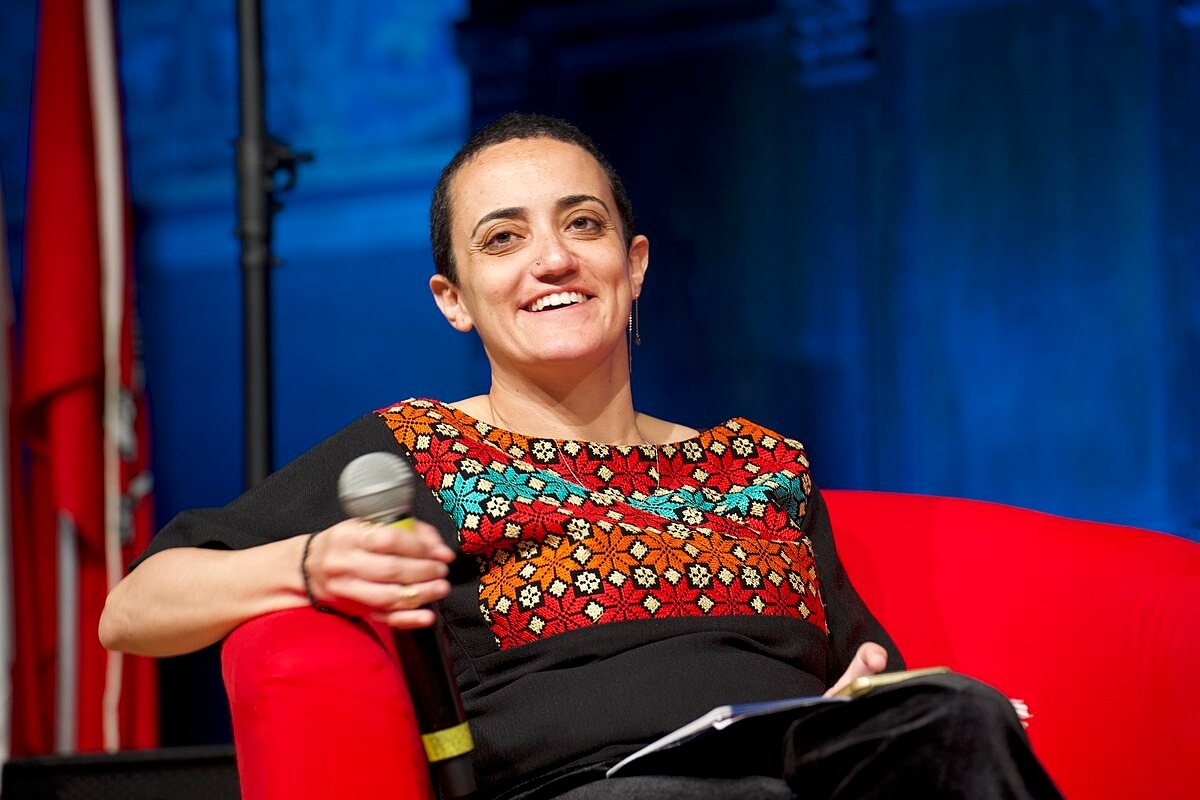
Supreme State Security Prosecution summons Mada Masr Editor-in-Chief Lina Attalah for investigation
The Supreme State Prosecution summoned Mada Masr Editor-in-Chief Lina Attalah on Saturday to appear for questioning next Monday in case 6182/2025. Although…
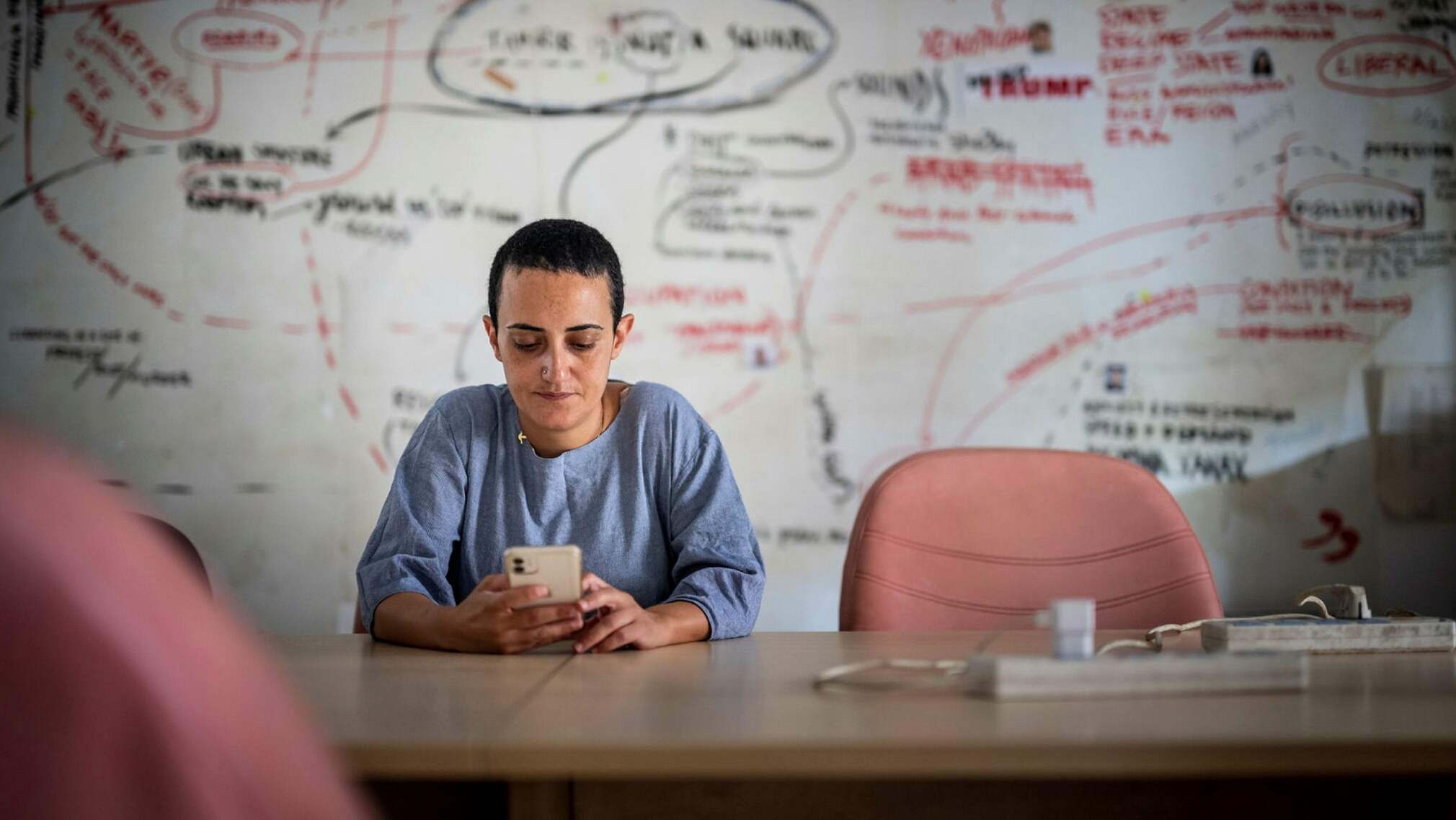
Lina Attalah summoned for questioning by appeals prosecution
Editor-in-Chief Lina Attalah has been summoned to appear for questioning before the Cairo Appeals Prosecution on Wednesday on charges that Mada Masr…
As BBC Cairo workers resume strike over wages, has outlet’s prestige lost its luster amid devaluation?
Former staff have not been met with open arms when they turn to the local market
Four years late, media regulator submits rationale for rejecting Mada Masr’s license application
Mada Masr applied for a license in 2018
Your support is the only way to ensure independent, progressive journalism survives.
You have a right to access accurate information, be stimulated by innovative and nuanced reporting, and be moved by compelling storytelling. Subscribe now to become part of the growing community of members who help us maintain our editorial independence.
Join us