
Dream job turns into nightmare for Egyptian jailed in Saudi
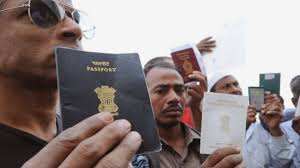
For Abdel Moniem Hussein, a contract in Saudi Arabia worth SR1800 was a dream come true. He was contracted to work as a shipment worker in a date factory. But after a three-month probation period, Hussein’s Saudi guardian reduced his salary to SR800 and increased his working hours from eight hours to 12.
Sitting in his prison cell in Shemiesy Prison in Jeddah, the 30-year-old recounted to Mada Masr his ordeal with his guardian, known only as “Kafil.”
“I refused the new conditions imposed on me, with regards to violating the terms of the contract, so problems kept mounting with my guardian,” he said. “And just like thousands of Egyptians who struggle with their guardians in Saudi, I decided to go back to Egypt."
But it is not easy for a worker to leave the country without the permission of his guardian. According to the Saudi legal system, work guardians keep all the official documentation of the workers they supervise.
A decree passed last April by Saudi King Abdullah Bin Abdel Aziz gave workers a chance to regularize their work status and resolve their problems with their guardians. If they failed to do so, they were to surrender to Saudi authorities, who would then contact the workers' embassies and end their contracts. The workers would then be deported back to their home countries and not face any legal penalties.
The decree gave workers three months to regularize their work conditions, otherwise both the guardians and the workers would be subject to legal penalties.
Hussein was not alone. With him were 30 other Egyptian men with similar feuds with their guardians. Together, they turned themselves over to Saudi authorities, hoping that the Egyptian Embassy would later receive them to facilitate their repatriation to Egypt.
But Hussein and the other Egyptians who went to Saudi authorities said that the Egyptian Embassy declined to receive them, leaving them imprisoned in Shemiesy Prison for more than 20 days.
“Saudi authorities told us that the only thing lacking is a representative from the Egyptian Embassy to come and finish our deportation documentation. We have been urging the Egyptian Consulate in Jeddah to act quickly, and the only response we receive is a promise to end the issue very soon,” Hussein said. He was speaking to Mada Masr by phone, as prisoners are allowed to use mobile phones in prison.
The king’s decree came on the heels of the Saudi Kingdom’s efforts to end mounting violations of the country's labor law. According to an April report by Reuters, Saudi authorities have deported 200,000 workers since the start of the year. The deportations have increased concern in the many countries which each year send thousands of their nationals to work in the Gulf’s largest country.
According to the report, there are more than nine million foreign workers in Saudi Arabia, most of these coming from India, Pakistan, Philippines, Bangladesh, Yemen, Sudan and Egypt.
According to Egypt’s deputy minister for consulate affairs, Ambassador Ali al-Eshairy, the detained workers must have turned themselves over to the Saudi authorities after the three-month deadline had passed.
“There is no reluctance from the side of the Egyptian authorities to deport any Egyptian nationals who wish to end their work feuds with their guardians, as we have already deported hundreds of Egyptians following the Saudi decree,” Eshairy told Mada Masr.
The diplomat added that a representative from the Egyptian consulate goes to Shemiesy Prison every day, because this is the prison where most workers with work feuds are transferred.
“We always try to ease the process for the workers, but these issues usually take time to finish, especially because it involves a long and complicated process of paperwork,” Eshairy said. He asked Mada Masr to send the names of the detainees to further assist the Egyptian Consulate with their cases.


Mai Shams El-Din
Mai graduated from the American University in Cairo with a degree in journalism. She worked mostly for local English-language news outlets but has also been writing in Arabic, particularly when…
أخبار ذات صلة
Egypt deports Syrian asylum seeker, forcibly disappears 2 Egyptians of Ahmadi faith
Egyptian authorities deported a Syrian asylum seeker on Wednesday morning after detaining him incommunicado for over a month, Amnesty International Egypt Libya-focused…

ENHR: After deportation from Bahrain, 2 Egyptian opposition figures detained pending terrorism charges
Both Ajez and Hassanain had been legal residents of Bahrain for eight years

Human Rights Watch documents arrests, forced labor of dozens of Sudanese refugees in Egypt
The threat of deportation is a common practice against refugees of all African nationalities
Egyptian authorities prepare 24 Eritrean nationals for deportation
At least 200 Eritrean asylum seekers have been held in detention in Egypt since 2019
Your support is the only way to ensure independent, progressive journalism survives.
You have a right to access accurate information, be stimulated by innovative and nuanced reporting, and be moved by compelling storytelling. Subscribe now to become part of the growing community of members who help us maintain our editorial independence.
Join us