
Court ruling says local authorities need not provide cemeteries for those not of ‘the 3 faiths’

A court ruling this week exempted local authorities in Alexandria of the responsibility to provide people of the Baha’i faith the space to bury their dead.
The ruling also affects anyone in Egypt who has a dash mark (“-”) in the “religion” field of their national identity card, which officially denotes that they are not adherents of Islam, Christianity or Judaism.
Currently, a single cemetery space in Cairo’s Basatin neighborhood is available to the thousands of Egyptians of the Baha’i faith. This has led to the depletion of the cemetery’s capacity and has left families of deceased Baha’is with the burden of transporting the remains of their loved ones to Cairo from all across Egypt.
In Alexandria and Borg al-Arab, where most Baha'is in Egypt live, families have spent years submitting their requests to local councils for dedicated burial space, Egyptian Initiative for Personal Rights researcher Amr Ezzat told Mada Masr. However, government employees often refuse even to file the submitted requests.
In a legal suit submitted to the Administrative Court of Alexandria a year ago, EIPR lawyers sued to obligate Alexandria’s local governorate authorities to allocate cemetery space for them on behalf of dozens of Baha’i families.
On Monday, December 27, the court refused to oblige the governorate to take action, referring to a State Lawsuits Authority opinion advising the court to reject the case on the basis that only Islam, Christianity and Judaism are recognized as religions in Egypt and guaranteed the freedom and space to worship and practice their rites.
Yet EIPR's lawsuit, filed against the prime minister, the local development minister, the Alexandria governor and the director of the Alexandria Governorate cemeteries department, argues that the government does recognize people of other faiths or of no faith, and points to the 2009 decision to allow for people who are not Muslim, Christian or Jewish to leave the field dedicated to religious affiliation in their national IDs blank, as an acknowledgment of a fourth category of religious identification.
Under a 1966 law on cemeteries, local councils are tasked with looking into how much space is needed by different religious sects, and with proposing potentially appropriate sites and spaces to the governor, who is then responsible for making a decision. Given that local councils have not been elected for 10 years, the responsibility falls entirely upon the governor, who is tasked by the law with forming a special committee to look into the matter if local councils are unable to do so.
When an EIPR lawyer began the suit a year ago, filing through the Cabinet's online complaints portal on behalf of the plaintiffs, the Alexandria Governorate responded by saying that it does not have authority to allocate cemetery space.
EIPR intends to appeal the ruling before the Supreme Administrative Court, according to Ezzat.
The initiative’s statement noted that the governor of Alexandria had consulted with the Grand Sheikh of Al-Azhar regarding the lawsuit, who concluded that “it is not permissible to allocate a plot of land to bury the dead who bear the mark (-) [to denote religious affiliation on their IDs] … because it leads to discrimination and division, and tears the fabric of a unified society.”

أخبار ذات صلة

St. Catherine: Monks in the face of the state
In late May, the Ismailia Appeals Court ruled to evict the archbishop of Saint Catherine's Monastery from 14 land plots in South Sinai, part of a larger dispute with the…
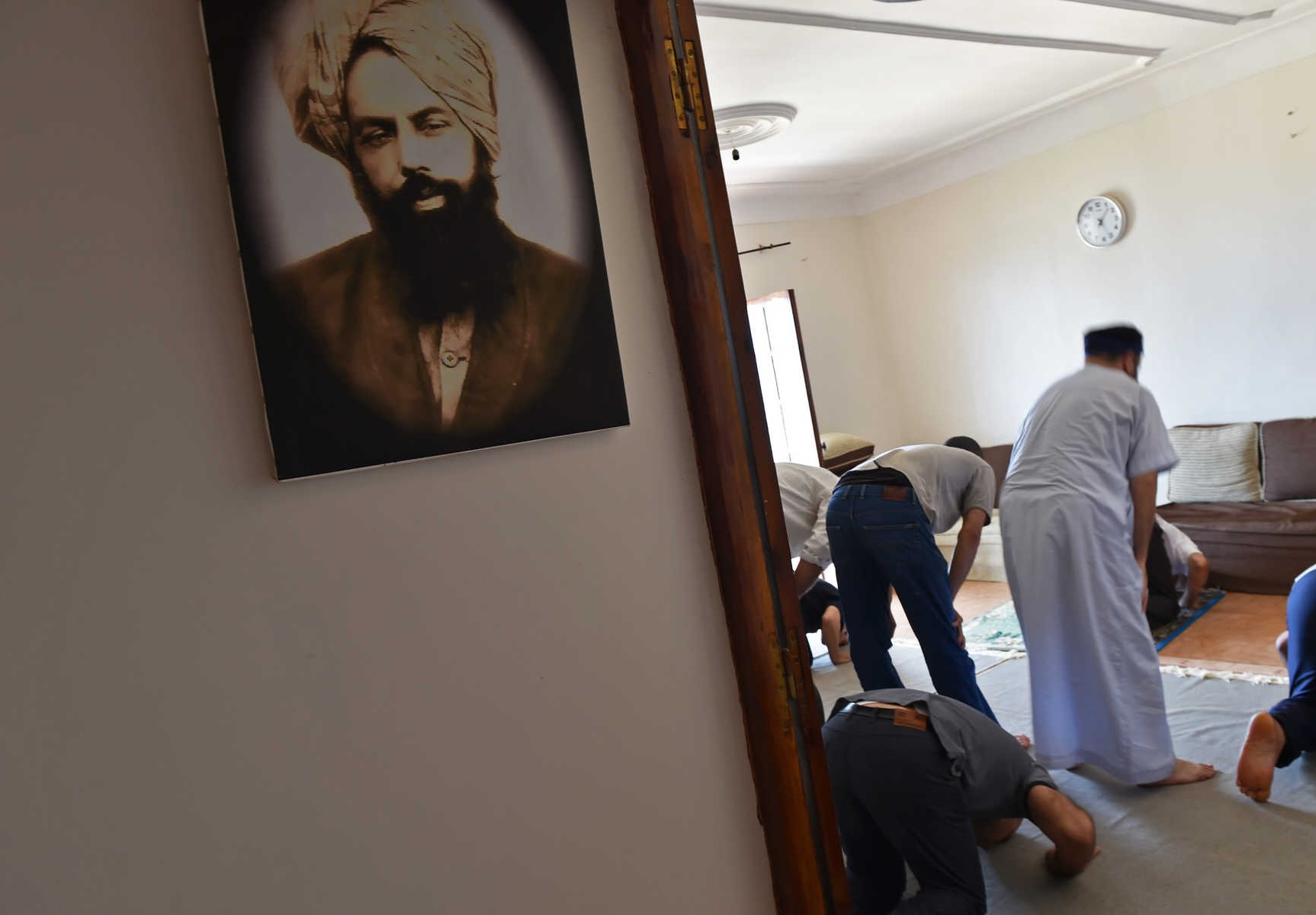
Egypt deports Syrian asylum seeker, forcibly disappears 2 Egyptians of Ahmadi faith
Egyptian authorities deported a Syrian asylum seeker on Wednesday morning after detaining him incommunicado for over a month, Amnesty International Egypt Libya-focused…
Cabinet committee legalizes 80 pre-existing churches, service buildings
A Cabinet committee approved the legal status of 80 churches, brings the total number to 627

European Parliament adopts resolution condemning human rights violations in Egypt
The European Parliament adopted a resolution condemning the human rights situation in Egypt
Your support is the only way to ensure independent, progressive journalism survives.
You have a right to access accurate information, be stimulated by innovative and nuanced reporting, and be moved by compelling storytelling. Subscribe now to become part of the growing community of members who help us maintain our editorial independence.
Join us