
Copy of oldest known gospel found inside a mummy’s mask?
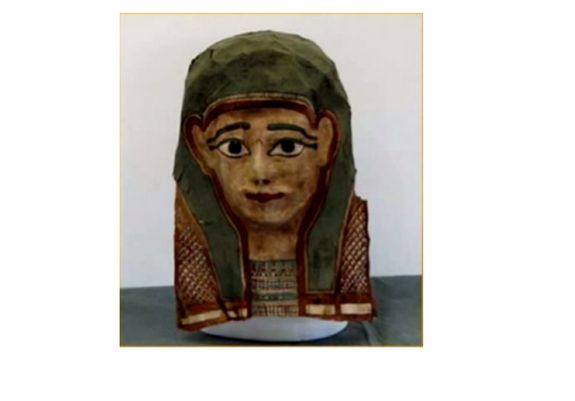
A team of scientists and biblical scholars claim they have discovered the world's oldest existing gospel inside a mummy’s papyrus mask – or at least a fragment of it – said to date back prior to the year 90 AD.
Due to be published this year, this so-called "oldest copy of the Gospel of Mark" remains clouded by doubts and controversies.
The writings found in this mummy mask are said to date back to the first century AD, while the oldest extant copy of the Gospel of Mark dates back to the second century (101 to 200 AD.)
A fragment of this scripture, said to be the first written copy of the Gospel of Mark, was reportedly found several years ago on papyrus sheets used in an ancient funerary mask. This mask has since been destroyed in the process of investigating its sheets and writings.
In an interview with the Live Science website this week, Craig Evans – professor of New Testament studies at the Acadia Divinity College in Novia Scotia, Canada – claimed: "We're not talking about the destruction of any museum-quality piece."
While the funerary masks of the royalty and nobility in Ancient Egypt were usually made of gold (or coated with it), commoners typically used glued fabrics, or recycled papyrus sheets for their funerary masks.
The papyrus sheets in this mummy’s mask have already been (carefully) unglued and taken apart for analysis.
Evans, who is at the forefront of this religious-scientific project, claims it is basically “a paper mache mask.” Evans added that it was used in a pagan’s funeral mask, whilst apparently disregarding the writings of Egypt’s earliest Christians.
The scientists analyzing these papyri are reportedly using carbon-14 dating and other comparative methods to determine the estimated age of these hand-writings, which they claim predate the year 90 AD.
However, skeptics point out that such scientific methods may be inconclusive as to the date of these writings. Some accuse Evans and his team of being apologists for the Bible, who are desperately trying to prove a theory which cannot be scientifically proven.
Writing for the Examiner website, the scholar of religion and mythology, D.M. Murdoch pointed out: “C-14 dating is not exact but has an error of +/- 80-150 years, so the fragment in question could date to the second or even third century, if the C-14 testing was done properly to begin with.”
Egypt’s Ministry of State for Antiquities has not weighed-in on this controversy – at least not on its official website.
Evans, has re-ignited a debate regarding the history and authenticity of these papyrus writings. This debate first came to light in 2012, when one of his team members leaked information about the project.
A non-disclosure agreement pertaining to the project’s findings means that very little is known about the original mask: where it was located, its original owner or its present keeper.
However, some of these details may be revealed when the writings are published later this year.
Christian historians claim that Saint Mark (or Mark the Evangelist) was the founder and first patriarch of the Church of Alexandria, which he is said to have established around the year 49 AD.
Saint Mark is attributed with introducing Christianity not only to Egypt, but to the African continent.
From the four gospels, which are biblical accounts of the life of Jesus, Christian historians generally cite the Gospel of Mark as being the first or oldest, followed by the Gospels of Matthew, Luke and John.

أخبار ذات صلة
Looking back to see the present through the Grand Egyptian Museum
The coincidental nature behind the establishment of the Grand Egyptian Museum
Staging a grand opening for the grand museum
In Cairo, sidewalks have been repainted, screens set-up and security measures tightened. People living nearby say fireworks have been test-run in Giza.…
All around the Grand Egyptian Museum
The museum will not be open to visitors until after the three-day celebration
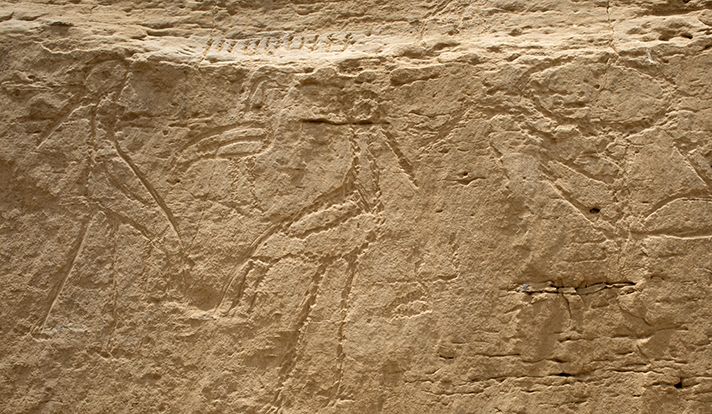
5,200-year-old rock inscriptions discovered in Luxor Governorate
A joint expedition of archaeologists from Yale University and the Royal Museums of Art and History was able to excavate several panels of rock…
Your support is the only way to ensure independent, progressive journalism survives.
You have a right to access accurate information, be stimulated by innovative and nuanced reporting, and be moved by compelling storytelling. Subscribe now to become part of the growing community of members who help us maintain our editorial independence.
Join us