
Committee of 50 decides on system for parliament elections
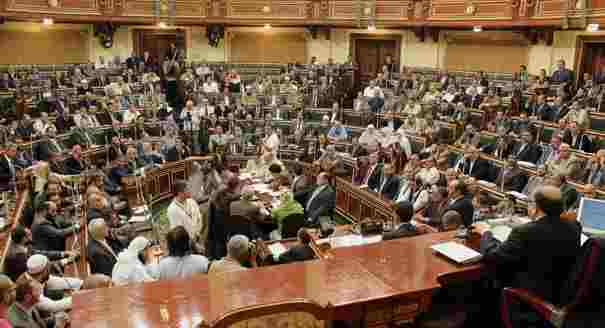
The committee of 50 agreed tonight to add an article to the new draft constitution stipulating that the upcoming parliamentary elections be held using a mixed electoral system. Two thirds of seats will be elected through the single-winner system and the other third through the proportional list system.
Under the current interim constitution, the president has the right to legislate until a parliament is elected. This means that the elections law will be issued by interim President Adly Mansor, a judge and head of the Supreme Constitutional Court (SCC).
The post-July 3 roadmap said that the SCC must issue recommendations on the electoral law sent to it by the now-disbanded Shura Council, which had an Islamist majority, before the ouster of President Mohamed Morsi. The SCC was meant to take the Shura Council’s amendments into consideration and hold elections in accordance with its law.
However, legal experts had predicted that Mansour would issue another elections law, as this point in the roadmap was not put in the interim constitution.
The mixed electoral system has not yielded great results so far in Egypt’s transitional phase.
In the single-winner system voters choose an individual, and in the list system they chose a party.
In 2011, the law for the first parliamentary elections after the 25 January revolution stipulated a mixed system in which two thirds of seats were elected through the proportional lists system and the remaining third through the single winner system.
The resulting People’s Assembly was dissolved by order of the SCC, which declared that some of that law’s articles were unconstitutional.
It is widely believed that the single-winner system opens the door for political funds to be a deciding factor in the elections, which may favor the so-called “feloul” (remnants of the Hosni Mubarak regime) and some Islamist factions, while the proportional list gives more room for political parties.
However, many also say that Egypt is witnessing a political vacuum after two presidents, Mubarak and Morsi, were ousted. There appears to be a dearth of individuals willing to put themselves forward to stand as presidential candidates. Nor have established political parties introduced politicians who have gained broad public support.
Egypt expects to see a referendum on the draft constitution by early January and parliamentary elections could take place in March.

أخبار ذات صلة
Egypt’s winding path toward a new constitution
Since the ouster of former President Hosni Mubarak, Egyptians have witnessed the formation of three constitutional assemblies and have been called on to vote on two draft constitutions (as well…
Constitutional wrangling
As Egyptians wait for a final date to vote in the referendum on the draft constitution, advocacy and rights groups have time to take stock of the gains and losses…
President to announce constitution referendum date Saturday
Interim President Adly Mansour will announce the dates for the referendum on the new draft constitution on Saturday, according to a statement…
President to receive draft constitution Tuesday
The 50-member committee concluded Sunday night its amendment of the 2012 Constitution, after passing four articles that failed to get the required votes in an…
Your support is the only way to ensure independent, progressive journalism survives.
You have a right to access accurate information, be stimulated by innovative and nuanced reporting, and be moved by compelling storytelling. Subscribe now to become part of the growing community of members who help us maintain our editorial independence.
Join us