
Cave painting found in Egyptian Sahara depicts nativity scene 3,000 years before Bible
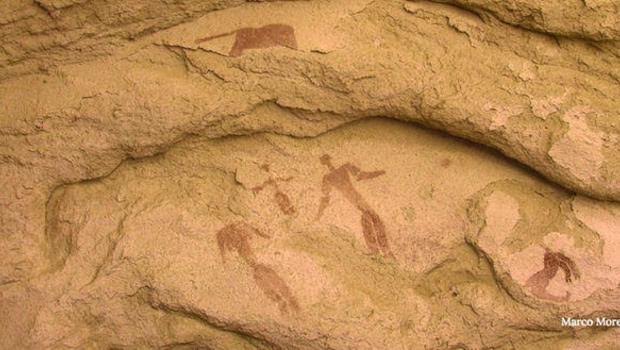
A rock painting discovered in a cave in southwestern Egypt and estimated to be 5,000 years old may be the earliest representation of the “nativity scene.” Reminiscent of the Bible’s account of Jesus’s birth, the prehistoric painting predates the biblical account by around 3,000 years.
Painted in a reddish-brown tinted ochre, the Neolithic pictograph depicts a star in the east, a newborn between two parents and two animals.
A team of Italian researchers found the painting inside a cavity, which has subsequently been dubbed the “Cave of the Parents,” in the Egyptian Sahara during field expeditions between the Gilf al-Kebir plateau and the Nile Valley.
"It's a very evocative scene which indeed resembles the Christmas nativity. But it predates it by some 3,000 years," geologist Marco Morelli, the director of the Museum of Planetary Sciences in Prato, Italy, told Seeker website in an interview.
Morelli and his team discovered the painting in 2005 but only revealed their find to the public now without providing a reason for the delay.
"The discovery has several implications as it raises new questions on the iconography of one of the more powerful Christian symbols,” the geologist added. "We didn't find similar scenes until the early Christian age."
Substantiating his claim that the image depicts a childbirth, Morelli pointed to iconography that would have been contemporary to the painting. “As death was associated to Earth in contemporary rock art from the same area, it is likely that birth was linked to the sky,” he said.
The Christmas nativity scene is primarily based on the account of the birth of Jesus found in the Gospel of Matthew, which state that three wise men followed a newly risen star that led them to Jesus’ birthplace of Bethlehem.
Although the exact month and date of Jesus’ birth are unknown, the Western Christian Church had placed Christmas on December 25 by the fourth century. Most Christians celebrate Christ’s birth on December 25 of the Gregorian calendar, while Eastern Christian churches celebrate Christmas on December 25 of the Julian calendar, which corresponds to January 7 in the Gregorian calendar. Comparative religion scholars have argued that the choice of date corresponds to non-Abrahamic religious festivals that occurred at the winter solstice, among which include the birth of the ancient Egyptian god Horus.

أخبار ذات صلة
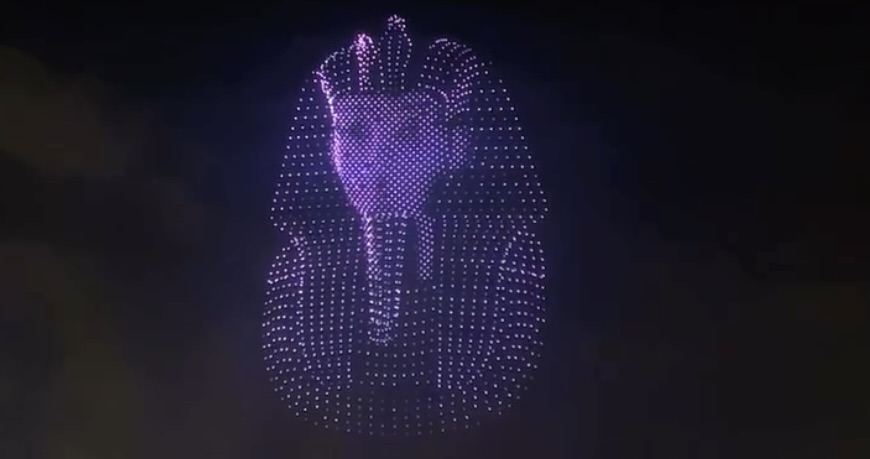
Staging a grand opening for the grand museum
In Cairo, sidewalks have been repainted, screens set-up and security measures tightened. People living nearby say fireworks have been test-run in Giza.…
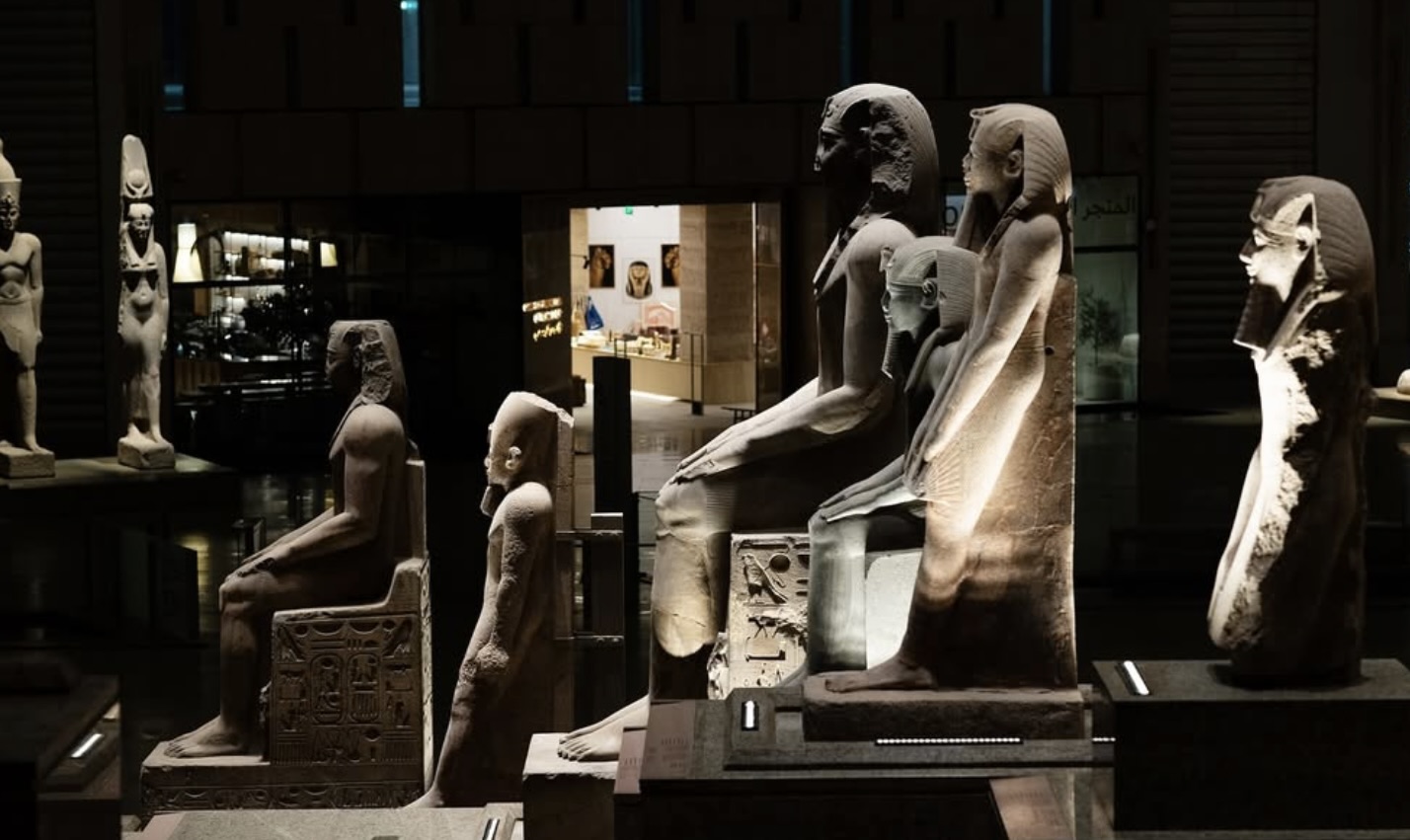
All around the Grand Egyptian Museum
The museum will not be open to visitors until after the three-day celebration
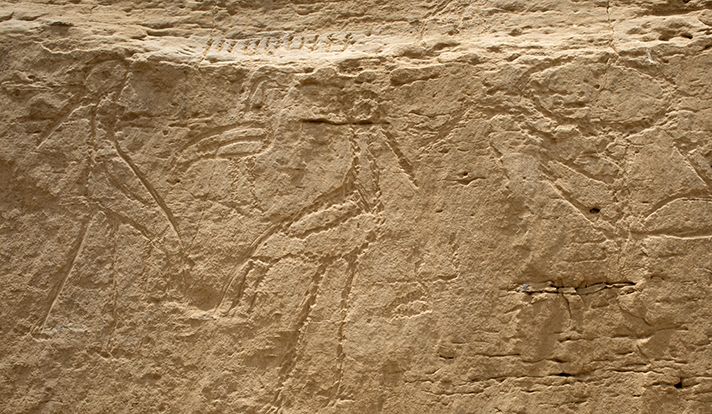
5,200-year-old rock inscriptions discovered in Luxor Governorate
A joint expedition of archaeologists from Yale University and the Royal Museums of Art and History was able to excavate several panels of rock…
Ancient Egyptian gold workers’ tomb excavated on island in Sudan
An ancient tomb reported to contain the mummified remains of at least 12 Egyptian gold workers has been excavated in Sudan
Your support is the only way to ensure independent, progressive journalism survives.
You have a right to access accurate information, be stimulated by innovative and nuanced reporting, and be moved by compelling storytelling. Subscribe now to become part of the growing community of members who help us maintain our editorial independence.
Join us