
Burials stopped in Bab al-Nasr as another historic cemetery faces demolition

Cemetery caretakers at the historic Bab al-Nasr cemetery have been instructed by officials to halt burials in the graveyard facing Moezz Street, with some told verbally that some of the graves overlooking Banhawy Street will be removed.
Burials were also halted by a similar notice the governorate distributed last week to the cemeteries of the Imam Shafie and Sayeda Nafisa areas in preparation for their removal, with the remains of the dead to be exhumed and transferred to new locations, monuments and tombs erected to their memory demolished and the area leveled to the ground.
This is the latest in a series of projects pitched as part of an effort aiming to modernize historic Cairo by widening roads and constructing flyover bridges, reshaping in the process the heritage area that includes the tombs in Fustat, a certified UNESCO heritage site.
A memo issued by the Cairo governorate was obtained by Mada Masr and included an official letter issued by the governor's office to the governorate's health directorate on February 14, which outlined decision 1117/2024 "regarding the suspensions of burials in Bab al-Nasr cemetery."
A historian specialized in documenting Cairo's cemeteries told Mada Masr on condition of anonymity that some of the registered cemetery caretakers in the area informed them that the government intends to demolish a significant number of graveyards.
Many of the burial sites in the area around Bab al-Nasr, one of the gates in the wall of historic Cairo, are graves for "the poor, harafish and Sufis," said the historian, noting that as a result, they are not classified as heritage sites by the National Organization for Urban Harmony.
The sites, however, hold valuable artifacts for researchers and rare compositions, whether ancient or modern, the historian said. The cemetery also includes the Sufi burial ground where Ibn Khaldun, Ibn Hisham, al-Maqrizi and scholars of the Khanqah Sufis are buried, as well as domes registered as antiquities.
“What they require is rediscovery, not demolition,” said the historian.
The Bab al-Nasr cemetery is one of the main historical burial grounds of Cairo since the city was established in the 10th Century AD, said Egyptian historian Sally Soliman, founder of Bassara blog for heritage documentation. Bab al-Nasr served as the main burial site for Old Cairo residents, both Cairenes and people from other governorates who settled in Cairo and established family cemeteries there under the names of their villages in Upper and Lower Egypt. The cemetery also holds significance for descendants of Arab and foreign migrants who lived in Cairo, such as the Levantine burial grounds and others.
Examples are also important for other countries' heritage, Soliman told Mada Masr, pointing to the tomb, a unique marble structure that is under Swiss embassy supervision, of Swiss explorer Johann Ludwig Burckhardt who ultimately converted to Islam, changed his name to Sheikh Ibrahim and is credited for discovering the Abu Simbel temple and Petra in Jordan.
Soliman further explained that the Bab al-Nasr cemetery has layers upon layers of history with the potential for endless discoveries. Its tombs are characterized by wooden structures, and while many have fallen into disrepair, some need restoration, not demolition, she said.
Bab al-Nasr cemetery is a destination for many regional and foreign tourists seeking to explore modern Egyptian funerary heritage, just like those who visit Pharaonic tombs to learn about ancient Egyptian funerary traditions, said Soliman.
"I’m a tour guide, and there are groups that specifically request to visit Bab al-Nasr given its uniqueness, including specialists in Arabic calligraphy and researchers in Sufism and its figures. We already lost Ibn Khaldun's tomb to the expansion of the main Banhawy street between the cemetery and Old Cairo walls, while the Spanish and Moroccans make a huge deal out of him."
On Saturday, archaeologist Monica Hanna said that a number of tombs and ancient buildings “may be demolished" in the Bab al-Nasr cemetery area to make way for a new garage. Among these buildings, Hanna wrote, are the graveyard of the Sahar family, the Najm Eddin mosque, Yunus al-Saadi dome, Zainab dome and Johann Burckhardt’s tomb.
"I truly hope that all stakeholders can find an alternative architectural solution other than demolition. Heritage, once lost, cannot be recovered, and we will all be held accountable by future generations," she added.

أخبار ذات صلة

Police evict residents as demolitions resume in Arish despite unfulfilled govt promise of alternative housing
Police units ordered residents to evacuate as the North Sinai Governorate began to demolish homes on
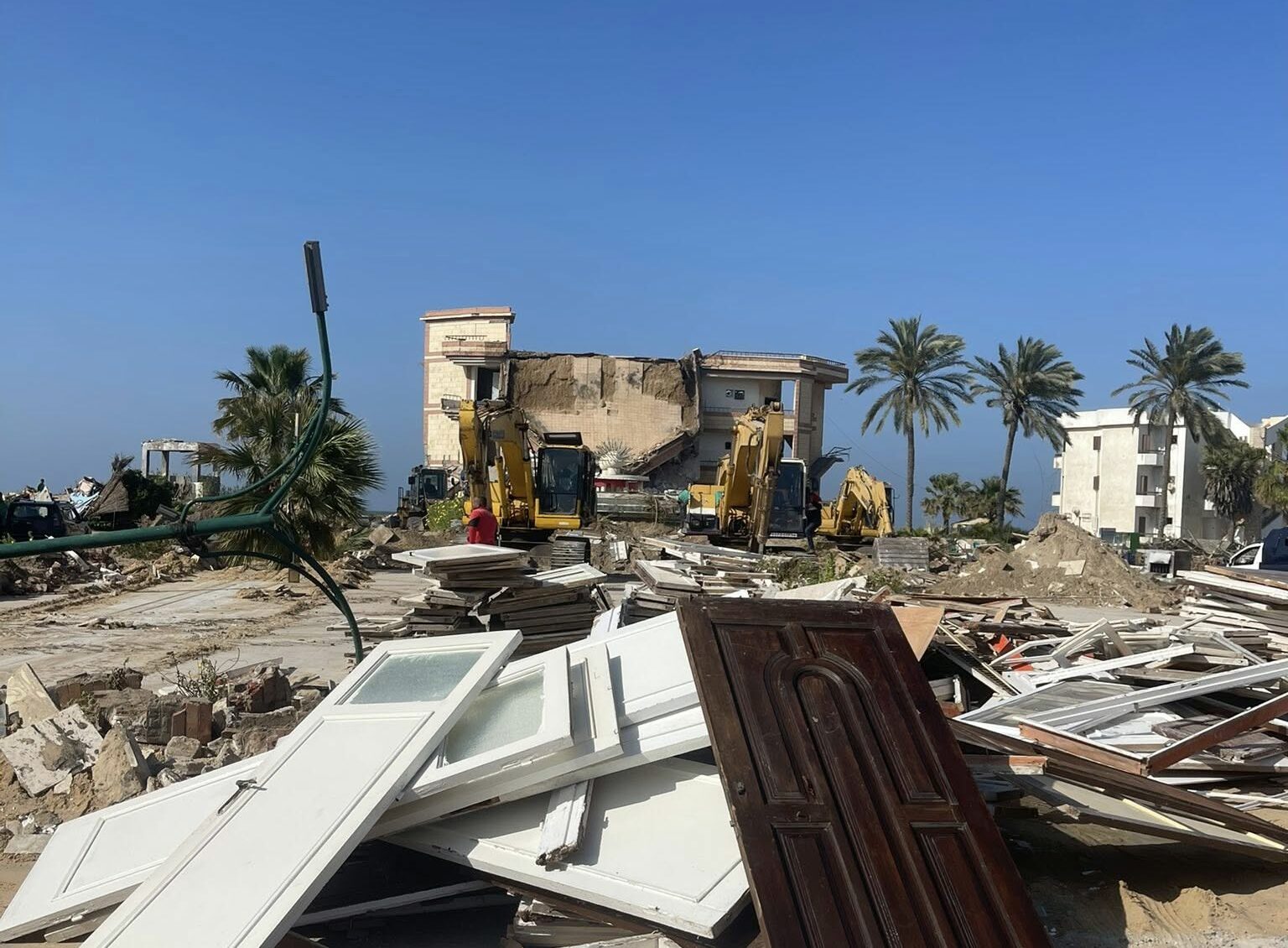
Port Said governorate demolishes summer compound despite legal battle with residents
Governorate authorities began demolishing people’s villas and the local facilities that serve the Fardous tourist village — a beach compound in west…
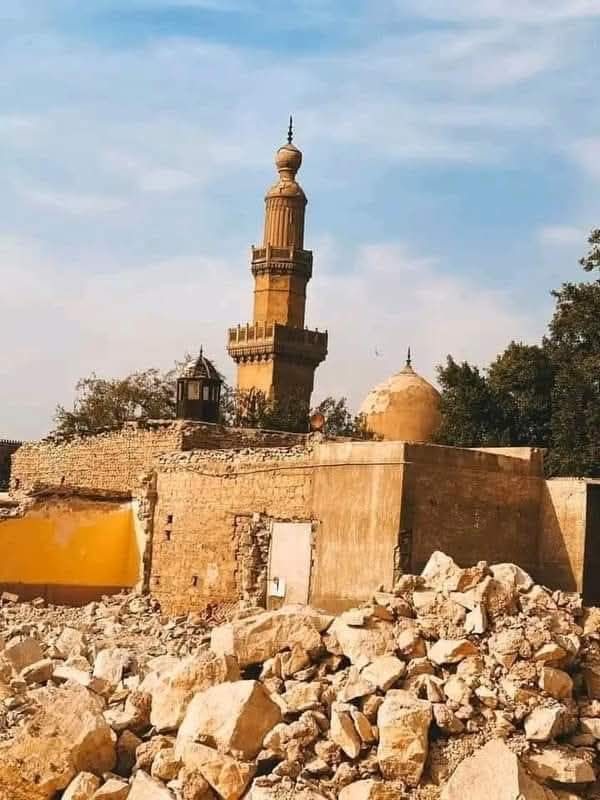
Cairo authorities demolish Falaky mosque dome, minaret amid historic cemetery removals
In the early hours of Wednesday morning, governorate authorities demolished the dome and minaret of Mahmoud Pasha al-Falaky Mosque, three informed sources…
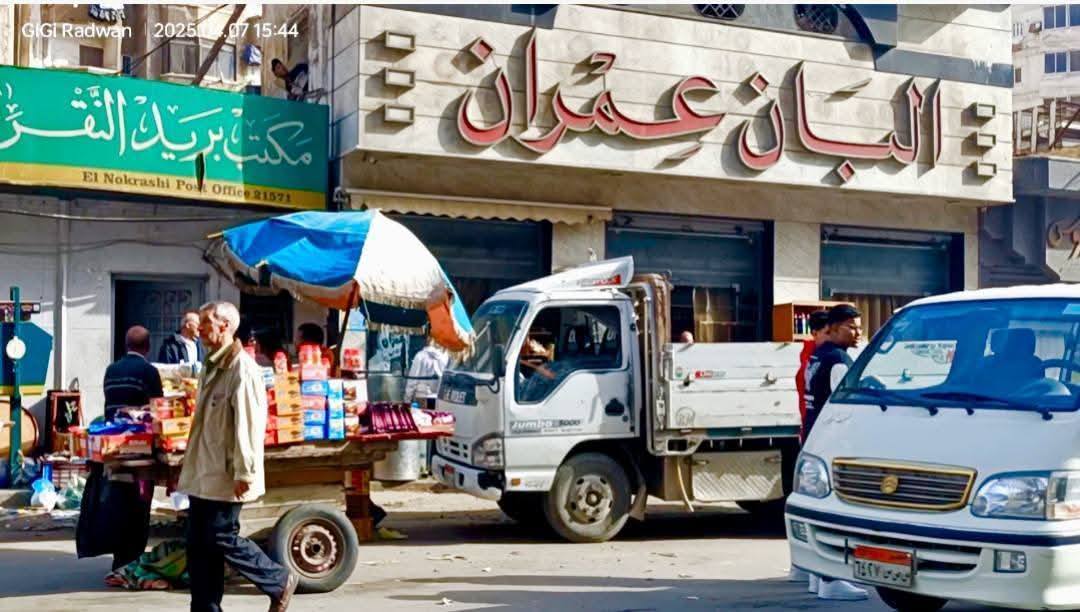
Alexandria shops demolished to make way for metro, displacing decades-old businesses
Early on Tuesday morning, authorities began demolishing shops at the intersection of the railway and tram lines in the Victoria neighborhood —…
Your support is the only way to ensure independent, progressive journalism survives.
You have a right to access accurate information, be stimulated by innovative and nuanced reporting, and be moved by compelling storytelling. Subscribe now to become part of the growing community of members who help us maintain our editorial independence.
Join us