
Authorities refuse to authorize protest against new Civil Service Law

The Ministry of Interior refused to grant public sector workers authorization to protest against a new Civil Service Law (presidential decree 18/2015) scheduled for Monday in Downtown Cairo.
In response, thousands of civil servants warned they would escalate action at the end of the month with a million-person march and strikes.
Public sector workers — primarily employees of Egypt's tax authorities — have staged two large protests in Downtown Cairo in the past few weeks, demanding that the decree be amended or repealed altogether. Partial strikes were also staged last week among Public Transport Authority workers in Cairo.
Other disgruntled public sector employees have been demanding the resignation of Finance Minister Hany Qadry and Prime Minister Ibrahim Mehleb for forcing this controversial legislation upon them.
President Abdel Fattah al-Sisi delivered a televised address on Sunday, in which he spoke of the new legislation by reasserting ministerial statements that this new decree is “part of the state's comprehensive administrative reforms.”
Yet, a statement issued by the Trade Union of Judicial Sector Workers of the Gharbiya Governorate dismissed this claim, arguing, “This law has nothing to do with reforming the administrative apparatus of the state,” and will only serve “to heighten tensions between the state and public sector employees.”
Sisi pointed out that Egypt's public sector has increased from six to seven million employees in the last few years. He added that, while the public sector “requires restructuring,” employees would not be pushed into early or forced retirement, despite the saturation of labor.
He explained that the state budget for the payment of public sector wages amounted to LE70 billion until 2011. "Now our budget includes LE218 billion" [due to a new minimum wage], to accommodate for these salaries, he asserted, adding that he has no intention of cutting this budget.
According to Hassan Hamdy, a protesting worker from Cairo's General Tax Authority: "When making these comments, President Sisi made no mention of the increased rate of inflation in Egypt over the years, nor of his government's lifting of subsidies on electricity and fuel, nor of the increased taxes on consumer commodities. The president did not mention the word 'real wages' at all."
Hamdy said that representatives and unionists (primarily members of independent trade unions, who have largely organized previous protests) from the different tax authorities are currently discussing means of amending the Civil Service legislation with cabinet officials, especially from the Ministry of Finance.
During his speech on Sunday, Sisi announced, “We are not ending people's livelihoods or laying-off workers,” denying reports that bonuses to public sector employees had been frozen.
"Yet our bonuses have in fact been frozen as of July. This is the main reason we are protesting. Our total wages are stagnating rather than growing, as they used to," said Ghareeb.
Sisi added, "I am upset. Yes." He went on to ask Egypt's workers: "Did we not agree? Do you want to build Egypt or not?"
Hamdy emphatically responded: "No. We did not agree to this law. We did not agree to have our wages frozen, and we did not agree to vastly expand the authorities of managerial posts over us."
According to Ali Fattouh, a bus driver at the Public Transport Authority: "The Civil Service Law is a flawed and failed piece of legislation. There was virtually no consultation with unions or workers prior to the issuing of this law."
Fattouh added, "We demand that this so-called law be immediately rescinded until an elected parliament can comprehensively draft a more just law. If this law will be used to decrease our incomes or to push back our basic rights, we will strike. Moreover, we may stage strikes in solidarity with other public sector employees if their incomes or rights are rolled-back due to the provisions of Law 18."
The trade union statement from Gharbiya Governorate also called on ruling authorities to "halt the implementation of law until a new law could be drafted in light of an inclusive social dialogue."
Sisi concluded his speech on Sunday by announcing that he was not going to delve into the details of this decree, which also exempts the presidency from its provisions.
According to Ali Fattouh, “Following our partial strikes on Monday (August 10), we were told that we would not be affected by the new Civil Service Law, as it would not be imposed upon us. It appears that the authorities backed-off from imposing this law on us because of the effect of our strikes.
While hundreds of public sector workers protested outside the Cabinet on July 27, the Ministry of Interior moved to deny another such protest outside this governmental headquarters on August 10, at which point it was relocated to the Journalists Syndicate.
Yet the August 17 protest called for by employees of the Real Estate Tax Authority was banned altogether. Previous protests were organized primarily by other tax authority employees, but included participation from postal workers, public bus drivers and employees of the Ministry of Antiquities, along with members of professional syndicates, including doctors, pharmacists and veterinarians employed in the public sector.

أخبار ذات صلة
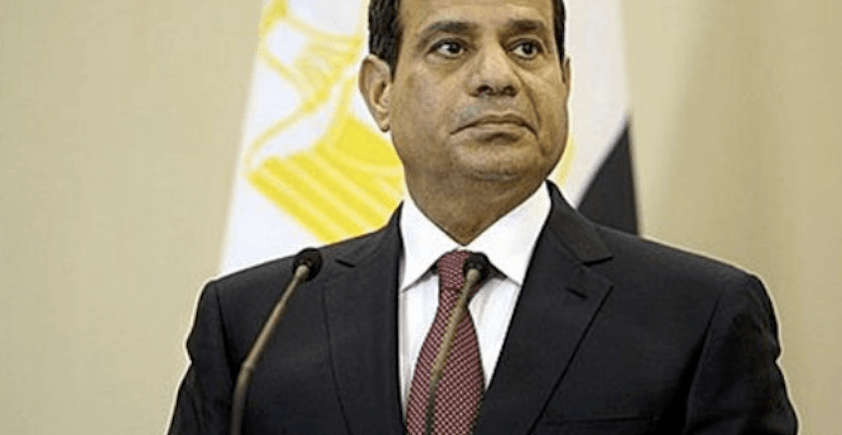
4 security officials to sit on committee empowered to dismiss state employees without disciplinary process
The committee will ultimately answer to the president
Parliament approves law expanding powers to dismiss civil servants on terrorist lists
Senior government officials will be able to fire civil servants on terrorist lists.
17 striking workers acquitted as court demands right to strike be included in civil service law
A court acquitted 17 post office workers facing striking charges, criticizing legislators' failure to outline the right to strike in Egypt's civil…
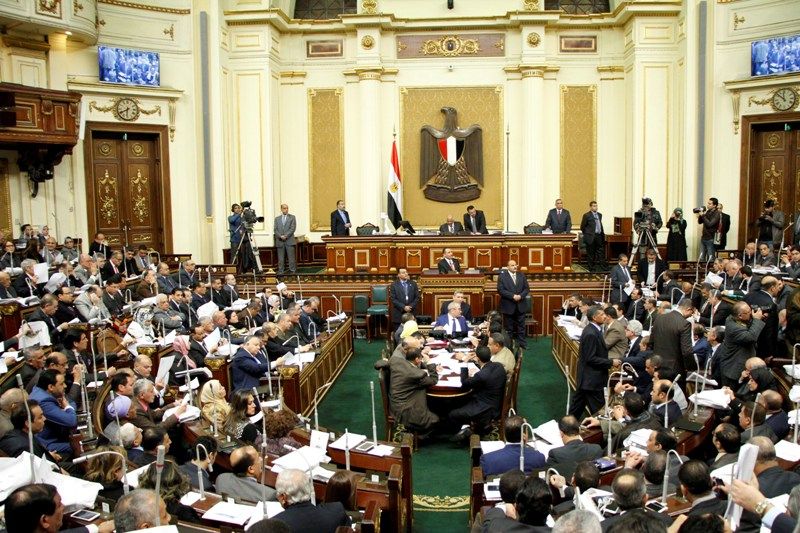
Parliament approves controversial civil service law
Parliament approved the long-disputed civil service law and submitted it to the state council, tasked with assessing its constitutionality.
Your support is the only way to ensure independent, progressive journalism survives.
You have a right to access accurate information, be stimulated by innovative and nuanced reporting, and be moved by compelling storytelling. Subscribe now to become part of the growing community of members who help us maintain our editorial independence.
Join us