
Attempting to return to Rafah: A city leveled to the ground

At dawn, just hours before the Israel-Hamas ceasefire was set to take effect, dozens of residents of the Palestinian governorate of Rafah began to try to make their way home nearly eight months after the Occupation displaced them.
What awaited them, however, was what the Rafah Municipality declared a "disaster zone:” rubble where the houses and buildings that made up their neighborhoods once stood. It was an expanse of ruins still dotted by Israeli tanks.
And as they approached their former homes, Israeli forces stationed near the Gaza-Egypt border began to fire at them, preventing them from getting any closer.
Among those attempting to return was Rami Taha, who was able to venture as far as central Rafah early on Sunday. Residents managed to reach up to Najma and Awda squares in the center of Rafah and Karaj in eastern Rafah, according to Taha.
Speaking to Mada Masr, he described a city so flattened that returning residents standing in its center could see all the way to the place where Israeli forces remained stationed along the Philadelphi Corridor adjacent to the Egyptian border.
Taha also said he found the remains of dozens of people who he assumed were killed when Israel invaded the Rafah governorate square in May. At the time, Rafah was home to over a million people who had been displaced from other areas of Gaza. In a far reaching and brutal operation, the Israeli military depopulated the area and turned it into a militarized zone.
From the center of the city, Rafah Mayor Ahmed al-Sufi held a press conference to declare Rafah a "disaster zone" due to the extensive destruction caused by eight months of Israeli military operations. The Occupation had devastated critical infrastructure, including water and power networks, roads, and thousands of homes and public facilities. Sufi stressed that the scale of the damage far exceeds the resources available to the municipality and local community.
Waleed Saqr and his siblings were among those that came under fire from Israeli tanks as they tried to make their way home on Sunday. Several members of his party sustained injuries as they took cover amid the rubble, Saqr told Mada Masr.
More than 20 Palestinians were killed and 50 others injured this morning as they attempted to return to their homes in Rafah, according to Mahmoud Mhanna, a civil defense worker. Mhanna told Mada Masr that civil defense teams recovered 45 decomposed bodies from areas from which Israeli forces had withdrawn.
Municipal teams and emergency committees began to clear the main roads leading from western Rafah to the city center, Sufi told Mada Masr. In the hours and days ahead, the municipality will work to remove rubble from streets and repair water lines, he added.
Before the ceasefire went into effect this morning, Israeli military spokesperson Avichay Adraee cautioned Gaza residents to avoid the Occupation-imposed buffer zone along the eastern, northern, and southern borders, as well as the the Netsarim corridor, a wide swath of territory bisecting northern and southern Gaza on which Israel has built up military infrastructure.
Adraee also prohibited residents from entering the sea for fishing, swimming or diving and said the military would provide instructions for “safe travel routes” for displaced residents moving from southern to northern Gaza.
Adraee shared a map of areas to be avoided in red.
On Saturday, the Rafah Municipality also released a map marking red zones along the border with Egypt, designating them as prohibited areas during the first phase of the ceasefire due to the presence of Israeli military forces. The municipality described these zones as posing a "direct threat to residents' safety."
The Khan Yunis Municipality in southern Gaza also published a map outlining main roads that displaced residents in the Mawasi area could use to return to their homes in eastern Khan Yunis and neighboring Rafah.
Similarly, the Gaza Municipality released a map identifying main roads slated to be reopened to facilitate the return of hundreds of thousands of residents from the south to northern Gaza. Southern neighborhoods of Gaza City were highlighted in red to mark them as off limits, as they are located near the Netsarim corridor where Israeli forces remain entrenched.
Under the ceasefire agreement, Israeli forces will gradually withdraw after the truce’s seventh day, at which point displaced residents will be allowed to move northward from southern Gaza toward Gaza City.
أخبار ذات صلة

White House launches Board of Peace with chain of command including Blair, Kushner, global representatives
The White House announced on Friday the formation of two boards, tasking them with the management of Gaza’s affairs and assigning them…
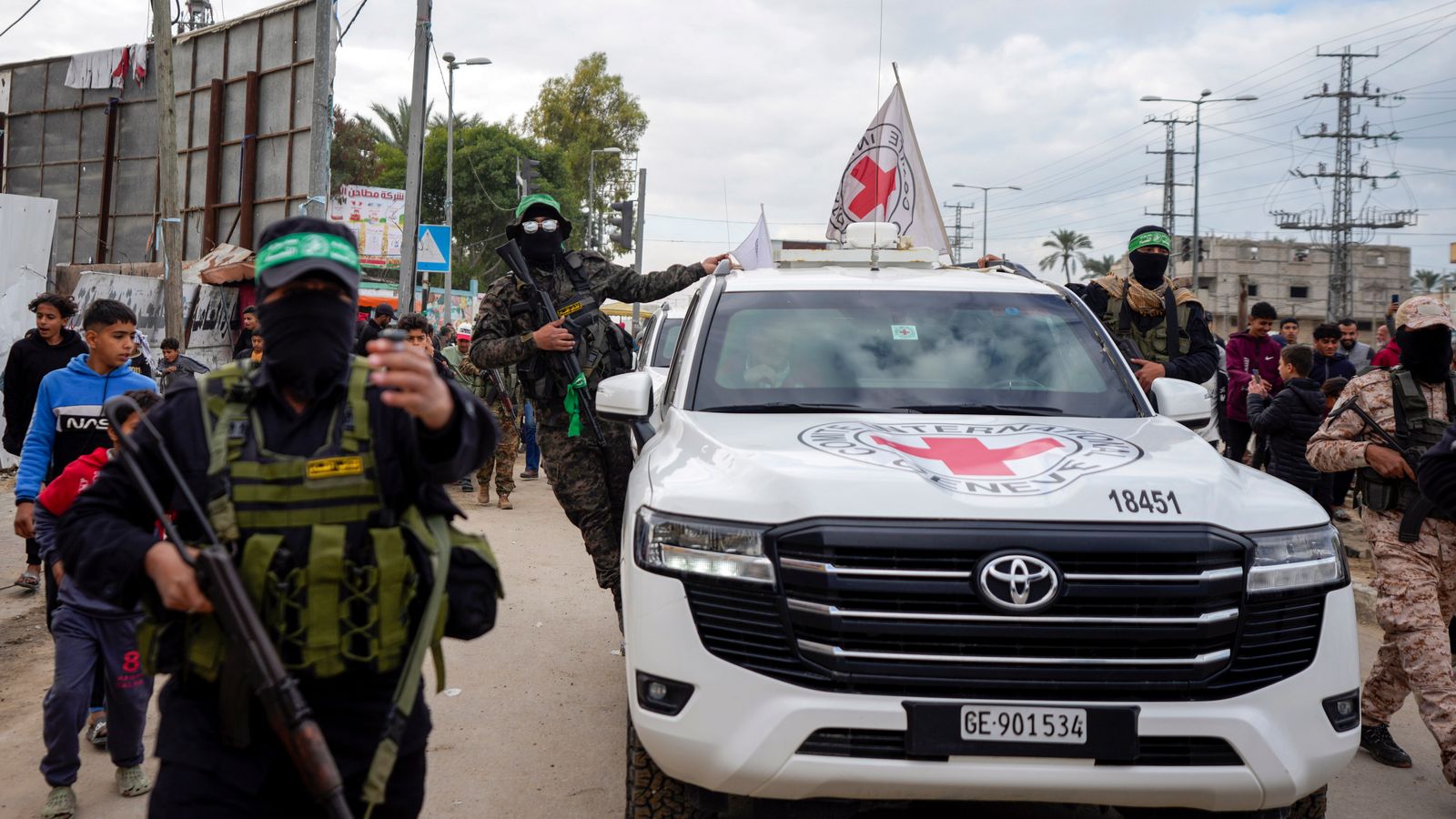
Hamas delivers dead prisoner in bid to preserve ceasefire as political differences multiply
Hamas delivered the body of an Israeli who died in captivity in Gaza to the Red Cross on Tuesday. Earlier, the organization…
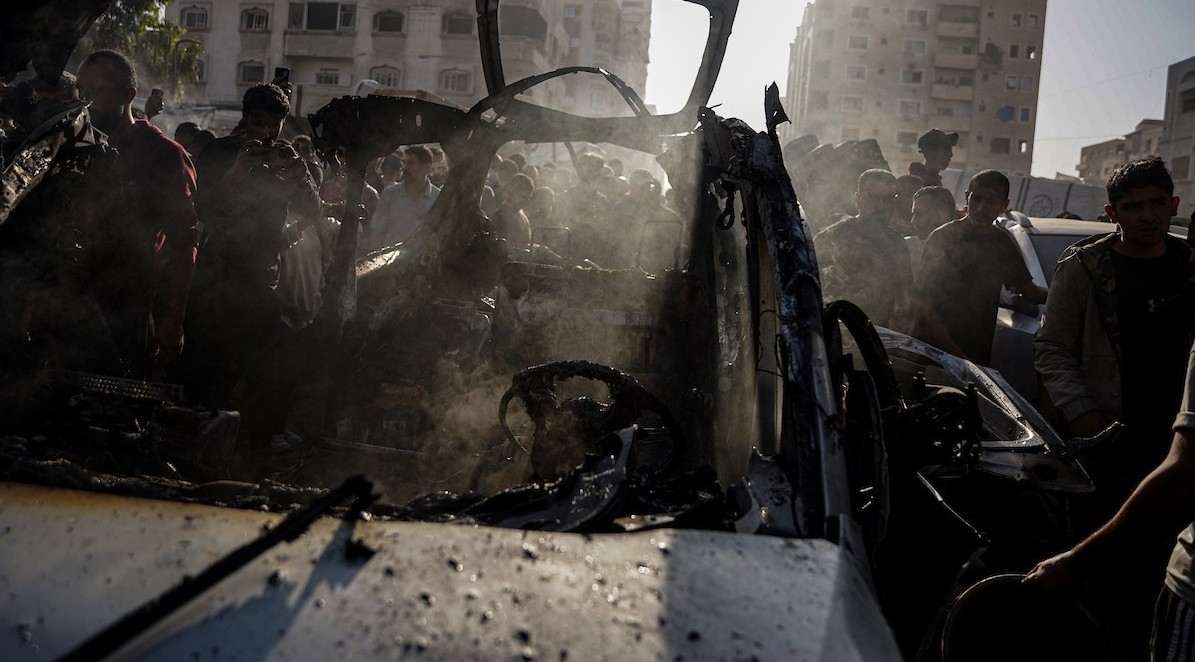
In another escalation, Israel kills 20 in airstrikes on sites across Gaza, including family homes
Israel launched a series of airstrikes across the Gaza Strip on Saturday afternoon after the Occupation military claimed that an armed man…

UN cover for the Board of Peace: Unpacking America’s draft resolution
The US is seeking UN backing to launch its post-war Gaza vision and sidestep Palestinian sovereignty
Your support is the only way to ensure independent, progressive journalism survives.
You have a right to access accurate information, be stimulated by innovative and nuanced reporting, and be moved by compelling storytelling. Subscribe now to become part of the growing community of members who help us maintain our editorial independence.
Join us