
As levels of Emirati investment in Egypt soar, MBZ, Sisi discuss security concerns hampering potential deals

A Sunday meeting brought President Abdel Fattah al-Sisi together with his Emirati counterpart in the coastal city of Alamein.
The leaders’ head-to-head was convened in part to discuss security and political considerations hampering investments that the UAE has sought to make in Egypt’s east, according to two Egyptian government sources who spoke to Mada Masr on condition of anonymity.
Egypt’s economy is currently suffering a liquidity crisis as global instability propelled a foreign investor exit from its bond market over the first half of the year, leaving the fiscal system bereft of foreign currency. At the same time, demand for foreign currency has spiked, with debt maturing over the coming year and the import bill for vital commodities soaring due to high global inflation.
As Cairo negotiates with the IMF for a loan as ballast for its balance of payments, Gulf investment has also proved key, with Emirati investments alone increasing by 170 percent year-on-year, according to figures released on Sunday by the Central Agency for Public Mobilization and Statistics.
And though the Egyptian and Emirati positions on a number of potential investment sites diverge, Cairo is planning to host another Gulf country with an appetite for Egyptian assets next week, according to both sources and a third government official who spoke to Mada Masr on condition of anonymity regarding Sisi’s preparations for an anticipated meeting with Qatari Emir Tamim bin Hamad Al Thani next week.
On the bill of fare in Alamein, according to the first government source, was the abortive July attempt by UAE majority-owned, Egypt-based real estate firm SODIC to purchase 100 percent of the Madinet Nasr for Housing and Development Company, a public housing development company in which state entities hold a controlling stake.
Madinet Nasr owns swaths of land across east Cairo, from Nasr City, where the Egyptian Defense Ministry and the Military Technical College are headquartered, to the Fifth Settlement, reaching as far as the new administrative capital, to which the government is scheduled to relocate the majority of its administrative buildings away from Cairo’s center.
Given that UAE companies have already acquired or are seeking acquisition of other assets in Egypt’s east, said the source — with UAE companies making a 2021 bid for the military-owned Wataniya Petroleum, which has holdings across the East Delta, and winning a contract under which Abu Dhabi Ports is to manage operations at the coastal city of Ain Sokhna — the security considerations associated with expanding Emirati investment in the country’s east have become a matter of particular concern and have been presented to the president, said the first source, as well as two other sources with knowledge of the deal who spoke to Mada Masr on condition of anonymity.
SODIC, which is majority owned by the UAE-based Aldar Properties and Abu Dhabi’s sovereign fund, ADQ, made a takeover bid for Madinet Nasr that was ultimately rejected by the company later in the same month on the basis that SODIC’s offer undervalued the company.
Emirati expansion in the Maspero Triangle area of Cairo, according to the first government source, was on the Alamein meeting agenda on Sunday. Thousands of residents have already been expelled from the area since government development plans took root in 2017.
The Foreign Ministry headquarters next to Maspero Towers might be offered up for sale as well, said the source, mentioning parallel plans to relocate the remaining residents of July 26th Street and the commercial Wekalet al-Balah area.
The two heads of state also discussed Warraq Island, the site of a five-year struggle as residents continue to resist authorities carrying out government development plans. While an Emirati investor is interested in purchasing the Nile island, the source added, Egypt is unable to hand over ownership of the whole entity. Designs published in 2017 for the island’s development and drawn up by a Singaporean-Emirati company sparked public concern that the island could be chalked for sale to Gulf investors.
Abu Dhabi is also looking to further increase its investments in Egypt’s real estate and ports sectors, said the same source, adding that the presidential meeting was billed to address problems that had proved difficult to handle at lower government levels.
In March, when Egypt elicited Gulf investment to assist its balance of payments crisis, Abu Dhabi’s sovereign fund pledged US$2 billion, which has since been directed into the privately-owned Commercial International Bank and e-payments platform Fawry, as well as Egyptian state-owned assets Abu Qir Fertilizers, Misr Fertilizers Production Company, and the Alexandria Container & Cargo Handling Company.
Divergent views on policy direction, both domestically and in the region, have caused friction between Egypt and the UAE over recent years, with the Emirates accruing greater cachet as a political player in Libya, Palestine and East Africa — areas that historically fall within Cairo’s backyard.
This remains the case, the source said, pointing to the Grand Ethiopian Renaissance Dam in particular. As Ethiopia advances to activate the dam that Egypt and Sudan fear will compromise their access to Nile water resources, the UAE has emerged as a broker in GERD negotiations, with talks under the African Union first faltering and later falling dormant. After the UAE’s permanent representative to the UN made a statement on Emirati mediation to bring an end to the dispute over the dam’s filling and operation, Cairo informed Abu Dhabi through diplomatic channels, said the source, that Cairo did not fully agree with what it articulated, particularly the claim that Egypt and Ethiopia have shown equal readiness to cooperate in reaching a solution.
The UAE’s proposal for a deal on the dam that would be based upon UAE-backed economic cooperation between Egypt, Sudan and Ethiopia, is not fully to Cairo’s liking, said the source, but it has conceded so long as a “reasonable and equitable” legal understanding is reached to complement the Emirati plan — a point on which Addis Ababa has not agreed to cooperate.
The meeting came ahead of a wider regional summit held on Monday that included the heads of state of Bahrain, Jordan and Iraq, according to one of the sources, while all three government officials stated that preparations are underway for Sisi to meet with the Qatari emir next week regarding further potential Qatari investments.
The three sources anticipated that Qatari investments — if all projects were approved — would exceed $20 billion. The quantity would mark a qualitative leap for Egyptian-Qatari relations since reconciliation between the two countries began in January 2021. The large investments coming to Cairo are also set to come with the relaunch of Al Jazeera network’s Cairo office, originally scheduled earlier this summer and later delayed.
According to the sources, potential projects for Doha include investments in Alamein and the new administrative capital, as well as the potential acquisitions of a number of food companies, including some state-owned ones, and investments in the management and operation of a number of ports. In March, Qatar committed to investments worth $5 billion in Egypt.
While the sources noted that Cairo is “not oblivious” to the uninterrupted Qatari financial support for the Muslim Brotherhood, including their TV channels, Egypt is currently focusing on economic cooperation, they said, as long as Doha does not stray too far in promoting oppositional sentiment toward the Egyptian government.
أخبار ذات صلة
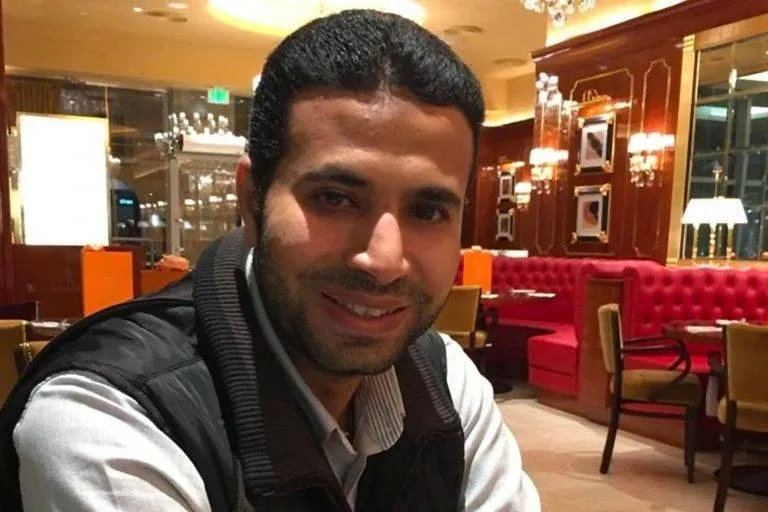
Al Jazeera journalist released after four years in remand detention
Cairo is rushing to reconcile relations with Doha to secure foreign currency investment
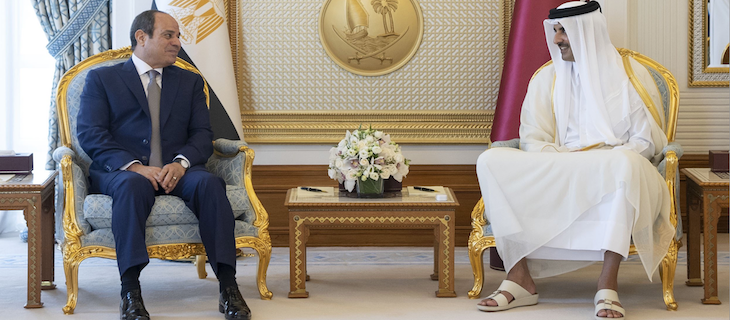
The enemy you know: Why Egypt is turning to Qatar to weather crisis
“At least with the Qataris, things are clear,” says one government official
Al Jazeera’s return to Egypt imminent, as Doha and Cairo reforge relationship
Doha would refrain from funding channels that espouse views “hostile“ toward the Egyptian regime
Rights organizations call for release of Al Jazeera journalist detained for over a year without trial
Rights organizations call on Egypt to release Al Jazeera journalist Mahmoud Hussein
Your support is the only way to ensure independent, progressive journalism survives.
You have a right to access accurate information, be stimulated by innovative and nuanced reporting, and be moved by compelling storytelling. Subscribe now to become part of the growing community of members who help us maintain our editorial independence.
Join us