
Artifacts discovered in Aswan may shed light on ancient mining and jewelry industry
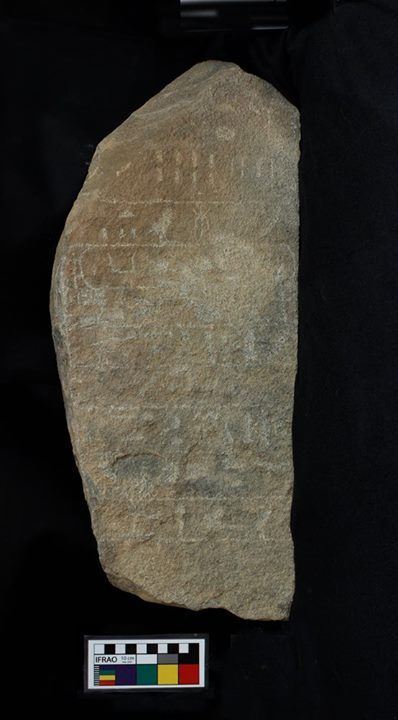
A joint team of Egyptian and American archaeologists in Aswan have discovered three stone plaques with hieroglyphic inscriptions estimated to date back at least 3,950 years.
The artifacts were unearthed in Al-Houdi Valley, located about 35 km south of Aswan City, the Antiquities Ministry said in a statement posted to its official website on Monday. The excavation team — led by Princeton University’s Kate Liszka and University of Chicago’s Bryan Kraemer — believe the tablets were made during the 12th Dynasty of the Middle Kingdom (circa 1991 BC - 1802 BC).
At least two of the plaques have been dated to the 28th year of Pharaoh Senusert I (who reigned from roughly 1971 BC – 1926 BC), but the age of the third object is still being determined, according to Mahmoud Afifi, director of the Department of Egyptian Artifacts.
All three of the stone objects have been worn down by erosion, rendering most of the hieroglyphs illegible. The ministry said it would employ “reflectance transformation imaging” technology to try to reconstruct the worn-off inscriptions.
Al-Houdi Valley was a flourishing quarry zone during the period that the plaques were fabricated, the ministry statement continued. The discovery of amethyst gemstones in the quarries reportedly led to the development of an amethyst jewelry industry at that time.
The history of the valley and the mining industry there is still being researched, and archaeologists hope the inscriptions on the newly discovered plaques will help to shed light on this largely forgotten subject.

أخبار ذات صلة

Looking back to see the present through the Grand Egyptian Museum
The coincidental nature behind the establishment of the Grand Egyptian Museum
Staging a grand opening for the grand museum
In Cairo, sidewalks have been repainted, screens set-up and security measures tightened. People living nearby say fireworks have been test-run in Giza.…
All around the Grand Egyptian Museum
The museum will not be open to visitors until after the three-day celebration
5,200-year-old rock inscriptions discovered in Luxor Governorate
A joint expedition of archaeologists from Yale University and the Royal Museums of Art and History was able to excavate several panels of rock…
Your support is the only way to ensure independent, progressive journalism survives.
You have a right to access accurate information, be stimulated by innovative and nuanced reporting, and be moved by compelling storytelling. Subscribe now to become part of the growing community of members who help us maintain our editorial independence.
Join us