
Ancient Egyptian mummy named ‘Alex’ displayed in Jerusalem
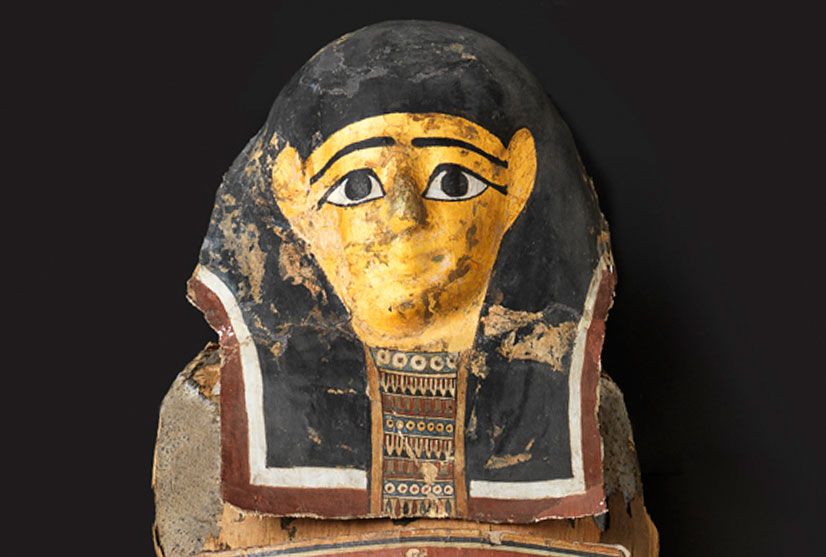
A 2,200-year-old Egyptian mummy with osteoporosis and tooth decay, nicknamed “Alex,” was placed on public display for the first time at a museum in Jerusalem on Wednesday.
Alex is the only mummy in Israel, according to the website of the Israel Museum. The mummy and its sarcophagus were reportedly given to the Jerusalem Pontifical Biblical Institute in 1930 to mark its inauguration by Jesuits in the Egyptian city of Alexandria, hence the mummy’s nickname.
CAT scans have revealed Alex suffered from conditions more commonly associated with modern day patients, such as osteoporosis — a medical condition that causes the bones to become brittle — tooth decay and cavities, the Associated Press (AP) reported. Alex reportedly led a largely sedentary life, with a carbohydrate-heavy diet, and suffered from a lack of exposure to the sun.
Alex is more formally known as “The Protective Eye of Horus,” in reference to the ancient Egyptian falcon-headed deity Horus, a curator from the Israel Museum told AP.
The mummified remains have been well preserved for 22 centuries, with the bones, teeth and remnants of blood vessels largely intact, due to the ancient Egyptian embalming process and the dry climate in Jerusalem, the curator added.
Studies have indicated Alex was between 30 and 40 years old and once around 167 centimeters tall, before he shrunk to around 154 centimeters as a result of osteoporosis.
He was most likely a high-ranking clergyman from ancient Egypt’s New Kingdom, as indicated by his sedentary lifestyle, according to the museum curator. He is reported to have lived in the Upper Egyptian town of Akhmim (located in the present day governorate of Sohag).
The new exhibition at the Israel Museum also includes a coffin containing an embalmed ibis bird, which was reportedly presented as a gift to Yigael Yadin — archaeologist and former Israeli Deputy Prime Minister — by former Egyptian President Anwar al-Sadat during the peace agreements of 1979, according to the webpage of the Israel Museum in Jerusalem.
Alex was encased in a gold and black sarcophagus, and wrapped in strips of linen, with a gold mask, AP reported.
In another archaeological development, a fragment from a large ancient Egyptian statue was discovered at Tal al-Quddah (known by Israelis as Tel Hazor), in northeastern Israel this week. It is reported to date back to the Old Kingdom of Ancient Egypt, around 2,500 BC.

The 4,500-year-old fragment measures 45 centimeters by 40 centimeters, and was once part of the feet of a large crouching male statue made of limestone. Only the lower part of this large statue has survived, according to the archaeological Ancient Origins website.
Inscribed on the fragment are a few lines of hieroglyphs. But neither the name nor title of the ancient Egyptian official that the statue was made of is clear.
The statue may originally have been placed in a temple for the Egyptian deity Ptah (a deity of the ancient city of Memphis, and god of craftsmen, sculptors, and builders), or the tomb of an ancient Egyptian official, the website speculates, adding that most of the text inscribed on the base of the statue are in praise of the official, who probably lived in the Memphis region — the primary area for worship of Ptah. The hieroglyphs also include an ancient Egyptian funerary intercession, to ensure the statue’s subject was eternally blessed.
Tal al-Quddah, where the statue fragment was unearthed, was reportedly an ancient Canaanite town, which may have functioned as the center of power for Canaan’s city-states. The Book of Joshua in the Torah and Old Testament of the Bible mentions Hazor. However, the archaeological website maintains that Hazor, which was much later occupied by Biblical Israelites, would not have existed during the Old Kingdom of Ancient Egypt when this limestone statue was built. Hazor and its statues were likely destroyed by foreign invaders around 1,300 BC.
According to a statement published this week, attributed to the Israeli Governmental Press Office (GPO), this is the second fragment of an ancient Egyptian statue dating back to the Old Kingdom that has been found in the area of Tal al-Quddah. The first was a fragment of a sphinx statue with the name of the pyramid-building Pharaoh Menkaure inscribed on it.
“This find is incredibly rare, as there are only two statues known to be discovered in the Levant dating back to the third millennium BCE,” or the Old Kingdom, the GPO’s statement read.
Last month, Israeli authorities returned two Ancient Egyptian sarcophagus covers to Cairo that were discovered on display at an auction house in Jerusalem. Israel reportedly agreed to return the artifacts as a sign of improved relations between the two nations.

أخبار ذات صلة
All around the Grand Egyptian Museum
The museum will not be open to visitors until after the three-day celebration
Forever is now, on the art of Art D’Égypte
A new contemporary art scene dominated by public and private stakeholders is emerging
Ancient Egyptian gold workers’ tomb excavated on island in Sudan
An ancient tomb reported to contain the mummified remains of at least 12 Egyptian gold workers has been excavated in Sudan
Archaeologists discover 2,000-year-old mausoleum in Alexandria
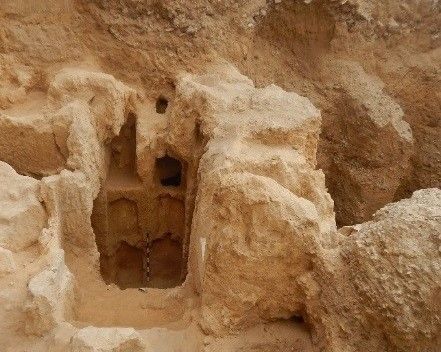
A 2,000-year-old mausoleum containing approximately 300 artifacts was unearthed by a team of Egyptian archaeologists in Alexandria
Your support is the only way to ensure independent, progressive journalism survives.
You have a right to access accurate information, be stimulated by innovative and nuanced reporting, and be moved by compelling storytelling. Subscribe now to become part of the growing community of members who help us maintain our editorial independence.
Join us