
What Yarmouk holds: Syria on our minds
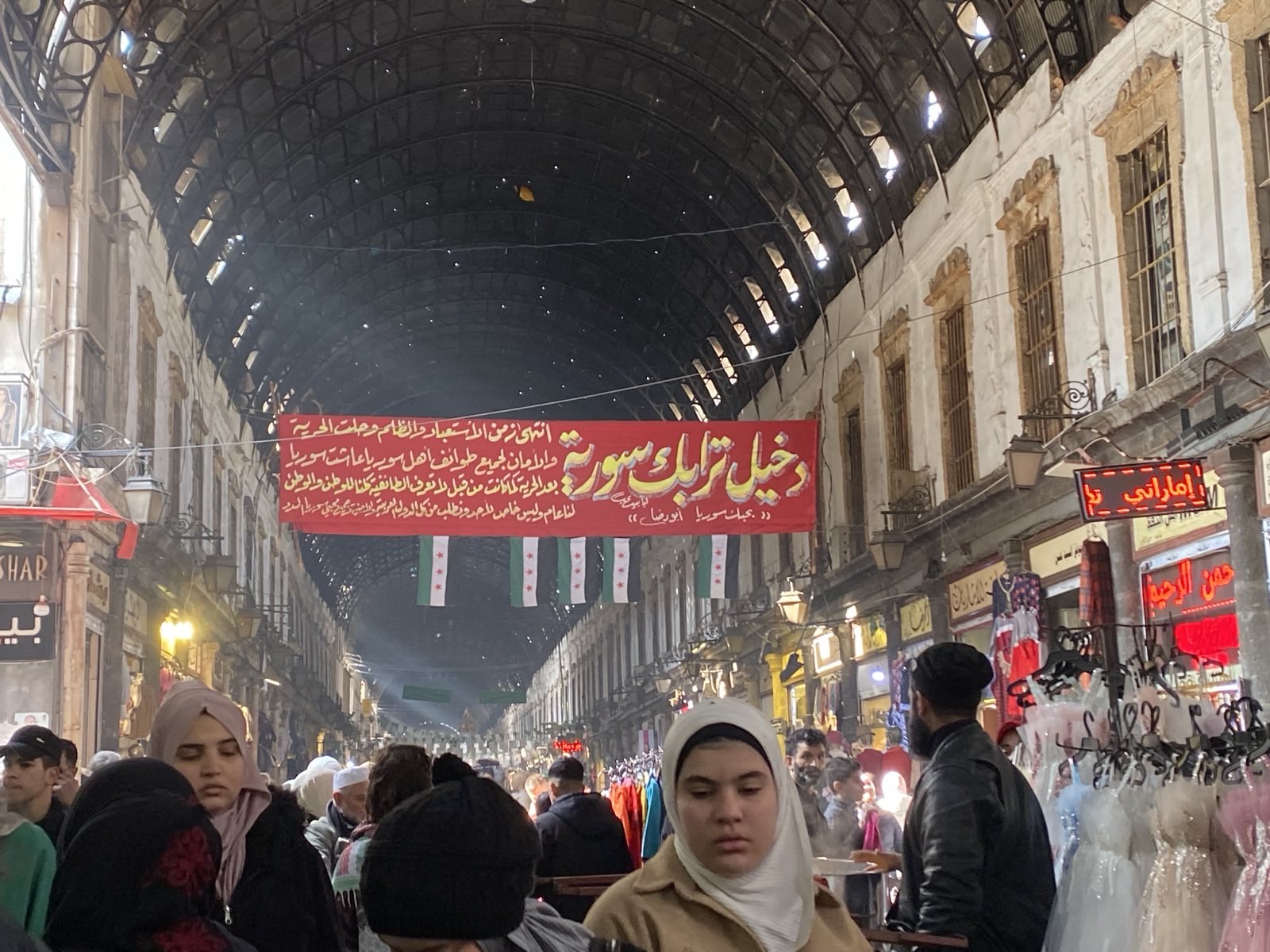
We went to Damascus on a whim, as the year opened— aware yet uneasy that this might teeter on political tourism. Perhaps it was a need to satiate raw curiosity: what does it look like when a dictatorship of however many years falls? The visit was brief, intimate. In hindsight, I think we wanted to touch the Syrian people’s joy, to feel a glimmer of their victory, however fleeting.
Since our return, we have been asked over and over again: What was it like? What are people saying? How are they feeling? The questions are pressing. There is a sense of collective hunger — ours, theirs — for hope. As we are stripped of voice and freedom, more and more each day, Syria sublimates the failures of our political reality into a future past.
The answers are hard to articulate, uneasy to convey. Among our Syrian friends returning after years of exile, the joy of return is impossible to grasp. The magnitude of this impossible possibility — returning — is ecstasy. In l-Rawda Café, recently reborn as a hub of political and cultural activity, on a Friday night, it rippled in waves. Casually, everyone would rise and sing in unison, “irfaa rassak fo’, enta Suri horr” (raise your head high, you are a free Syrian), drowning out the sound system. The same songs and chants echoed that morning in Hamidiyah, outside the Umayyad Mosque, after Friday prayers. There, however, the speakers blasting the songs were louder than the crowds. The presence of people was dense, but the air was subdued.

Elsewhere in Damascus, the energy shifts. Masked by the daily interactions — with taxi drivers, shopkeepers, and so on — lies, apprehension, exhaustion, ambivalence. For those who stayed, time warps differently under Assad’s carceral authoritarianism. What we perceive as ambivalence is a clue to Syria’s complex reality now, setting this moment apart from the revolutionary wave of 2011. Ambivalence and uncertainty, with a space perhaps more open for possibility, is what we found embodied in other places.
On our second day, we went to Yarmouk. At the camp’s entrance, we stumbled upon a group of girls painting a fractured, oversized heart on a broken wall. Sarah stopped to take a picture. Years ago, she had spent an entire day wandering Yarmouk, with a friend, photographing every heart they could find. Now, the camp is empty and gutted. Neither of us has ever confronted devastation this directly, this viscerally: the destruction, displacement, erasure — Gaza must feel like this too. Walking through its remains, an eerie, suffocating quiet surrounded us, unlike elsewhere in Damascus, where we felt the relief of being able to speak freely, as if exhaling. Yarmouk felt different. It had absorbed oppression’s silence, swallowed it whole. It became a site of muted history.
The story of the camp is enmeshed in the history of hostility between former Syrian President Hafez al-Assad and Chairman of the Palestinian Liberation Organization Yasser Arafat. Established in the 1950s to accommodate Palestinian refugees displaced during the Nakba, it became a sanctuary for Palestinians — a little Palestine. Yarmouk was where Youssef Oraby, a Palestinian fighter and Assad’s protégé, was killed in unknown circumstances, after which Assad, then defense minister, jailed Arafat and always looked at the camp with suspicion of revolt. Yarmouk holds a key to understanding this Syria-Palestine duality which encapsulates the story of our region.
One way to describe the tension is who gets to control the Palestinian nationalist movement. While Assad, since his time as defense minister in the 1960s, imposed operational meddling within Arafat’s Fatah movement, the latter succumbed to establishing the diasporic Palestinian movement’s presence in Syria. And as the relationship soured, especially during the Lebanese civil war, the PLO increasingly moved away from Syria.
One broader way to root the tensions is the struggle for an Arab national formation as a reaction to the colonial course of history and Zionism as a sub-course of this same history.
We are thinking about this, with the seamlessness of crossing the border from Lebanon to Syria in the back of our minds. There is a parallel seamlessness southwards, while crossing to Jordan. Lina notes here how she took pleasure, in her twenties, traveling to places where she could reach Palestine on foot — from southern Lebanon, northeastern Egypt and western Jordan.
And there are the Golan Heights, which take you to historic Palestine and which we never visited due to its occupation by Israel since long before we were born. Still, we remember the image of the fedayeen in Mohamed Malas’s Al-Lail (The Night), the passionate fighters ready to take the bus from Quneitra and join the armies fighting in Palestine during the Great Revolt of 1936. The film ends with the captivity of one of those freedom fighters by none other than the newly founded police of a liberated Syria.
Is it this sedimented history that is heart-pinching when, in unison, the crowds erupt in chants of irfaa rassak fo’, enta Surri? If nationalism is not the path prescribed by history to follow colonialism, what could have been an alternative?
The afterlives of the Assad–PLO conflict resurfaced in the wake of the Syrian revolution when peaceful anti-regime protesters took to Damascus’s outskirts, including the south and the Yarmouk camp, away from the authorities’ grip over central areas. Eventually, the camp became a field for different armed factions, including Hayat Tahrir al-Sham (HTS), when it used to be the Nusra Front, to launch attacks in southern Damascus. As a result, the Assad regime relentlessly bombed the camp since 2012 and subjected its residents to a siege that caused deaths by famine. In 2018, backed by the Russians, Assad launched a brutal offensive of airstrikes, in theory recapturing the camp, and in reality obliterating it. Over the years, people drifted away, renting homes in distant neighborhoods. Once home to 160,000 people, the Yarmouk camp now hosts a statistically negligent number.
We might think that the camp is moving backward in history, with news of factions as hardcore Islamist as the Islamic State inhabiting it for their anti-regime operations. The echoes of the 636 CE Battle of Yarmouk hover somewhere on the rearview horizon. First initiated by Abu Bakr, and later by Umar ibn al-Khattab, the decisive military conquest, meticulously orchestrated by Khalid ibn al-Walid and the forces of the Rashidun Caliphate, shattered the Byzantine Empire’s forces, ending Byzantine control over Syria and Palestine. It marked a cataclysmic historical shift, ushering in sweeping Arab-Islamic expansion. It feels impossible to escape the fabled history of this history’s future.
Today, there are calls to return to the camp, dressed in political slogans turning it into a vessel for Palestinian identity. But they ring hollow. With the ruins left post-Assad, what could be the future’s future? We dream that it won’t be a recoil. We want to believe there are other temporal ways than the backward and the forward. Our discrete chant is: down with history, down with repetition.
We kept walking through the debris of the camp, winding down roads lined with uninhabitable structures. The same group of scouts appeared to have left painted scenes scattered through the ruins and were planting small things — as if painting over destruction might coax life back. A bright red map of Gaza stared at us with green eyes. A dark, triumphant figure loomed over a headless man in a blue suit, plastered flat to the ground. Another figure, shackled in ball and chain, had a head that was itself a black orb, caged inside the silhouette of a larger head — a prison within a prison.
The skeletal buildings, the rubble, the dust, all raise an unbearable question: how does one even begin to rebuild? The destruction overwhelms. Yarmouk, what remains of it, needs to be entirely uprooted before anything new can take hold.

We also went to Marjeh Square, where families of the missing have been gathering around a column filled with prints of their loved ones’ faces, the dates of their disappearance, where they came from and their ages. Before being pronounced as the site where families of the missing gather, many of these families used to discreetly come to the square before the fall of the regime, from all around the country, pretending to be seeking medical treatment in the capital, while in reality, they were on the search, we are told. Estimates say there are more than 130,000 documented missing people in Assad’s prisons — an entire population. Some of them happen to be from the Yarmouk camp. Here, there is no cheering and no ambivalence. Only pain, lots of it. The missing, we like to believe, is one of the ways in which the old and the new connect — the negative which, unless identified, there is no building possible. The old haunts the new, and the new can’t but grapple with the old so as not to be haunted.


We said goodbye to Levant from the top of Mount Qasioun, overlooking the city and the presidential palace. During Bashar’s era, the mountain was closed off, the lookout inaccessible. We sat at the edge of the mountain, in one of the makeshift cafés that had sprung up after the fall of the regime. We nibbled on corn cobs and sipped sahlab out of paper cups, and remembered our friend’s Alaa Abd al-Fattah’s musing on how, in postmodern revolutions, revolutionaries might gaze at the palace in a vista, while smoking shisha, instead of entering it. There was something ordinary about this moment. It got cold quickly, we weren’t prepared. We squeezed our way out past the people and cars still arriving, haggling with one, two, three taxis over the fare back to the old city. Our Syrian friends were adamant — as were we — to not get ripped off. Resolute to find a fair fare, we started walking down the winding road. The asphalt sloped and the sun set grey and gold, not a single taxi passed us. Time stretched into the night, we trekked, single file, all the way down. On the way down, the palace looked even more visible, fully lit to our wonder. Who is in there now, and why was there full electricity, when the rest of the city is struggling with relentless power cuts? Maybe it’s the new rulers, we speculated as we kept moving forward, eventually lifting our gaze to the starry sky.

Sarah Rifky and Lina Attalah
Sarah Rifky is a curator and writer based in Cairo, Egypt. She is the co-founder of the Beirut art initiative. Lina Attalah is a journalist and the chief editor of…
تقارير ذات صلة
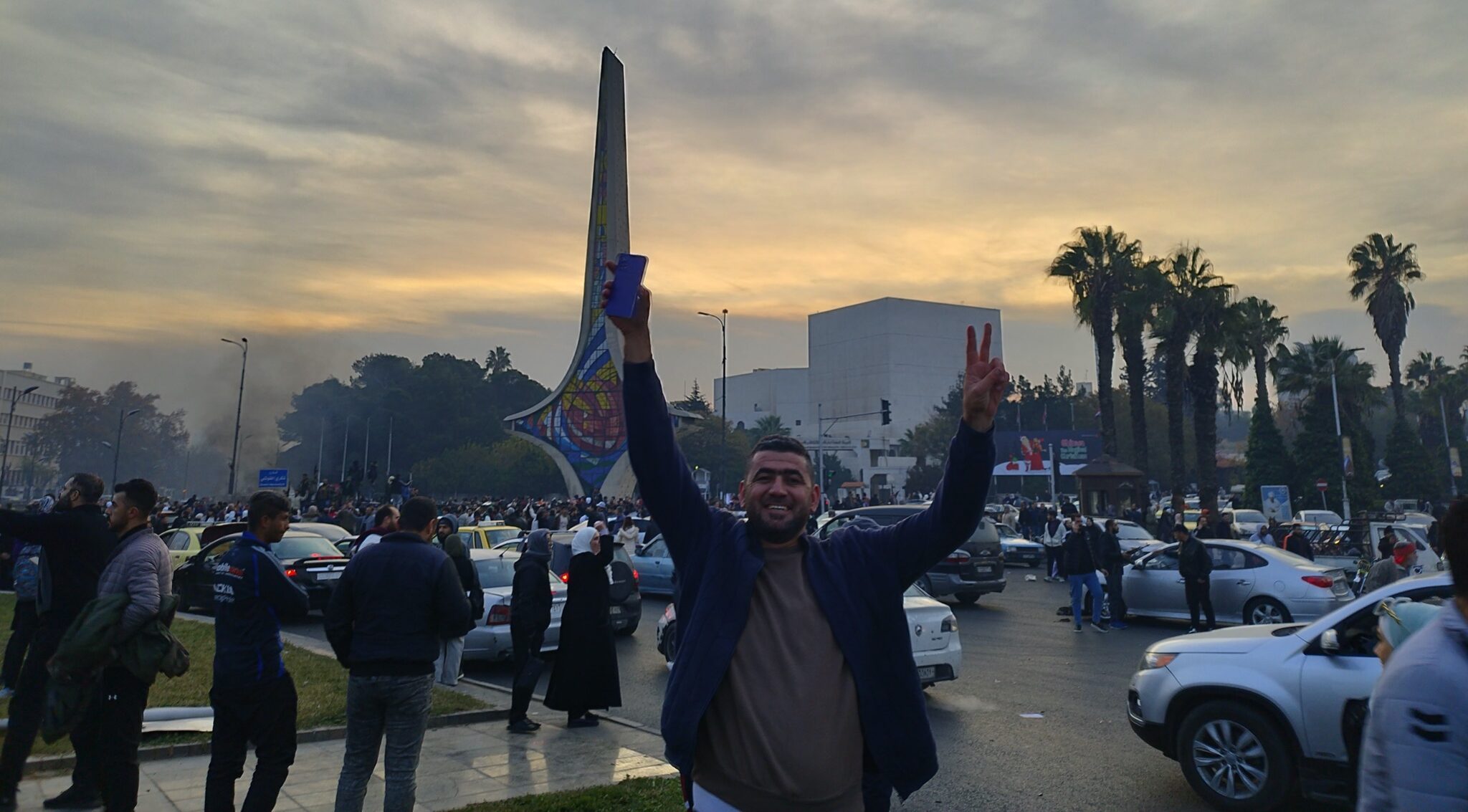
Scenes from the Damascus regime’s collapse: ‘Something out of dreams’
At noon on Saturday, an unfamiliar scene unfolded on the outskirts of the Syrian capital as armed opposition factions advanced from the south of the country toward Western Ghouta —…
Idlib, a refuge no more: Stories of Syria’s displaced
"These days, I’m left thinking, if there’s a military campaign … where would we go?”
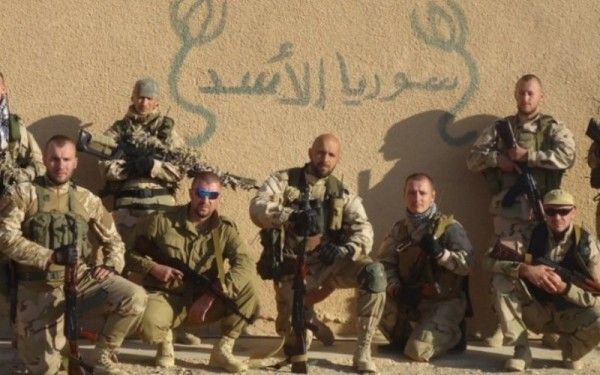
Diplomatic sources rule out imminent restoration of Syrian-Arab relations
It may seem otherwise, but Bashar al-Assad's Arab League membership is unlikely to be restored soon
Your support is the only way to ensure independent, progressive journalism survives.
You have a right to access accurate information, be stimulated by innovative and nuanced reporting, and be moved by compelling storytelling. Subscribe now to become part of the growing community of members who help us maintain our editorial independence.
Join us