
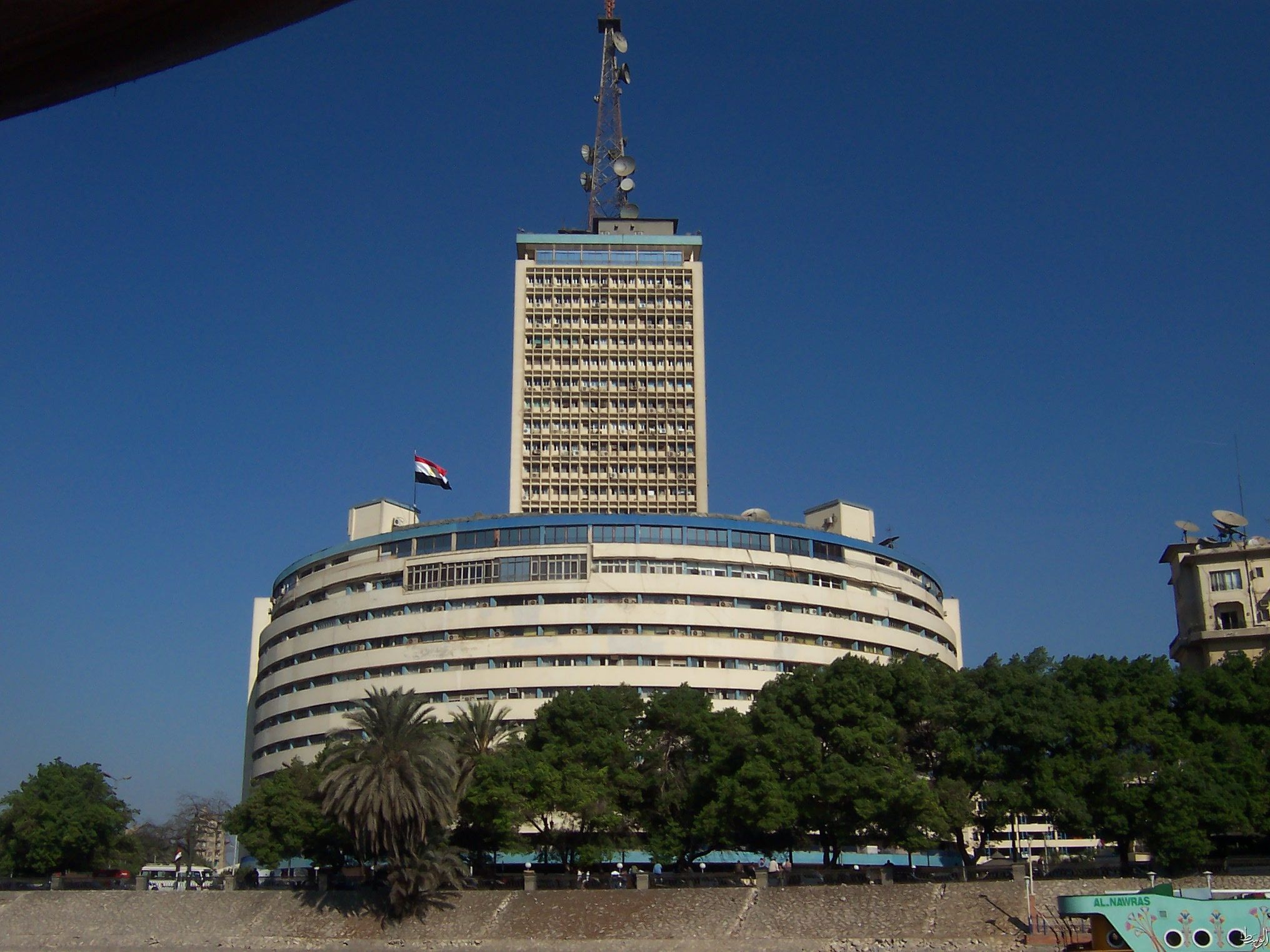
What does Maspero offer in exchange for LE4 billion annual debt?
President Abdel Fattah al-Sisi ordered the tightening of the budget for the National Authority for Radio and Television Union on Monday, amid claims that its estimated losses in the 2015/2016 Fiscal Year amount to LE4.1 billion.
Maspero’s expenses total around LE6 billion, with revenues of just LE1.7 billion. Such loses raise questions concerning what the media authority can offer in return.
Private satellite channels were able to steal the spotlight from the ancient downtown broadcaster, especially since it was accused of being the mouthpiece for Mubarak’s government and subsequent presidents. Viewers turned to private satellite channels based in Media City in 6th of October as an alternative, with anchors from these channels rivalling the popularity of those from state-owned networks.
The private sector also threatened Maspero’s decades-long domination of drama productions, leaving it drowning in loses and prompting calls for its restructuring or getting rid of it altogether.
Taghreed al-Dessouky, who works on the show “Naharak Said” on state television’s Nile Live channel for Maspero, explains the challenges they face. “We have good content, but we are unable to present it in the same attractive way that private channels present their content,” she says. “We are in need of better production services, including the developing of studios and the training of anchors, presenters and hosts.”
Dessouky explains that the domination of private satellite channels in advertising costs Maspero one of its main income sources.
Khaled al-Sobky, general manager of Maspero’s economic and financial division, told Mada Masr that Maspero’s debt is mostly interest on loans from the National Investment Bank. These loans are used to develop engineering projects and radio and television networks, without which Maspero cannot broadcast.
“These are non-profit projects, which are used to expand transmission networks, and unfortunately Maspero cannot access these funds from the state treasury, as the law designates it an investment body, with its own revenue and private funding that is not from governmental sources,” Sobky explains.
Employees’ salaries at Maspero are said to exceed LE2 billion, according to the budget published in Egypt’s Official Gazette on Monday. Sobky says that all Maspero gets from the government is basic expenses for media services, which it provides for all state bodies and authorities. It doesn’t cover salaries.
“These amounts are basically compensation in light of the decree issued by the late President Gamal Abdel Nasser to halt the imposition of taxes, which citizens used to pay upon purchasing radios, back in the 1960s. When this tax was abolished, the government resorted to paying Maspero these expenses in exchange for its services to the various state institutions.”
Sobky believes Maspero’s “message has been lost,” along with its declining production of TV and radio dramas, a primary source of revenue in recent decades.
He says these popular dramas were “replaced by dull, repetitive and outdated conversational programs, which he claims have not satisfied peoples appetites for information. These were misguided policies taken by former administrators, who did not know how to properly manage Maspero’s resources,” he adds.
“What is the purpose of Maspero? Is it a profitable institution or a service institution?” Dessouky asks. “In reality, no one really knows the answer to this question, even those managing this institution. I think that a good starting point is understanding what Maspero’s function really is. This may help address the many problems it is facing.”
Yasser Abdel Aziz, media expert and member of the media legislation committee formed by Prime Minister Ibrahim Mehleb last year says Maspero is supposed to be a service institution, yet it does not provide public services on par with international standards.
“If Maspero functioned as a public service institution, it would naturally and justifiably have incurred a large gap between its revenues and expenditures, but in fact Maspero does not fulfil this service or role, and thus this financial gap is not justified at all,” he claims, attributing loses to poor administrative policies, high staff employment and the lack of a clear vision from management.
Abdel Aziz asserts that one of the primary goals of the National Media Authority (which is still due to be officially established) should be to “bridge this gap” and to transform Maspero into a genuine service provider, as well as revamping TV and radio channels and developing strong online content.
Abdel Aziz concluded: “We cannot continue with all these excessive television channels and radio stations. It is important to reduce them and provide professional news and entertainment. Productions should be in keeping with the size and scope of the services provided.”

Mai Shams El-Din
Mai graduated from the American University in Cairo with a degree in journalism. She worked mostly for local English-language news outlets but has also been writing in Arabic, particularly when…
تقارير ذات صلة

The long and costly wait for a new personal status law
Bassant Soliman’s suicide triggered renewed public backlash against personal status laws in Egypt
We will sit together on Srifa hill, Qassem
Two friends try to reclaim a memory other than what the Israeli genocidal machine carved into them.

How Israel recognized Somaliland
Somaliland officials have pursued formal diplomatic recognition for over 30 years.
Your support is the only way to ensure independent, progressive journalism survives.
You have a right to access accurate information, be stimulated by innovative and nuanced reporting, and be moved by compelling storytelling. Subscribe now to become part of the growing community of members who help us maintain our editorial independence.
Join us