
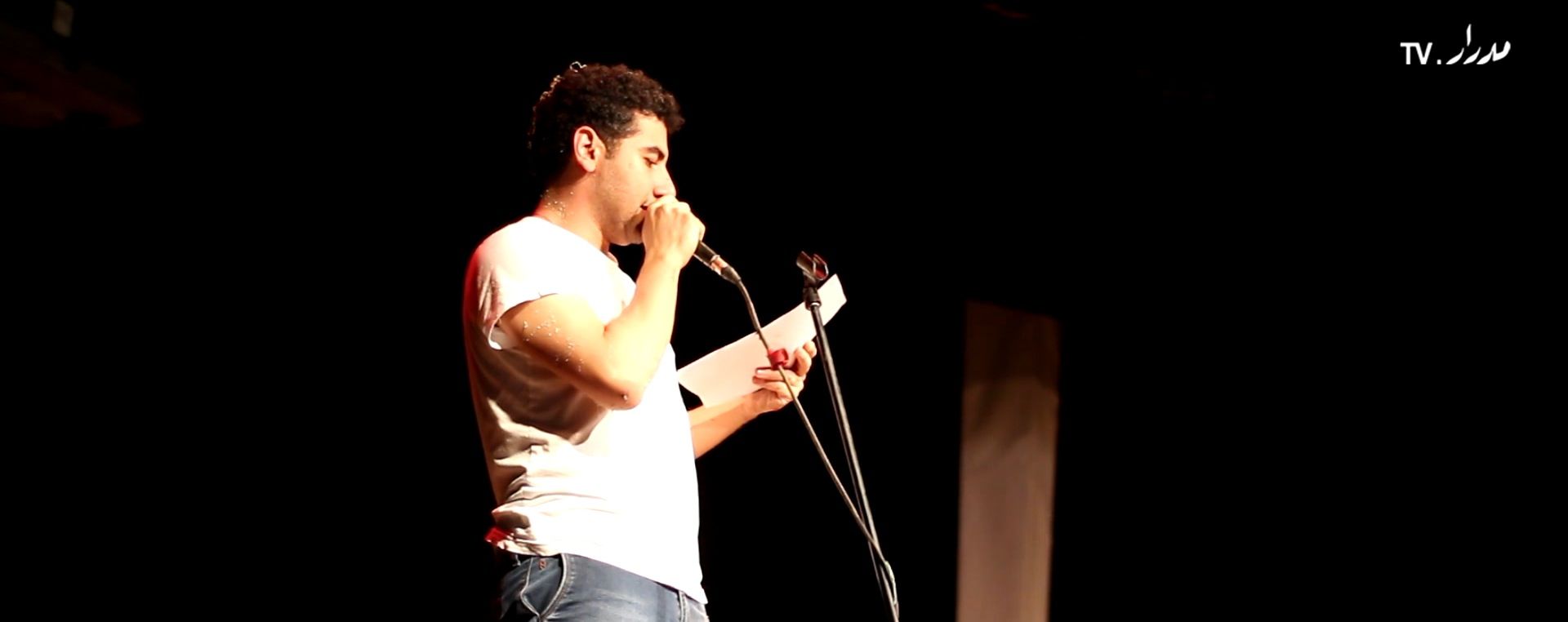
‘Violence Lointaine’: Distant violence in your own flat
Omar Ghayatt first told me about his new performance, “Violence Lointaine” (Distant Violence), in December.
The acclaimed performer, scenographer and theater director — he won the first prize for performance art in Egypt at the 15th Youth Salon in 2003, and has since received much international recognition — said he wanted to play around with notions of violence, particularly the violence we watch on the news and through brief YouTube clips. At the time, he was still developing the piece with French musician Maxime Denuc and Congolese choreographer DeLaVallet Bidiefono.
To my surprise, when I attended the world premiere of “Violence Lointaine” at Attaba’s Al-Taleea Theater last weekend as part of the third Downtown Contemporary Arts Festival (D-CAF), the set appeared to be a flat that had been wrecked by one crazy party. The trio are the sole actors in the 30-minute performance, with the exception of a few extras who only appear as shadows toward the end. We do not get to see any violence on stage, except three drunken friends occasionally wrestling.
Unconventional sets are nothing new to Ghayatt, and his performances have never ceased to surprise and engage. His 2006 award-winning “Les Passagers,” which shows the last 35 minutes of a man’s life in real time, was set in a bathroom shower. “If I Weren’t Egyptian,” which premiered in the first edition of D-CAF back in 2012, reflected on the experiences of undocumented migrants using minimal props, mostly bullhorns that echoed the phrase of the title on stage.

“Violence Lointaine” begins with the wrecked house party set. Wooden chairs are knocked down, a microphone stand lies on its side, bunches of flowers, confetti and empty beer bottles are scattered all over the floor. Three glittery gift boxes lie on top of one another at the back. Indecipherable sounds, possibly of bullets being fired, are heard from a distance. The three artists sit quietly among the audience before suddenly rising to jump on to the stage and run back and forth as if in a track race until falling down, one by one, from exhaustion.
The performance builds up bit by bit with minimal dialogue that includes nothing the audience can follow. Attempting to replace words with images is a theme in much of Ghayatt’s work.
The sounds of “Violence Lointaine” are a combination of distortion, noise and hysteria. Even Ghayatt’s voice, reading a human rights declaration, is purposefully distorted, and the projection of the declaration’s text in the background eventually turns into a glitch.
The production has no particular narrative. At times, Ghayatt and Bidiefono fight with chairs while Denuc plays the soundscape. At other times they dance. But we stay hooked, following the scenes and complementing them with other scenes inside our heads.
Although much of “Violence Lointaine” was designed during a workshop organized by the French Cultural Center in Brazzaville, Congo, the three artists had to adapt the performance to Al-Taleea Theater upon arriving to Cairo a week before the premiere.
During rehearsals, the bustling sounds of the Attaba book market, which has expanded to block one of the theater’s gates, echoed on stage due to the poor soundproofing. The theater was established by the state in 1962 to showcase experimental performances, but it has fallen apart and been encroached upon over the years. The situation has worsened since January 2011 due to the security void and continued lawlessness, especially in less privileged neighborhoods of Cairo. The artists, however, decided to turn this to their advantage.
This video is produced by Medrar.TV and is featured in partnership with Mada Masr. Please activate the CC options on YouTube to follow the interview in English.
Ghayatt bought all of the performance’s props (Chinese-made plastic flowers, confetti and giftwrap) from the Attaba market, while Denuc made several recordings of the booksellers’ merging voices advertising their collections and built these into the soundscape of the performance. Inside the theater, the line between the market and the performance is blurred. Watching it, we feel as if we are surrounded by angry crowds — exactly the effect the artists wanted to create in the first place.
When Ghayatt, Denuc and Bidiefono started working on the performance in Brazzaville for a tryout, they asked members of Bidiefono’s dance company, La Compagnie Baninga, to surround the theater and create noise, giving the impression of violence unfolding near by. In Cairo, there was no need for this due to the market.
Perhaps the weakest part of the opening night of “Violence Lointaine” was the scene toward the end that showed shadows of extras running around in chaos, creating the only direct image of violence in the show. An image was meant to be projected onto an area of the stage in front of the running extras, but due to technical difficulties the projector did not work, making it difficult to imagine what the three artists intended for the scene.
Otherwise, “Violence Lointaine” is an exciting twist on people’s spectatorship of violence in real life. The trio offer an experiential performance but choose to not show the common images of war and strife propagated by mass media.
After its success in Cairo, “Violence Lointaine” will show in November at the Festival Les Rencontres à l'Echelle in Marseille. Judging from the artists’ Cairo experience, they will probably re-adapt the performance to its new setting.
"Violence Lointaine" was shown at Cairo’s Al-Taleea Theater on April 3-4, 2014 as part of D-CAF.
تقارير ذات صلة
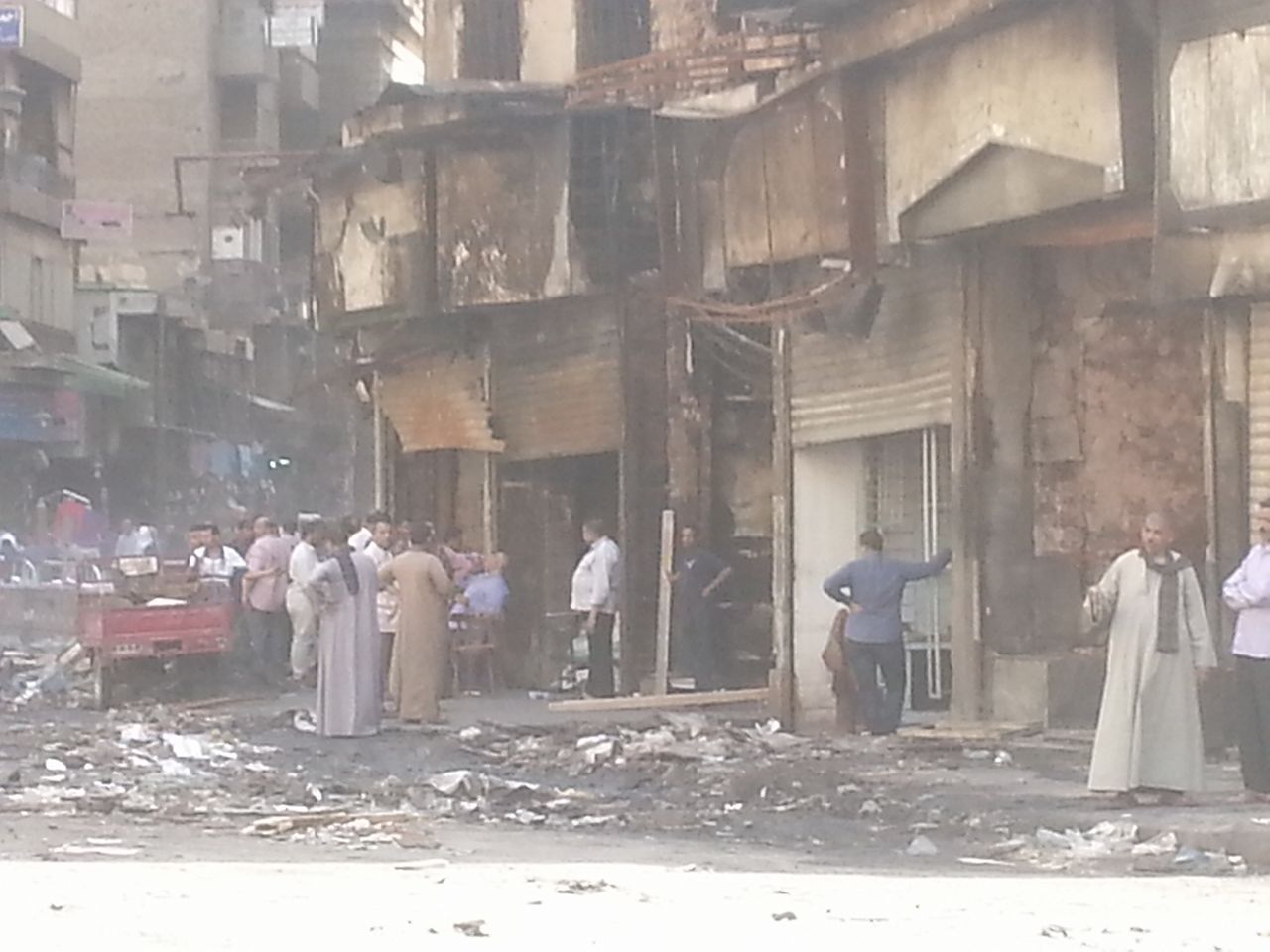
Will the Attaba fire pave the way for a central Cairo facelift?
As survivors of a major fire in downtown Cairo last week take toll of the dramatic few days they lived with flames, smoke and ashes, they blame the government for…
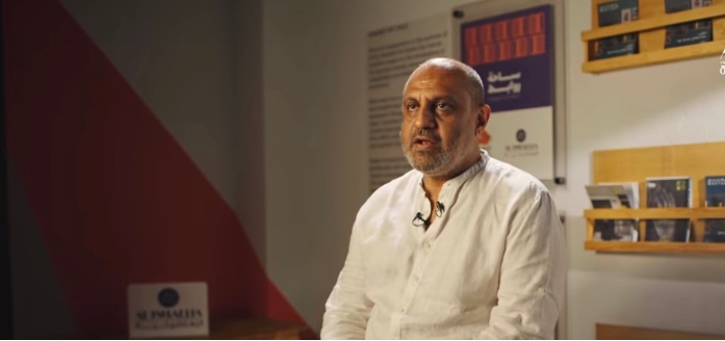
‘Now it’s a theater’: Ahmed El Attar on the new Rawabet Art Space
Orient for Film and Theatre Productions reopened the art space with a new strategy in 2021
Your support is the only way to ensure independent, progressive journalism survives.
You have a right to access accurate information, be stimulated by innovative and nuanced reporting, and be moved by compelling storytelling. Subscribe now to become part of the growing community of members who help us maintain our editorial independence.
Join us