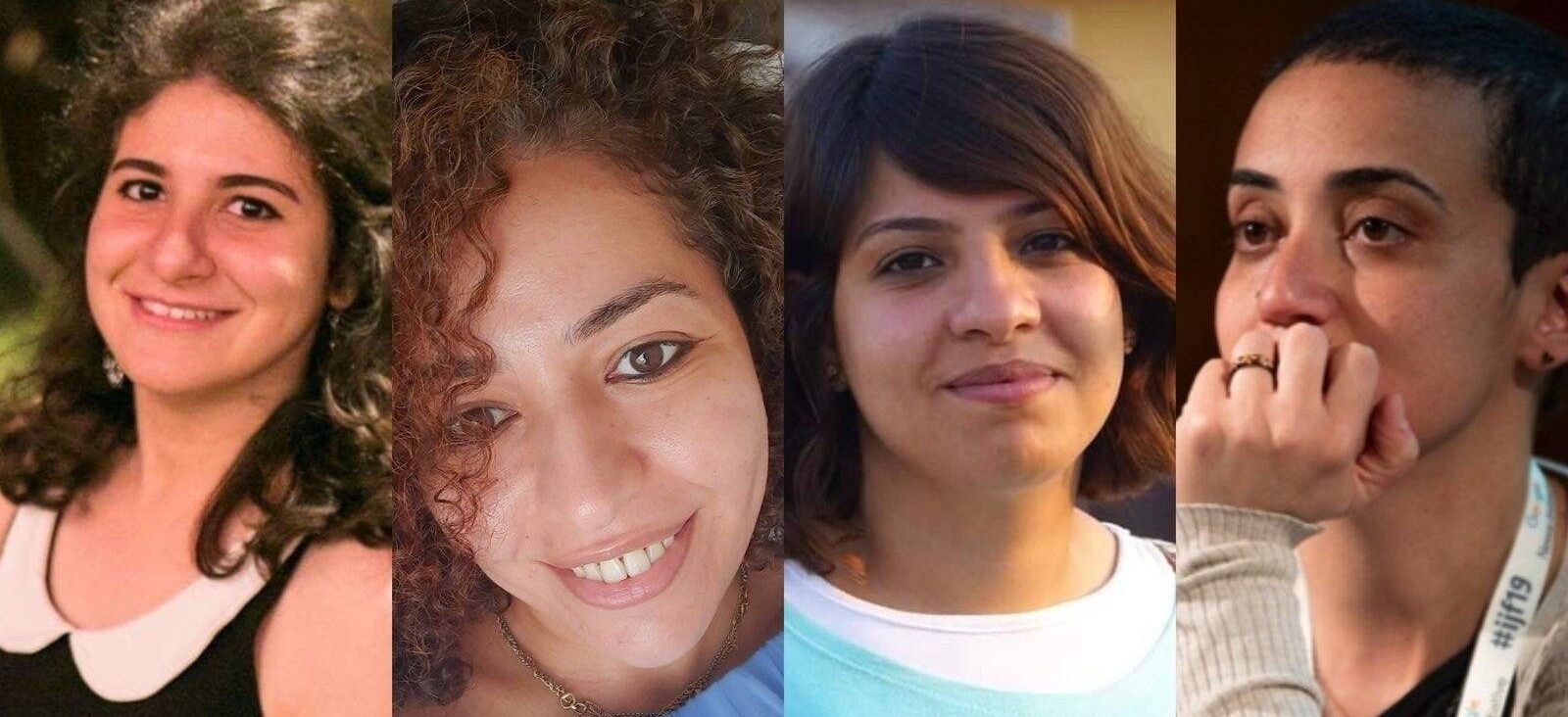
We discovered the rejection on September 7, when the Public Prosecution summoned and questioned four of Mada Masr's journalists. The summons came after scores of complaints were submitted against us by the government-aligned Nation's Future Party, following Mada Masr’s publication of a news piece citing incidents of corruption monitored within the party and stating that particular party members were facing inquiry in relation to the incidents.
During the September 7 questioning, the Public Prosecution directed charges of running a website without a license at Mada Masr Editor-in-Chief Lina Attalah. It’s a charge that has become very familiar to us, as has our answering to it.
When the SMRC asked all Egypt-based websites in October 2018 to ensure they met the registration requirements laid out in the newly enacted media and journalism law, we submitted all the necessary paperwork and paid LE50,000 in fees within the same month.
No response came, despite the law’s stipulation that the SMRC must decide to accept or reject the license application within 90 days of receiving it and must notify the applicant so that if the latter — i.e. us — is rejected, they can exercise their right to appeal the decision in court.
Up until our journalists were summoned less than three months ago, four years after our application, we had received no response from the SMRC despite inquiring several times about the status of our request.
It was only during questioning on September 7 — when we began, once again, to recount the process of our application for a license — that the investigator showed us a letter from the SMRC stating that on January 3, 2021, it had denied Mada Masr’s application.
Accordingly, we submitted our lawsuit in October to contest the rejection. The State Council referred our suit to the State Commissioners Office, and the first session was held on November 16. We presented documentation to demonstrate that we had applied for a license, paid the licensing fees and addressed the SMRC multiple times, with no response received regarding our application — neither an acceptance letter nor a letter of rejection. The State Commissioners Office adjourned the hearing until December 7.
Long before we found ourselves charged with running an unlicensed website, we were chasing after recognition under a law that we knew would limit our freedom to organize ourselves and our work — work that has contributed, and will continue to contribute, to advancing the practice of journalism in the country and enhancing the public’s ability to apprehend and engage critically with what’s happening around them.
And yet we were ignored, only to find ourselves now accused of working outside the law and confronting the looming specters of closure and massive fines.
It’s not exactly what we would have wished for to celebrate our 10th anniversary next year. In our lawsuit, we therefore also demand that the SMRC be obliged to publish all of its decisions regarding website license applications, in the interests of defending the role of the law as a tool to regulate rather than to restrict freedom of association.
We made a choice four years ago, when we applied for the license, to undertake our work within the available legal framework, to comply with and uphold the law as a regulatory mechanism and not one of control.
We are pursuing this legal battle in the hope that we can continue our work: researching, investigating and publishing to serve the public’s interests rather than becoming consumed with begging the authorities for permission to exist and having to confront accusations and publish about ourselves.
This lawsuit could turn out to be just another waypoint in the ongoing struggle to exist and persist, and it could also transpire to be an opportunity through which we test, question and even quarrel with the reality in which we live, as we always do through our journalism. Either way, we hope to continue on our trajectory, to defend our dream of what journalism can be.