
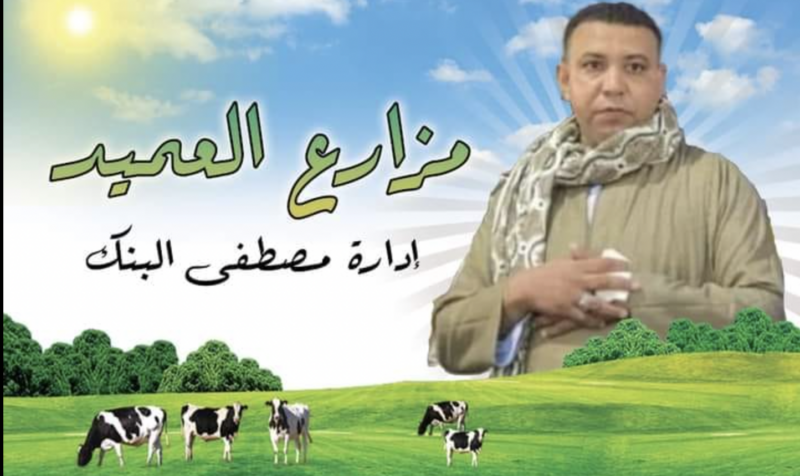
The perils of banking with Mostafa al-Bank: The rise and fall of Aswan’s Mestereyeheen
Over the last eight months, a phenomenon has swept through the Aswan villages surrounding Edfu. It was like economic magic: your vegetables, cattle, cars and motorbikes transformed suddenly into hard cash, profits reaching sometimes as high as 300 percent. Skeptical? Well, so were the farmers, traders, doctors, teachers, public servants, and even police officers and public prosecutors. But they saw it with their own eyes: cash pouring in.
At the center of it all were a group of men who appeared as suddenly as the phenomenon itself with heaps of cash without clear origin. They were able to take individual assets, pool them together for sale and then sell them off for unheard-of profits. “No one knew how they got their money. Historical artifacts? The arms trade?” the residents asked.
Residents had a name for them: the Mestereyeheen, a term that connotes a kind of monied comfort, a lifestyle of wealth. The Mestereyeheen won over the residents, supported by the state’s ambivalence toward their activities, a kind of tacit approval in the eyes of residents.
And everything was fine until it wasn’t. The Mestereyeheen depended on a constant inflow of money to make good on their lavish promises of profits, pushing the collective pot of money larger and larger until they would have to make their escape. By early May, the system had begun to crack. Residents mobilized. There were shootouts, fugitives, razing of the mini-economic fiefdoms and arrests.
And just like that, the Mestereyeh phenomenon was gone almost as quickly as it appeared.
Mada Masr spoke to residents over the course of the end of May to understand what happened in Aswan as not just a classical fraud scheme, but a story of trust, sudden affluence and state neglect.
***
Mostafa al-Badry — or, as residents of Bosaileya called him, Mostafa al-Bank — came to public attention in February when he inaugurated his “Sons of the Bank Farms.”
The inauguration was met with skepticism surrounding Badry’s sudden wealth. He was known to have descended from a poor family. In an interview, Badry says that he was a tuk tuk driver who also worked in construction before venturing to Alexandria. When he came back to Edfu, he bought a tuk tuk and worked as a driver for a time. Badry claimed he raised enough money through gamaeyat, informal collective money-saving schemes, to buy a farm. “Things got bigger,” he said. “The single farm became two. I began to work in business trading.”
Badry almost immediately began collecting funds and assets from residents from Edfu, Bosaileya, and Aswan. In exchange, he promised 100 percent and sometimes 300 percent profit over set periods ranging between two and six weeks, according to each agreement with those who contributed their funds or assets. To introduce the appearance of precision into the scheme, Badry and other Mestereyeheen used terms like “90 days” instead of three months for vehicle traders and “21 days” instead of three weeks for cattle traders.
The Mestereyeheen used vast plots of agricultural and mountainous land, which were often owned by the state, to exhibit their assets: camels, lambs, cows, vehicles, and motorbikes. They built fences around these areas, installed lighting and fans and erected one-story buildings in which employees busily moved about, flanked by money-counting machines and receipt books. According to residents, developments like this sprung up in several villages and communities in Aswan along with the financial system it introduced.
For residents, the motives for dealing with the Mestereyheen were not only greed or the desire for quick wealth. It was also the sense of assurance they had that the state does not mind these activities even if they were illegal. After all, the Mestereyeheen spent hundreds of thousands of pounds to equip offices and spaces on state-owned land with no opposition from any state agency. Some even promoted their activities on Facebook.
“The government left them to operate on state-owned land. Bosaileya became like Alexandria. Buildings were constructed, with vehicles and people all over,” says Ahmed Abu Zeid, a cattle trader, who was ultimately defrauded by Badry for cattle worth LE1.8 million. “Nothing would have made you scared. They were working openly. If I build a hut on the mountain or on agricultural land, the government will come and bulldoze it. However, the Mestereyeheen erected buildings and operational fields over thirty or forty pieces of land owned by the state. If I have a semi-automatic rifle and fired some shots at a wedding, the government will come and take me the following day. However, those people were wandering around with their semi-automatic rifles during the daytime and they used to fire shots but no one appeared to notice or talk to them.”
Not only did the state fail to block or issue police reports against their infringement on state-owned agricultural and mountainous land, the Mestereyeh were also publicly honored.
Residents of Aswan circulated pictures of Aswan’s governor giving Mahmoud al-Naggar, who was also known as the “vehicle Mestereyeh,” the “Governorate Shield”, Aswan’s official honorary award. Naggar was arrested on May 20.
The sense of trust in the Mestereyeheen was also bolstered by their regular payment of profits for several months, which worked to further attract thousands of residents from more villages around Aswan, residents who dealt with the Mestereyheen told Mada Masr.
This is how Ibrahim Osman, a public employee in Edfu, was drawn to Mostafa al-Bank.
Osman and his brother visited the Bosaileya administrative province and its 14 villages and communities between February and mid-April to monitor the Mestereyeheen’s activities and handling of funds, cattle and vehicles. They saw their relatives getting their profit payouts on time.
“We saw people paying LE1 million and getting back LE3 million,” Osman says. There was no cause for suspicion. “I saw the money coming in sealed boxes. The money had serial numbers. We saw LE20,000 in the form of fifty LE200 notes with a [serial] number and another fifty LE200 notes with other serial numbers. The money was real.”
The working theory was that Badr and his accomplices were “laundering money that was printed during the revolution but was later confiscated from the Muslim Brotherhood and now they sought to get rid of it. The blatant greed and what we saw with our eyes made us quite sure that what was happening was clearly money laundering but with the government’s approval,” Osman says.
After two months of reconnaissance, Osman and his brother decided to proceed. “I gave Mostafa al-Bank in Bosaileya two cows worth LE40,000 at the beginning of Ramadan. Our promissory agreement was that I would take LE100,000 after 21 days. My brother gave him four cows. And I delivered another two cows worth LE28,000 to another Mestereyeh in Ghanimiya named Eid al-Sayeh. The arrangement was to take back double the money after 15 days.”
The same happened to Rabie Omran, who told Mada Masr that he first gave Mostafa al-Bank six cows worth about LE120,000. Within 21 days, he had recouped LE200,000. This experience encouraged him to sell a piece of his land, and he subsequently brought camels and cows worth LE800,000 that he gave to Badry over several installments.
Abu Zeid’s trust in Badry increased after two successful dealings. “Before Ramadan, I delivered cattle worth LE100,000. We agreed I would collect LE220,000 and I did after 21 days. The second time, I collected LE500,000.” This encouraged him to give Badry 26 cattle during Ramadan.
***
But by the time Osman and his brother decided to move, things were already beginning to unravel.
What Osman, his brother, Omran and those that had trusted Mostafa al-Bank and the Mestereyheen didn’t know was that once Badry had the assets in hand, he would sell them wholesale at half price.
The whole system was a house of cards waiting to fall apart.
By early May, the Mestereyheen had defaulted on payments for 40 days in villages in Edfu, prompting several residents to storm their homes and offices. It was only at this moment that government and security agencies began to intervene after months of silence. The government bulldozed nine Mestereyeh exhibition spaces that had been built on a surface area of 10,000 square meters. The security agencies then launched a campaign to arrest some of the Mestereyheen and seized their funds, cattle and other assets.
Osman and his brother were supposed to take LE250,000 from Mostafa al-Bank in the last week of Ramadan and LE56,000 from Sayeh by early May. Bank asked for a grace period to deliver the money.
Omran was supposed to collect LE1,600,000 in the week after Eid al-Fitr, but Badry and his collaborators asked for an extension.
But Badry was arrested on May 12. On May 9, one day before the promissory agreement with Osman and his brother was due, police raided Sayeh’s house, killing several members of Sayeh’s family in a shootout before the police arrested Sayeh himself, who was shot in the foot during the exchange of fire.
On May 13, the Public Prosecution announced that it had arrested three people including Mostafa al-Bank over charges of “illicitly embezzling funds from a large number of citizens using deceptive methods under the pretense of investing them without a license to do so.” The police also announced it had seized LE9.5 million and 477 cattle from Badry’s farm when he was arrested. One week later, the prosecution said that the case had grown to include 37 defendants, 17 of whom had been arrested to that point. The move, the prosecution said, came after it had received 3,922 reports from citizens from Edfu and Kom Ombu claiming that they had provided Badry with cattle, vehicles, and funds estimated at LE500 million. On May 21, the Qena Economic Court began the trial on charges of fraudulent capital investment.
With Badry now arrested, Abu Zeid lost the cattle, which he had bought on credit. Now the cattle traders are asking Abu Zeid for their money.
For political sociologist Saeed Sadeq, the staggering scale of the fraud highlights key problems in the “financial inclusion” plans the state has been pushing in recent years.
In April, the Central Bank of Egypt said that 56.2 percent of Egyptians aged 16 or older deal with the formal banking sector.
But, Sadeq says, those dealings are quite limited, particularly in Upper Egypt.
“Aswan residents and others in Upper Egypt and rural areas only deal with banks to collect the remittances that their relatives abroad regularly send back. The majority prefer to keep their savings away from the banks’ bureaucracy. Mostafa al-Bank, on the other hand, used to send his victims a representative to give them their profits in their homes,” Sadeq says. “The Mestereyheen studied the market, spoke to the people in their language and managed to convince them to give away their money, cattle and all their possessions.”
Where banks have failed, Sadeq says, Mostafa al-Bank succeeded, even if that success proved devastating for large swaths of communities in Aswan.

تقارير ذات صلة
The Gold War
“When the gold is giving, it begets greed. And greed begets weapons”
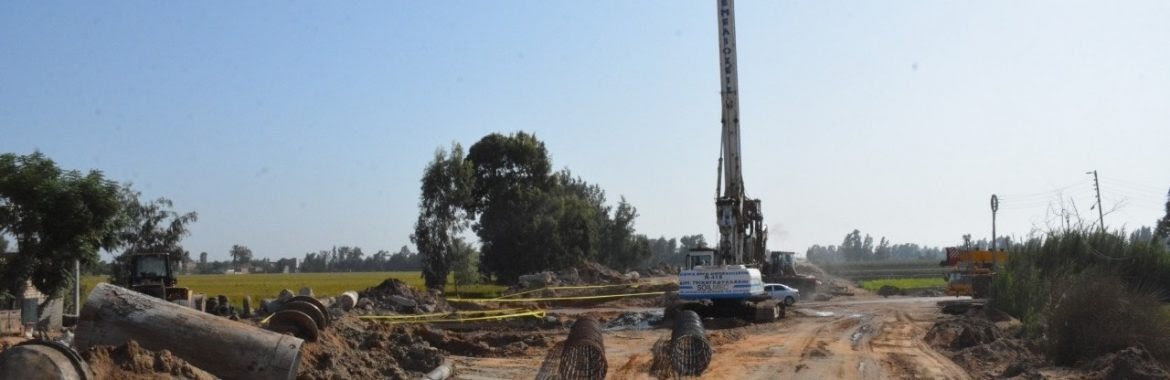
Land expropriation, not Mohamed Ali protest calls, behind demonstrations in Aswan village
On 1-year anniversary of the September 20 protests, Aswan villagers protested for a different reason
Video | The letter you sent …
After settling in Cairo, cassette tape recordings became Ali's lifeline to his family in Aswan.
Your support is the only way to ensure independent, progressive journalism survives.
You have a right to access accurate information, be stimulated by innovative and nuanced reporting, and be moved by compelling storytelling. Subscribe now to become part of the growing community of members who help us maintain our editorial independence.
Join us