
Students slam officials for ‘burying their heads in the sand’ over exam crisis
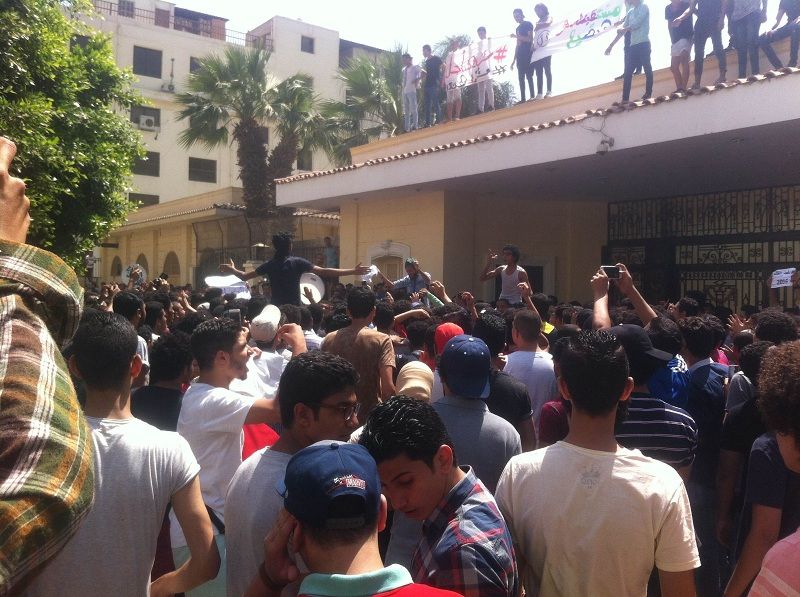
As dozens of high school students protested outside the Education Ministry and Cabinet headquarters on Wednesday, student leaders criticized Egypt’s education system in a press conference organized by the Egyptian Center for Economic and Social Rights (ECESR).
During the conference, dubbed, “The crisis of leaked high school exams,” students argued the leaking of thanaweya amma exams — which are standardized placement exams for universities — has exposed the failure of Egyptian education. They criticized the ministry for failing to respond to student demands and accused ministry officials of “burying their heads in the sand.”
Mohamed Walid, a student union leader from the Dokki district of Giza, says several student unions filed complaints with the ministry, but were told their complaints were unfounded by officials.
Students gathered on Falaki Street in Downtown Cairo after finishing an exam on religious education that had been postponed since June 5, and a number of others also protested outside the Journalists Syndicate headquarters, chanting, “We will not have our exams postponed. We will not retake our exams.”
Student Nour Mohamed was with a group that tried to march to Tahrir Square in downtown Cairo, but was prevented from doing so. An officer told him they should stay where they were and not march on the “Interior Ministry’s turf,” he says.
Although the protest was largely peaceful, according to Mohamed, who describes it as more of a “school outing,” security forces still chased students through side streets and dispersed them with teargas.
Bilal Ayman, who is part of a group called the Uprising of Alexandria’s Secondary Students, says security forces have violently dispersed several groups of students in recent weeks. Ayman says authorities told students in Alexandria they couldn’t protest without a permit, but when a fellow student attempted to get permission, security forces arrested him from his home.
“He was beaten and assaulted before they referred him to the prosecutor’s office, which then moved to released him. However, the National Security Agency insisted he be detained for another three days, without any regard for his exams,” Ayman says.
Earlier this week, the Ministry of Education announced the cancellation of a number of standardized exams after exam papers were leaked on social networking sites.
Abdul Rahman Omran, secretary of the Media Committee of the Federation of School Students, says the issue of leaked exams is not a new one, but that it used to occur mainly among upper and middle class students who could afford to pay to obtain a copy of the exam before it was scheduled to be taken. Social networking sites have now made leaked exams available to everyone, he explains.
Having standardized exams has failed students, says Mohamed Mostafa, an educational specialist at the Egyptian Commission for Rights and Freedoms. It doesn’t take into account individual skills and issues, he adds.
But Mostafa suggests that alternative systems will not considered due to “corruption and bribery.”
Some high school student unions have proposed a new electronic database of exam questions, where each student is given a question at random from the database, Omran says, adding, “Students are now familiar with the use of information technology, and we must make use of this.”
Student unions also proposed that student admission be determined by college acceptance tests as well as school placement exams, Walid says, adding that the ministry did not even acknowledge any of these suggestions.
Ghosoun Tawfiq, an educational specialist at ECESR, says the crisis of leaked exams reflects a larger issue in the management of education in Egypt, which he says is the responsibility of the executive authorities, represented by the minister of education.
Tawfiq explains that the Egyptian state is shirking its responsibilities regarding educational expenditure, as stipulated in the Constitution. “This is supposed to be 4 percent of the state’s budget for secondary education, with 2 percent for university and higher education. Yet Tunisia, for example, allocates 5.7 percent of its state budget to secondary education.”

Mai Shams El-Din
Mai graduated from the American University in Cairo with a degree in journalism. She worked mostly for local English-language news outlets but has also been writing in Arabic, particularly when…
تقارير ذات صلة
Book review: AUC and its students — irrepressible bubbles and inevitable politicization
Moataz Bellah’s bold introspective narrative tracks the rise and fall of the student movement in AUC
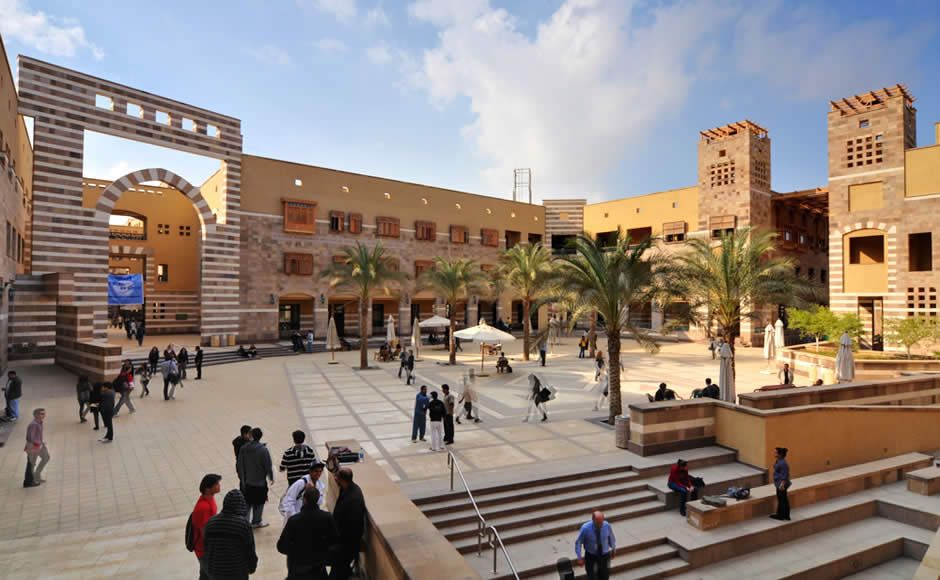
AUC Board of Trustees reaffirms confidence in university administration against faculty, student vote
The university’s Senate voted to withdraw confidence from AUC President Ricciardone last week
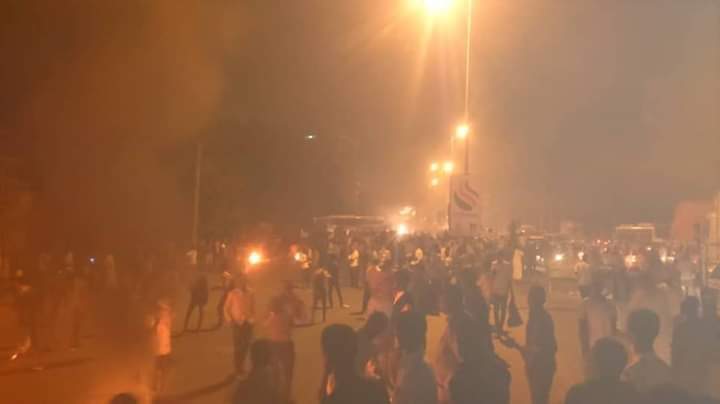
12 killed in nationwide anti-austerity demonstrations in Sudan as police use tear gas and live rounds to disperse protesters
Popular protests in Sudan sparked by inflation, food shortages and rising prices enter third day
Your support is the only way to ensure independent, progressive journalism survives.
You have a right to access accurate information, be stimulated by innovative and nuanced reporting, and be moved by compelling storytelling. Subscribe now to become part of the growing community of members who help us maintain our editorial independence.
Join us