
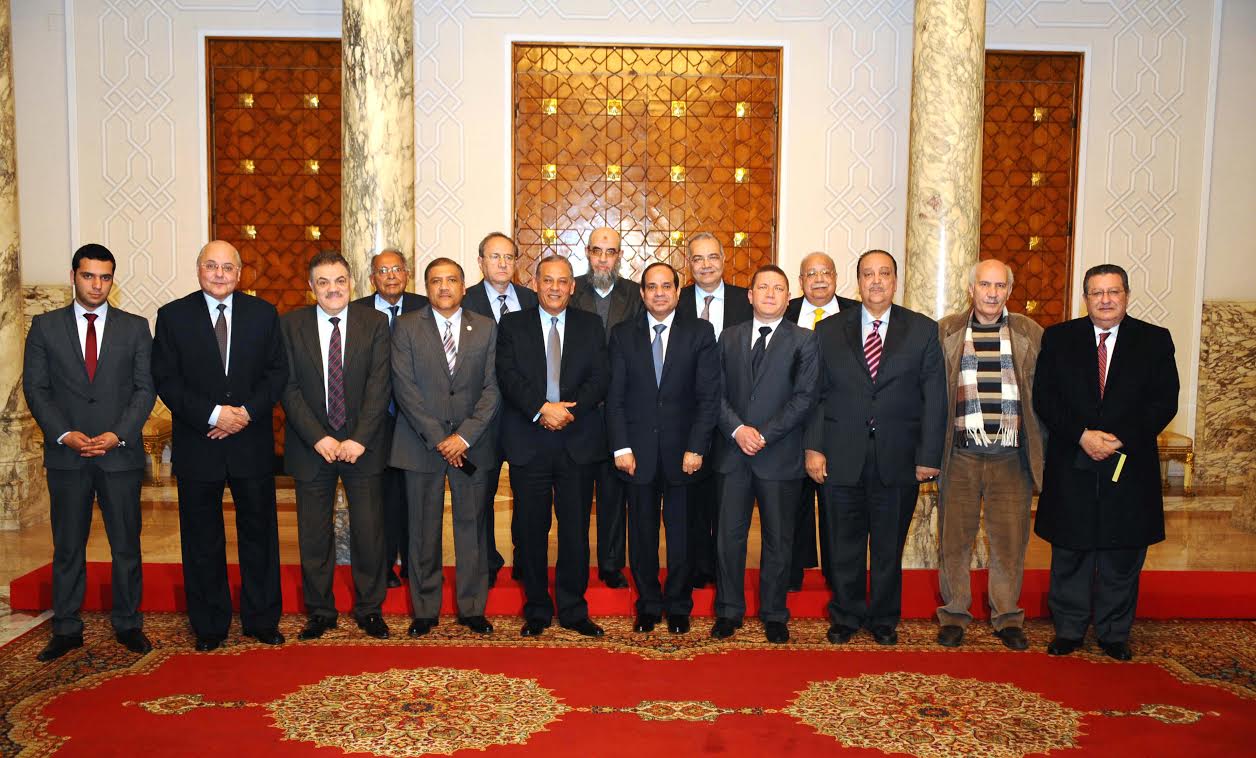
Campaigning started this week for the parliamentary elections. With voting in the first round slated for mid-October, Egypt will soon have an elected legislative body that could profoundly impact the prevailing power dynamics.
The 2014 Constitution gave parliament an assertive role in the political sphere. Article 131 grants parliament the right to withdraw confidence from the government. The president can’t reshuffle the Cabinet without parliament’s approval, according to Article 146, and if the parliamentarians reject a given Cabinet, the majority bloc can nominate a prime minister to replace the president’s choice. The president also can’t exempt ministers from performing their duties without parliamentary approval.
And parliament’s powers don’t stop there. MPs can modify drafts of the state budget, and furthermore, constitutional Article 127 states that “the executive authority may not contract a loan, obtain funding or commit itself to a project that is not listed in the approved state budget entailing expenditure from the state treasury for a subsequent period, except with the approval of parliament.”
The president can’t declare war without a two-thirds majority vote from the parliament, and declaring a state of emergency requires a review from parliament within seven days. The parliament can’t be dissolved during a state of emergency. In non-emergency situations, the president can only dissolve parliament with a referendum.
Columnist Abdullah al-Sinawy thus calls Egypt’s political system semi-parliamentary and semi-presidential, a system that might be of concern to President Abdel Fattah al-Sisi.
In a meeting with university students in mid-September, Sisi alluded to problems in the Constitution, asserting that “the Constitution was written with good intentions,” but that “the country cannot be run on good intentions.” State TV chose to edit that statement out of his speech during broadcast, but pro-Sisi figures then latched onto the comment, calling for constitutional changes to limit potentially dangerous powers of parliament.
Khaled Dawoud, former Dostour Party spokesperson, says that Sisi expects parliament to strongly support him in all his decisions. Dawoud believes the incoming parliament will essentially serve as a “guarantee that everything Sisi wants is executed,” and that the elections law was specifically tailored to ensure this by allocating 80 percent of the seats to individuals, and only 20 percent to electoral lists with distinctive political power.
The fact that the Salafi Nour Party ultimately decided to only run in two districts, instead of four, at the advice of security authorities could be an indicator of Sisi’s fear of a politically powerful, potentially dissenting parliament, says Dawoud. He points to the fact that security checks were conducted on all candidates on electoral lists as another sign of this anxiety.
Mohamed Menza, a political science professor at the American University in Cairo (AUC), believes that statements issued by the Sisi administration and the Cabinet’s rush to pass a spate of laws before the new parliament convenes indicate that Sisi might think the costs of building up this political body might outweigh the benefits.
According to Sinawy, Sisi refuses to allow the formation of a political movement that officially represents him because of the “negative experience of the [formerly ruling] National Democratic Party,” whose political corruption contributed to the fall of former President Hosni Mubarak.
In February, controversy erupted when the staunchly pro-Sisi For the Love of Egypt electoral list wanted to use Sisi’s photo in their campaign materials. At the time, bloc member Emad Gad said that “the use of Sisi’s photo is not a monopoly of one list or a political faction, but the right of any electoral bloc.” In response, the authorities then banned the use of Sisi’s photo in any campaign in order to allow the president to remain impartial.
But most incoming parliamentarians will likely back Sisi of their own accord, without waiting for the president to ask, say Sinawy and Dawoud.
Several of the political parties and alliances contesting the elections were quick to declare their desire to amend the Constitution after Sisi’s statement during his meeting with students. For example, Judge Ahmed al-Fadaly, head of the Independence Current Coalition and the general coordinator of the Egypt electoral list (an alliance between the coalition and the Egyptian Front) told the privately owned newspaper Youm7 that “the Independence Current is currently conducting a comprehensive review of the Constitution to determine the most important articles in need of modification, so that members of the Current in the upcoming parliament would work toward such amendments.” Fadaly has also declared that the list’s campaign slogan is, “We will change the Constitution.”
But although many parties have been quick to vow their loyalty to the president, Menza believes that there is not yet any one party that is ready to play an analogous role to that of the NDP.
“You can say what you want about the NDP and its corruption, but it functioned as an organizational machine that was able — through many networks, roots and connections — to run parliament, pass laws, organize elections and compose blocs,” he points out. But now, Egypt only has “lists that have been painstakingly formed, none of which have any clear political organization.”
And aside from supporting the president, Sinawy believes that the incoming parliament has a more important problem: winning over public opinion. Without the public’s trust, he says, important political decisions may be made outside of parliament, a pattern that could constitute a major threat to Egypt’s future.
تقارير ذات صلة

Who controls Egypt’s religious institutions? How the top of the executive, security apparatus loom over the 3 institutional houses of Islam
Objection to the potential selling of endowments has primarily come from Al-Azhar.
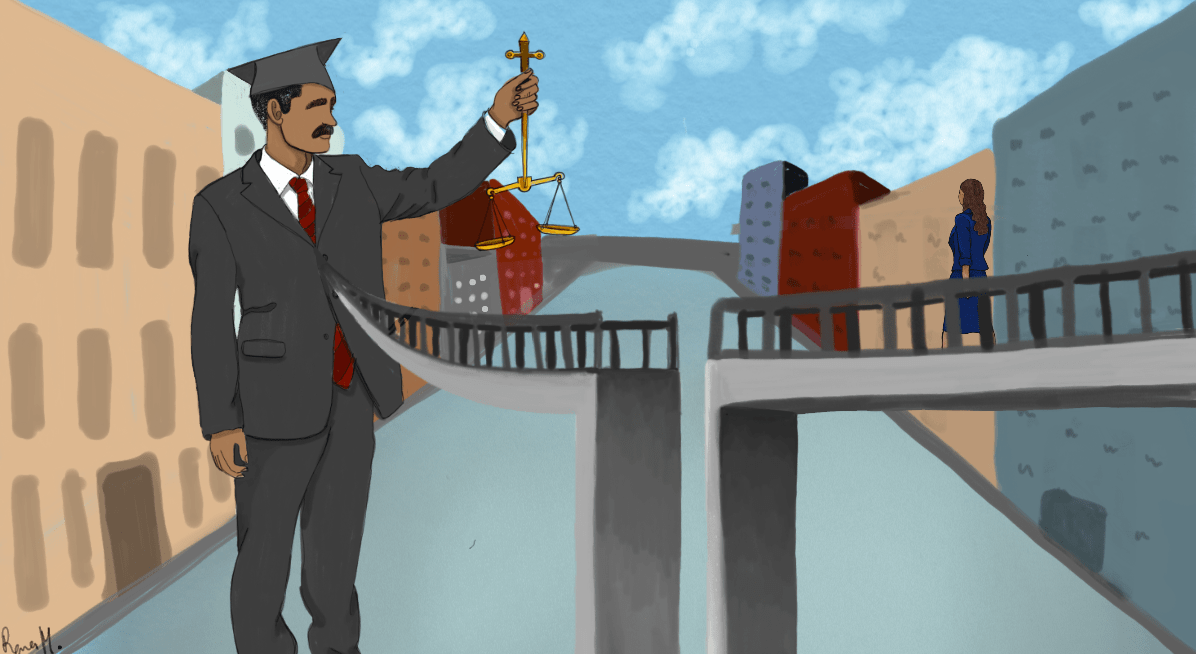
How the justice system shuts women out
Among the 335 new appointees, all graduates of public law schools, there was not a single woman.
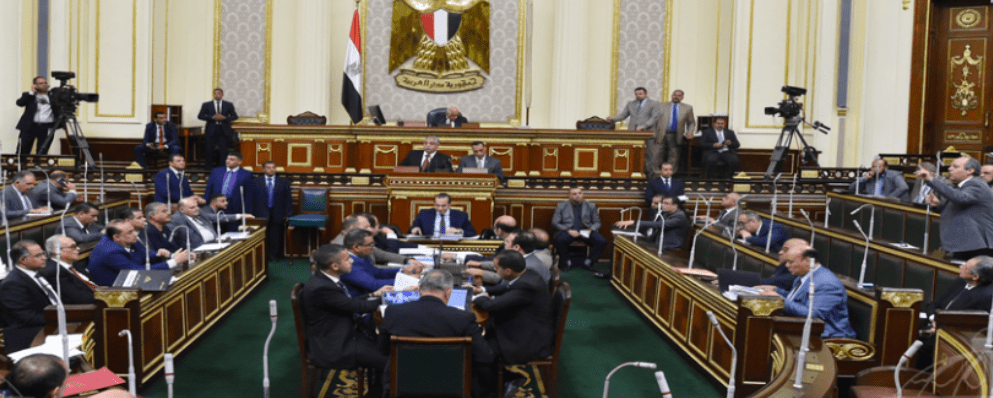
Sisi seems to reverse position on local council elections, speaker blames ‘deep state’ for delay of bill in Parliament
The delay may point to a power struggle between security and intelligence agencies, sources say.
Your support is the only way to ensure independent, progressive journalism survives.
You have a right to access accurate information, be stimulated by innovative and nuanced reporting, and be moved by compelling storytelling. Subscribe now to become part of the growing community of members who help us maintain our editorial independence.
Join us