
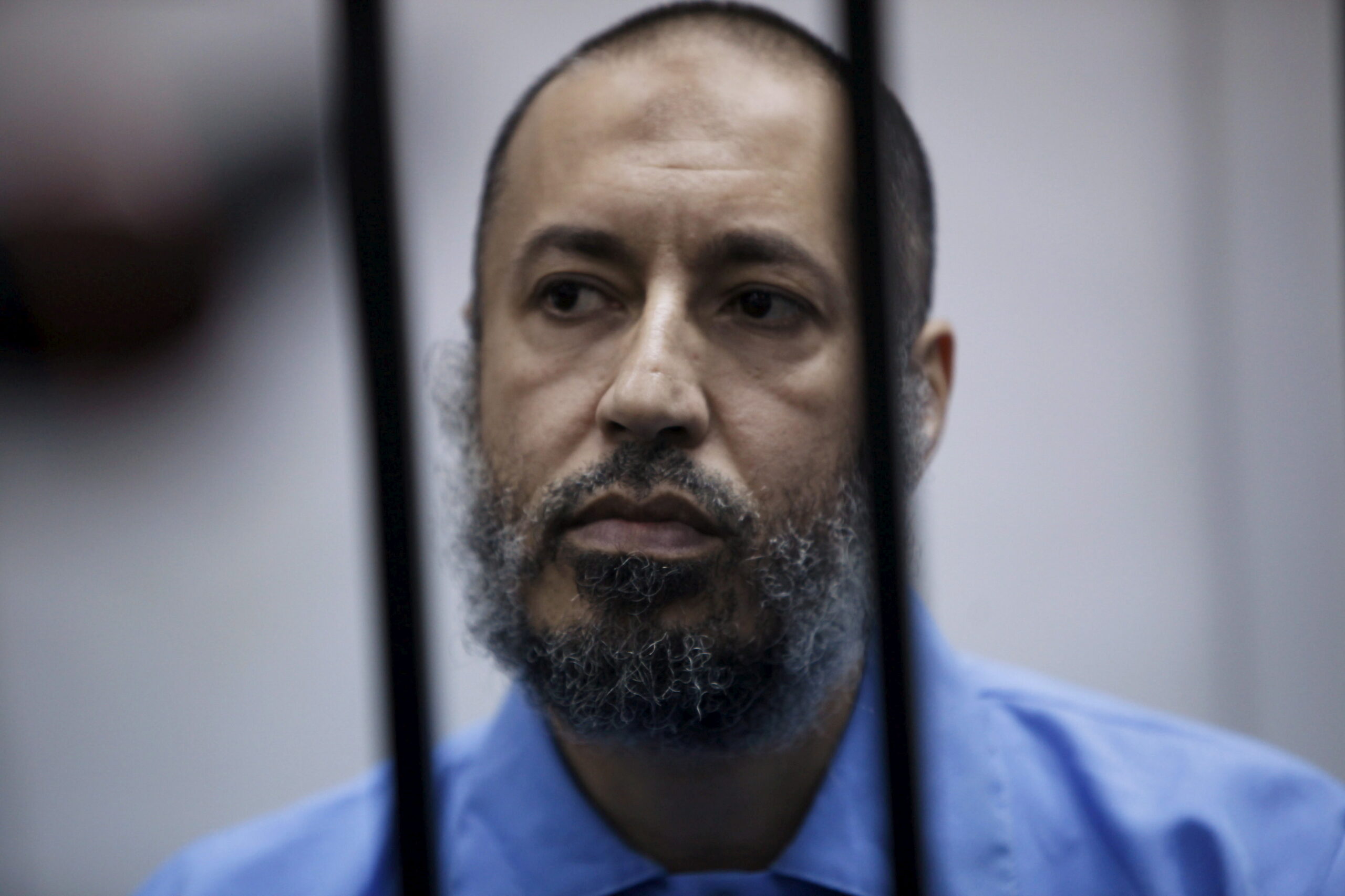
Release of Qadhafi’s son down to ‘personal deals’ amid faltering prospect of December election, political infighting
After seven years in detention, Al-Saadi Qadhafi, the son of former Libyan leader Muammar Qadhafi, was released by Libya’s Tripoli-based government on Sunday night. Shortly after his release, Al-Saadi was flown to Istanbul on a private plane belonging to the Libyan government, accompanied by Libyan Justice Ministry Undersecretary Ali Ishtiwi.
After the release of Al-Saadi — who was acquitted in 2018 and whose release has long been discussed as imminent — and the simultaneous releases of Ahmed Ramadan, who was the private secretary of Muammar Qadhafi, and Major General Naji Harir Qadhafi, who led a battalion loyal to the former leader in 2011, the Government of National Unity said it met to discuss the releases, framing “human rights and the course of justice” as an important part of efforts by Tripoli authorities to bring about a national reconciliation that is intended to pave the way for popular elections ambitiously scheduled for the end of this year.
Yet, director of the Policy Support Office of Libya’s Presidential Council Mohamed Ibrahim al-Darrat told Mada Masr that the releases did not come within a framework for national reconciliation nor within an official institutional framework on the part of the state, but rather as part of “personal deals” related to “the elections [at the end of this year]” and to “social and tribal pressures.”
The Government of National Unity —which was formed by a United Nations-steered appointment process in February — is facing mounting pressure as the December elections near and political intrigue builds over the possible formation of a parallel government that would threaten the superficial unity that that has superseded the failed 14-month bid to take Tripoli mounted by the self-styled Libyan National Army forces affiliated with the Government of National Accord and Turkey.
The GNU’s decision to release Al-Saadi and other key figures of the pre-2011 regime, who still enjoy sizable influence in Libya’s fragmented socio-political landscape, came two days after, Fathi Bashagha, the former GNA interior minister also announced that he had met in Misrata with leaders from the Qadhadhfa tribe to discuss the release of former officials imprisoned since 2011 as part of his efforts toward national reconciliation. Bashagha failed to win the appointment to head the GNA earlier this year and has been holding consultations with several international players including Cairo in recent weeks as friction builds to undermine the GNU and Dbaiba as the elections scheduled for the end of the year draw closer.
During Bashagha’s tenure at the head of the GNA Interior Ministry, which came to an end when the GNU assumed power in Tripoli this February, he submitted a request to the Libyan public prosecutor calling for the release of Al-Saadi and imprisoned former regime officials.
According to a source close to the family of GNU Prime Minister Abdul Hamid Dbaiba, who spoke to Mada Masr on condition of anonymity, the release deal was less a coup for the GNU than part of negotiations that Dbaiba made in order to secure his surprise appointment to head the GNU in February in exchange for support of members of the pre-revolution regime.
The source close to Dbaiba’s family and another governmental source from Tripoli told Mada Masr that Dabaiba and his advisor and cousin Ibrahim Ali Dbaiba played the most prominent role in the release deal and the negotiations with Turkey, where Saafi Qadhafi traveled after his release. The two sources both denied that Bashagha had played a part.
According to the source close to Dbaiba’s family, Dbaiba informed leaders of the Qadhadhfa tribe during a meeting on September 1 that the releases would take place after a series of meetings in Cairo and Istanbul between Ibrahim Dbaiba and members of Qadhafi’s family, including his mother Safia Farkash and his sister Aisha.
The Tripoli source said that releases of Al-Saadi and the other officials, while symbolic among supporters of the former regime, were not of great political significance, adding that Qadhafists have been divided as a result of the major shifts in the political and security situation that Libya has witnessed since the 2011 revolution.
The releases also coincide with a gradual rapprochement between the various regional actors who have interests in Libya, namely Cairo, Ankara, Doha and Abu Dhabi.
The source close to the Dbaiba family said that the releases were originally planned to occur when the prime minister took office in February but were postponed, “because there were arrangements to transfer him to Doha due the Qataris’ demand,” but authorities in Tripoli refused to do so at the time. The source, however, said they did not know why Qatar wanted Al-Saadi to be sent to Doha.
Darrat, the director of the policy support office of the GNU Presidential Council, told Mada Masr that he didn’t know anything about Qatar playing a role in the deal. “Turkey was asked to host Al-Saadi Qadhafi so that he could reside there freely without talking to the media,” Darrat said, adding that he also acknowledged the possibility that Al-Saadi could soon leave Istanbul for Cairo, where his mother resides.
Al-Saadi, who also enjoyed an abortive career as a forward in the Italian B league side Perugia AC with only one cap as a substitute before he was banished for doping, has been held in Ruwaimi prison in Tripoli since 2014, when he was extradited from Niger, where he had fled after the fall of his father’s regime in 2011. In 2018, the Libyan Justice Ministry acquitted him of charges of “premeditated murder, deception, threats and enslavement.”

تقارير ذات صلة

Saif al-Islam: The death of a myth
Saif al-Islam Qadhafi, from power’s pinnacle to Zintan’s mountains and the shadows of myth
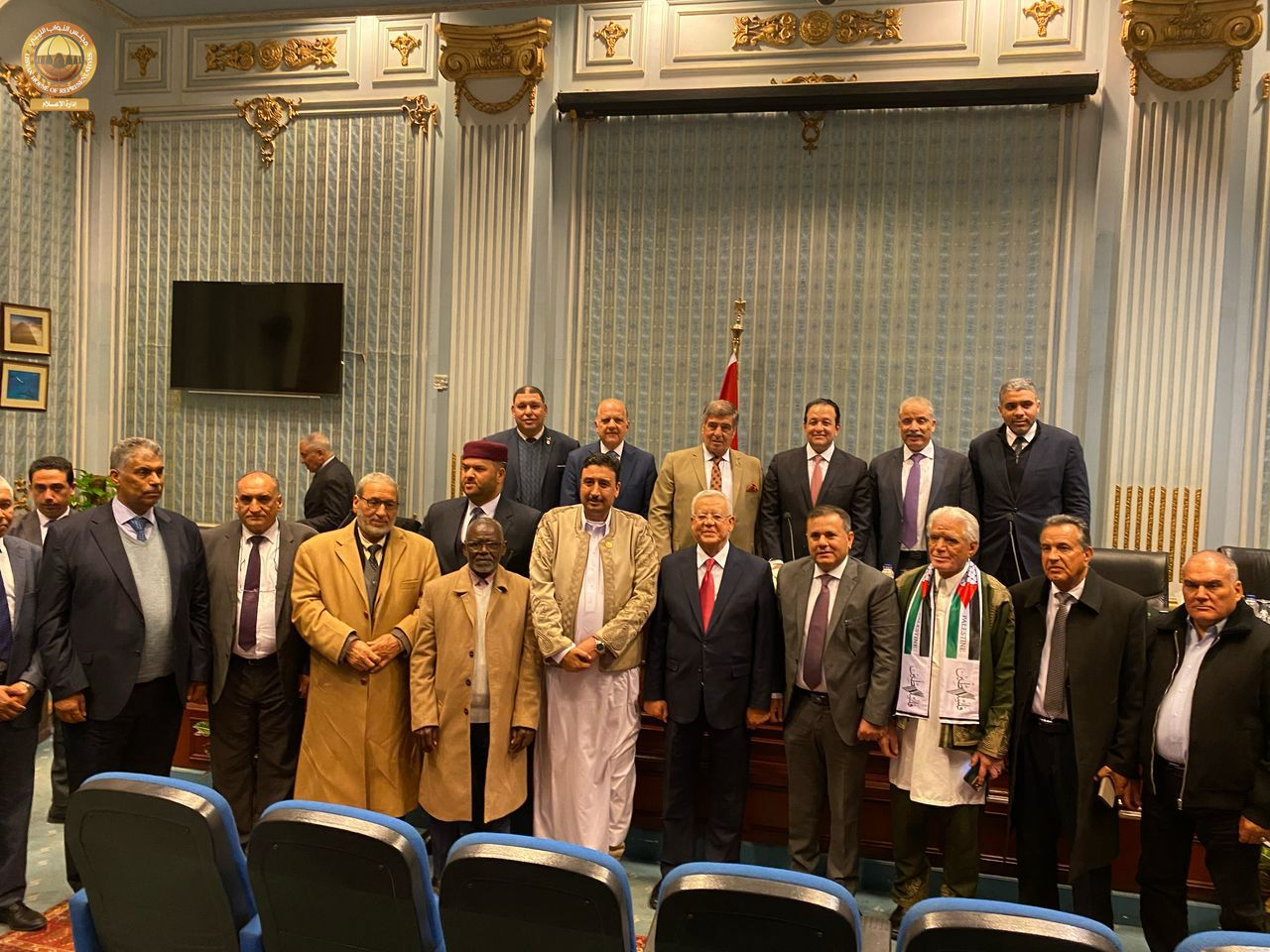
Analysts: Egypt aids obstructionist efforts of Libyan legislatures to stall UN-led political process
The political process to determine Libya’s future should be the “exclusive ownership” of Libyan official institutions, members of the country’s two legislative bodies declared Tuesday at the conclusion of two…

A ship apart: The making of a wreck
Accountability for the tragedy spans various actors across the Mediterranean
Your support is the only way to ensure independent, progressive journalism survives.
You have a right to access accurate information, be stimulated by innovative and nuanced reporting, and be moved by compelling storytelling. Subscribe now to become part of the growing community of members who help us maintain our editorial independence.
Join us