
Q&A on the crisis in Tunisia
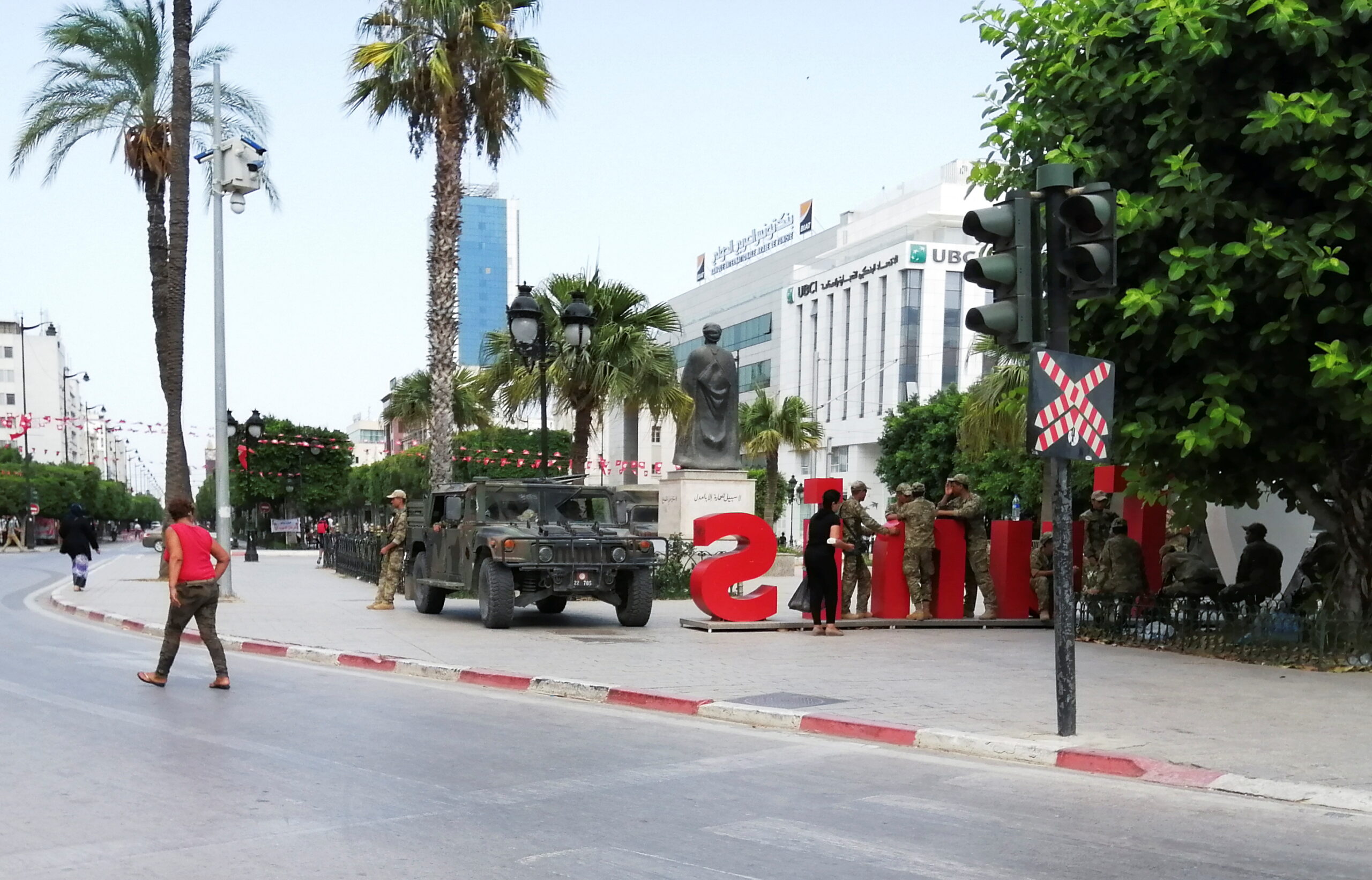
The situation in Tunisia remains tense days after President Kais Saied on Sunday fired the prime minister and other top members of government, suspended parliament and lifted the immunity of its members for a period of 30 days. The following day, Saied announced a series of other measures, including a month-long nationwide curfew from 7pm to 6am and a ban on public gatherings.
The move followed nationwide protests over Tunisia’s struggling economy and the government’s handling of the coronavirus pandemic. The government recently announced a series of subsidy cuts to food and fuel as it sought another loan from the International Monetary Fund.
Ennahda, the dominant party in parliament, called Saeid’s actions “a coup against the Tunisian democracy and its Constitution” and urged him to reverse his decisions immediately.
For context on the latest developments in Tunisia, we spoke on Monday with Thameur Mekki, chief editor of Nawaat, an independent Tunisian media outlet.
Mada Masr: Does what happened align with what protesters had been demanding? Were these protests bigger than previous movements over the past years?
Thameur Mekki: The protests in Tunisia have been in flux. But the chapter of protests that started in December 2020 is largely unique. For one thing, they — not unlike the protests of the revolution — don’t have any particular political affiliation and so are disconnected from civil society organizations and political parties. These protests did not come out in a structurally organized form, but several demands were made clear. The protests have mostly enjoyed support from prominent civil society organizations, such as the Tunisian Human Rights League, the Tunisian Forum for Economic and Social Rights, the Tunisian General Labour Union and the Tunisian Press Syndicate, among others. But these organizations don’t really have the ability to mobilize popular protests or call their tune.
MM: Does Saeid continue to enjoy popular support? What are the public’s grievances against the Ennahda Party?
TM: Since his election, Kais Saeid has upheld a distinguished moral value in the hearts of many people. Expressing his wish to take matters into his own hands by means of critical measures has recently lost him some of that reverence. The long wait to take some action, on the other hand, also cost him some popularity. But [Sunday’s] decision was widely positively received. This, of course, has to do with the profound health crisis facing Tunisia, but also the economic and social crises. Ennahda Party continuously paralyzed state institutions — especially the principal political institution, the now suspended Parliament — through alliances geared toward personal interests rather than public affairs.
There was a need to convene several institutions. Ennahda, being invested in maintaining the status quo, blocked any progress on that front. The Constitutional Court, for instance, should have been selected in 2014. Ennahda sought favorable selections and, when they failed, these institutions remained idle. Having a parliamentary majority, Ennahda bears the responsibility for that. They have been the primary contributor to the obstruction of conventional political, legal and constitutional avenues and thus to how things have ended up. Despite the wide positive reception to the measures Saeid took, rights advocacy groups are somewhat concerned about the discrepancy between these measures and Article 80 of the Constitution.
MM: Explain the controversy around Article 80 of the Constitution.
TM: One of the main reasons [for the controversy] is that the decision was made against [the wishes of] the prime minister and the parliamentary speaker. The president’s office claims that the president consulted them; personally, I think that’s unlikely. Speaker Rachid al-Ghannouchi says that he wasn’t consulted about the measures, as required by Article 80; I think that’s more likely what happened. But in the midst of all this, Saeed and Ghannouchi must, at some point, prove whether or not consultation took place. There’s also the fact that Article 80 provides a role for the Constitutional Court, which — as I said — has yet to be selected. Article 80 also doesn’t allow for suspending Parliament. It stipulates that Parliament shall be in a state of continuous session. So Kais Saeid did wield Article 80. It’s possible that this may have been an abuse of power, but it’s too early to label it a coup, in my opinion.
MM: So you don’t see this as a coup.
TM: I see the risk of a potential coup-type situation. But the current state of affairs doesn’t constitute a full-fledged coup. There’s an abuse of power in wielding a constitutional article, though not a total and complete disregard for constitutional norms. What would answer the question as to whether these abuses of power or of Article 80 amount to a coup are the presidential decrees to come in the next hours. That’s what would tell us exactly how much Saeid has abused his authority. What matters most is for these decrees to lay out a democratic transition plan or a road plan for the next chapter. A road plan would be reassuring, if only relatively. Most countries have been diplomatic about this. None have denounced [the measures]. A lot of countries only expressed concerns or called for calm, but didn’t declare what happened a coup.
Essentially, we’re still waiting on the decrees to come, whether they would bring a road map, how wide a circle around Saeid would give its blessing and take part in the road plan, if any. That’s what to anticipate in the next hours and what will shed light on the situation.
MM: What’s the military’s part in all of this? Are there fears that it may play a prominent role in the ongoing crisis?
TM: The military has, to date, never played a part in governing the country — it has never even had a prominent political role. The general narrative of the military is that it doesn’t get involved in politics. But, although it has never itself been a political decision maker, this institution has at times been used by tyrannical authorities as a tool for repression, though these have been rare occurrences. The Tunisian military is generally uninvolved in the political game and in political decision making. Fears around the military are fears of the unknown. There have been no attempts to take power or even take over decision making in the military’s history. Its tradition and handling of things don’t lend themselves to such concerns under the circumstances. The fear now is of the unknown, of the abandonment of the constitutional framework for something else.

تقارير ذات صلة
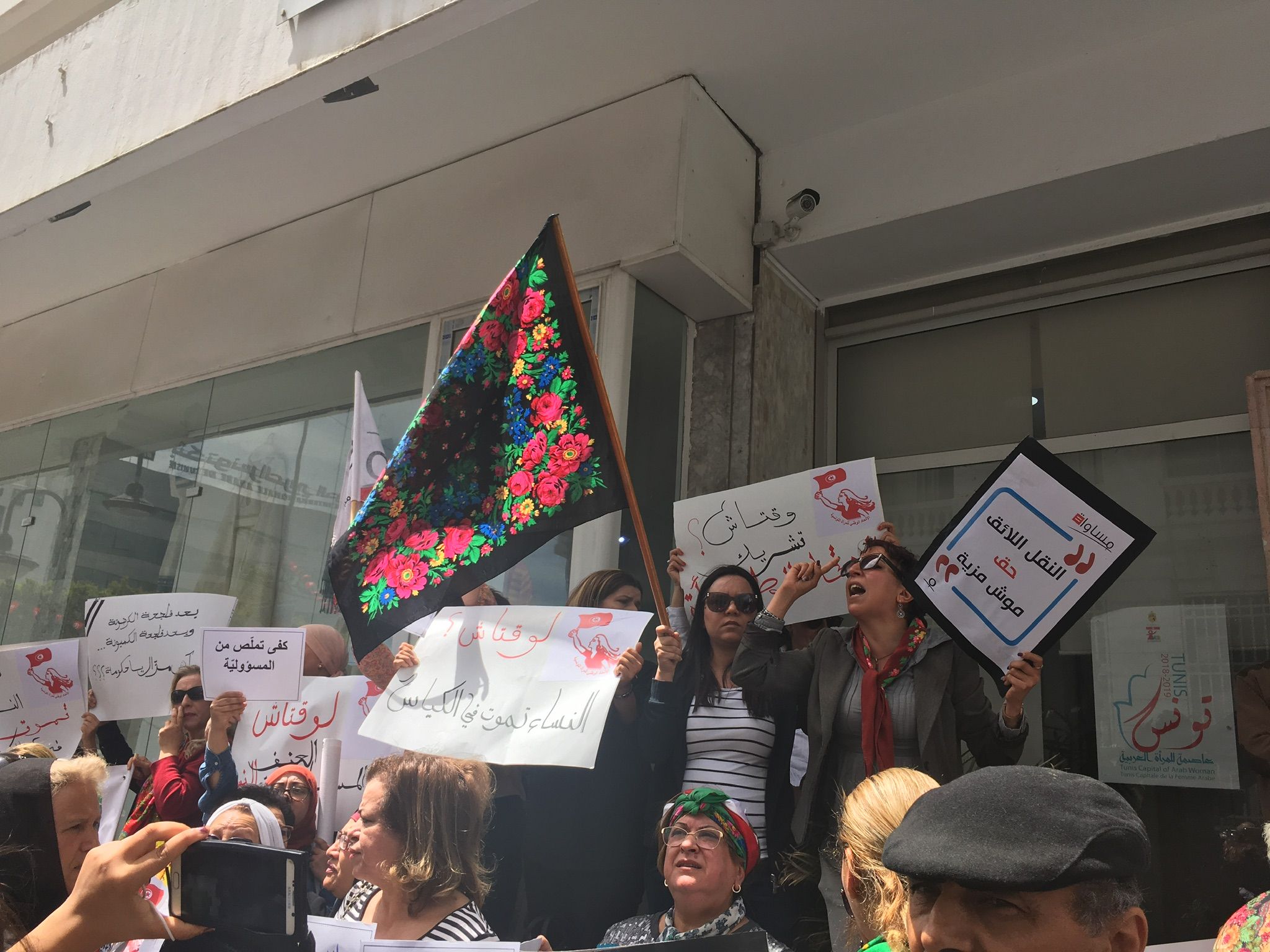
Gendered Labor and Structural Violence: The case of women farmworkers in Tunisia
The deaths sparked a national outcry in a country often thought of as a pioneer in women’s rights.
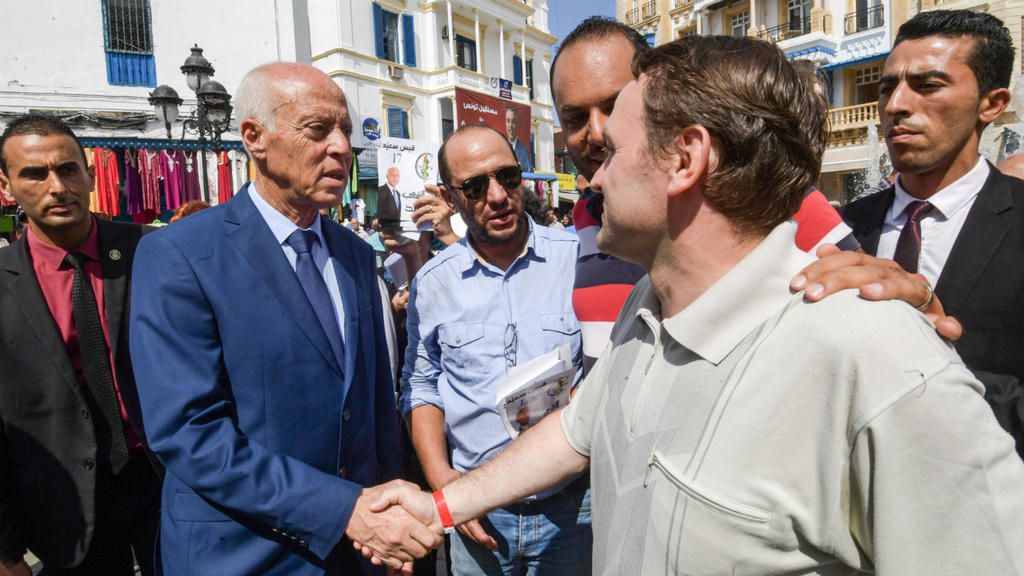
Voters in Tunisia shun traditional leaders as political outsiders advance to runoff
Two political outsiders advanced to the final round in Tunisia’s presidential elections.
Failed father figures and nuanced storytelling: Bezness as Usual
“Bezness,” the Arabization of the word “business,” took on a specific meaning in 1970s Tunisia.
Your support is the only way to ensure independent, progressive journalism survives.
You have a right to access accurate information, be stimulated by innovative and nuanced reporting, and be moved by compelling storytelling. Subscribe now to become part of the growing community of members who help us maintain our editorial independence.
Join us