
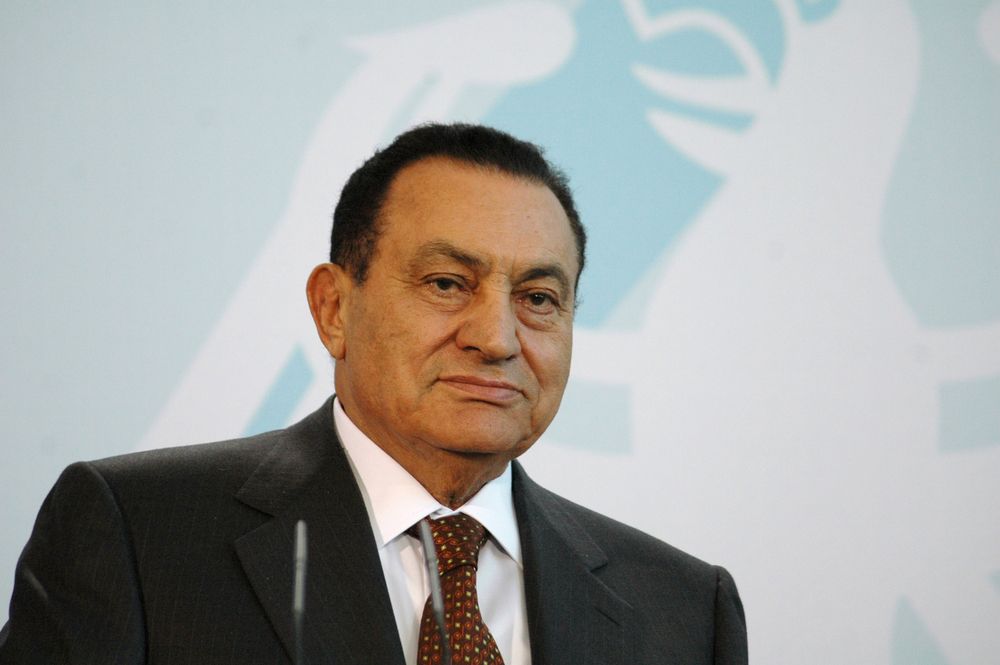
Politics and law in Mubarak’s trial
Due to its highly political nature, the many phases of the trial of former President Hosni Mubarak, his sons, his minister of interior and aides has been closely watched, capturing the attention of both local and international media.
The defendants in so-called “trial of the century” are accused of killing protesters, appropriating profits from the sales of natural gas to Israel and squandering public funds.
Legal expert Issam al-Islambolly argues that it is the court’s duty to keep pending legal cases isolated from any external influence, and it is the judiciary’s responsibility to inhibit this sway with actions such as adjournment or recusal.
But it might be inevitable for such cases to be influenced by the political context, according to Mohamed Monieb, a former member of the late Iraqi President Saddam Hussein’s defense team.
“In third world countries, the law would undoubtedly be infused with politics if the defendant in a criminal case is a senior official, like the president of the country,” he says.
In the Mubarak case, Monieb thinks this is the result of the lack of courts specialized in political cases, or criminal cases of a political nature. It is also the result of not bringing into effect a 1956 bill that would establish a specialized court for the legal proceedings involving the president and ministers.
In the first hours following Mubarak’s ouster on February 11, 2011, the public prosecutor and the public attorney’s offices were flooded with reports of charges against Mubarak and his aides. Abdel Meguid Mahmoud, the public prosecutor at the time, insisted that Mubarak was not above the law. Nevertheless, Hoda Nasrallah, one of the plaintiffs in Mubarak’s case and a lawyer with the Egyptian Initiative for Personal Rights, thinks that the legal procedures of the trial intersected with politics from the beginning.
Nasrallah claims that legal procedures in the case of the killing of protesters had already started even before the public prosecutor decided to include Mubarak in the list of defendants, and the Ministry of Interior had already been indicted within days of issuing the referral order. She thinks this would have been impossible if millions of protestors had failed to oust Mubarak, or if they had granted him a safe exit.
The political situation influenced the defense team’s arguments at different stages of the trial, adds Nasrallah.
“In 2011, during the violent clashes between protesters and security forces in Mohamed Mahmoud Street and around the Cabinet, and with the increasing accounts of a third party involved, the defense took advantage of the situation and accused a third party of killing the protestors. Last year, when all fingers started pointing at the Muslim Brotherhood and Hamas, accusing them of plotting to kill the protestors, the defense changed its rhetoric to adopt those accusations,” she says.
Monieb agrees that over the last three years, the course of the trial followed the highs and lows of the street activism movement.
“During the first year, when Tahrir Square was teeming with protestors, there were signs of strictness in the trial of the defendants,” he says, noting that after former President Mohamed Morsi came to power, such signs receded.
Monieb explains that he had submitted a request as a parliament member to bring the 1956 bill into effect and establish a specialized court for the president’s trial. But a bloc of parliament members from the Muslim Brotherhood, together with Saad al-Katatny, a leading Brotherhood member and the speaker of Parliament at the time, ignored his request.
Monieb interprets this as an attempt to close the cases against Mubarak’s regime during Morsi’s administration.
“There were several accounts about many of Mubarak’s associates being represented by lawyers affiliated with the Muslim Brotherhood, like Essam Sultan, Selim al-Awa and Mohamed Mahsoub, in an attempt to settle the accounts between both regimes,” Monieb claims.
But then, Morsi’s ouster and the ensuing crackdown on the Brotherhood and other opposition forces intersected with Mubarak’s trial. Thousands of Morsi’s supporters were put on trial, and mass death sentences were issued in some cases. At the same time, prominent figures of the January 25 revolution, opposed to both Mubarak and Morsi, were arrested.
Lawyers agree that the interference of politics in the criminal features of the Mubarak trial has increased over the course of last year.
“After the events of June 30, 2013, allies of the Mubarak regime were all over the media, and it became obvious that the Egyptian masses are increasingly accepting their acquittal of corruption and murder charges,” says Nasrallah.
After June 30, the judge in the Mubarak trial decided to refer the civil case to another specialized court, which only allows the defendants’ attorneys to present their case.
Monieb was surprised at the defense team’s course of actions throughout the trial.
“The attorneys did not present any legal defenses, they rather talked about political opinions and analysis. This was the core of the speeches of Mubarak and Adly,” says Monieb.
In addition, Mubarak kept to his usual discourse, in which he describes himself as an old man who has served his country, protecting Egypt from wars and conflicts, Monieb adds.
In 2011, it would have been impossible to broadcast the defense speeches of Mubarak and his co-defendants in such a manner, Nasrallah says.
Islambolly insists that the decision to allow the defendants to speak in their own defense is unprecedented in the history of criminal courts. He explains that the court only allows the defendants to speak during questioning, or in case they wish to point out further details omitted by their attorneys.
In the case of a deviation from the legal course, it is the court’s duty to interrupt the defense, which did not happen when Mubarak, Adly and their associates gave their statements.
The defendants’ speeches were political and emotional, adds Islambolly, and not directed to the court as much as to the public.
“Not to mention, their accounts of the January 25 conspiracy contradicts with what the judiciary acknowledged in the Supreme Constitutional Court, the Court of Appeals, the Supreme Administrative Court and the administrative courts in the State Council,” Islambolly continues. “And it contradicts also with the Constitution’s acknowledgement that January 25 was a popular revolution.”
Furthermore, Islambolly argues that broadcasting these statements, which were addressed to the people, through a satellite television channel owned by businessmen affiliated with Mubarak proves that politics was never detached from the course of the case. He mentions that the Sada al-Balad channel, owned by the businessman Muhammad Abu al-Enein, was granted exclusive rights to air the defendants’ speeches.
But the level of political interference in the Mubarak trial still has yet to be determined, as Saturday’s court session once again put off issuing a verdict in the now three-year long trial of the century.

تقارير ذات صلة

Welcome to Sharm el-Sheikh: President’s City, City of Peace, City of COP27
Beneath the mask the city’s donned for COP27 are the marks of years of uncalculated redevelopment
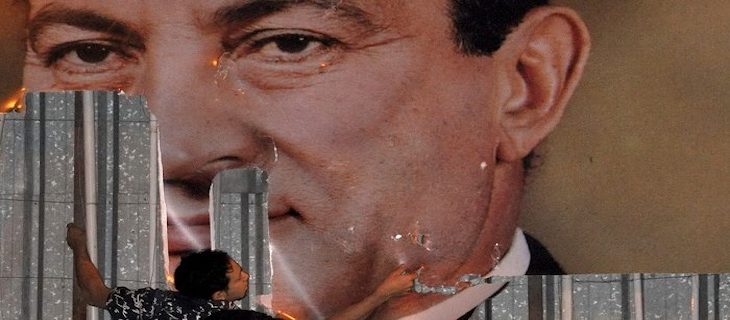
Inside a regime’s last days: Mubarak and his inner circle during the 2011 revolution
“When we went out on January 25, we weren’t thinking we would end Mubarak’s rule”
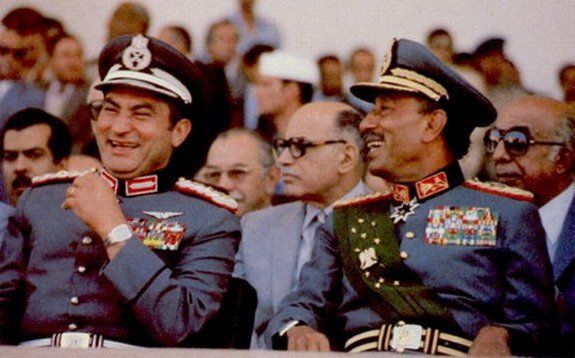
Hosni Mubarak (1928–2020): The rise and fall of Egypt’s longest-ruling president
Mubarak used fear of Islamists to justify a repressive police state.
Your support is the only way to ensure independent, progressive journalism survives.
You have a right to access accurate information, be stimulated by innovative and nuanced reporting, and be moved by compelling storytelling. Subscribe now to become part of the growing community of members who help us maintain our editorial independence.
Join us