
Pay $1,000, register as a refugee, or face deportation? Egypt’s undocumented migrants confront difficult choice as deadline looms
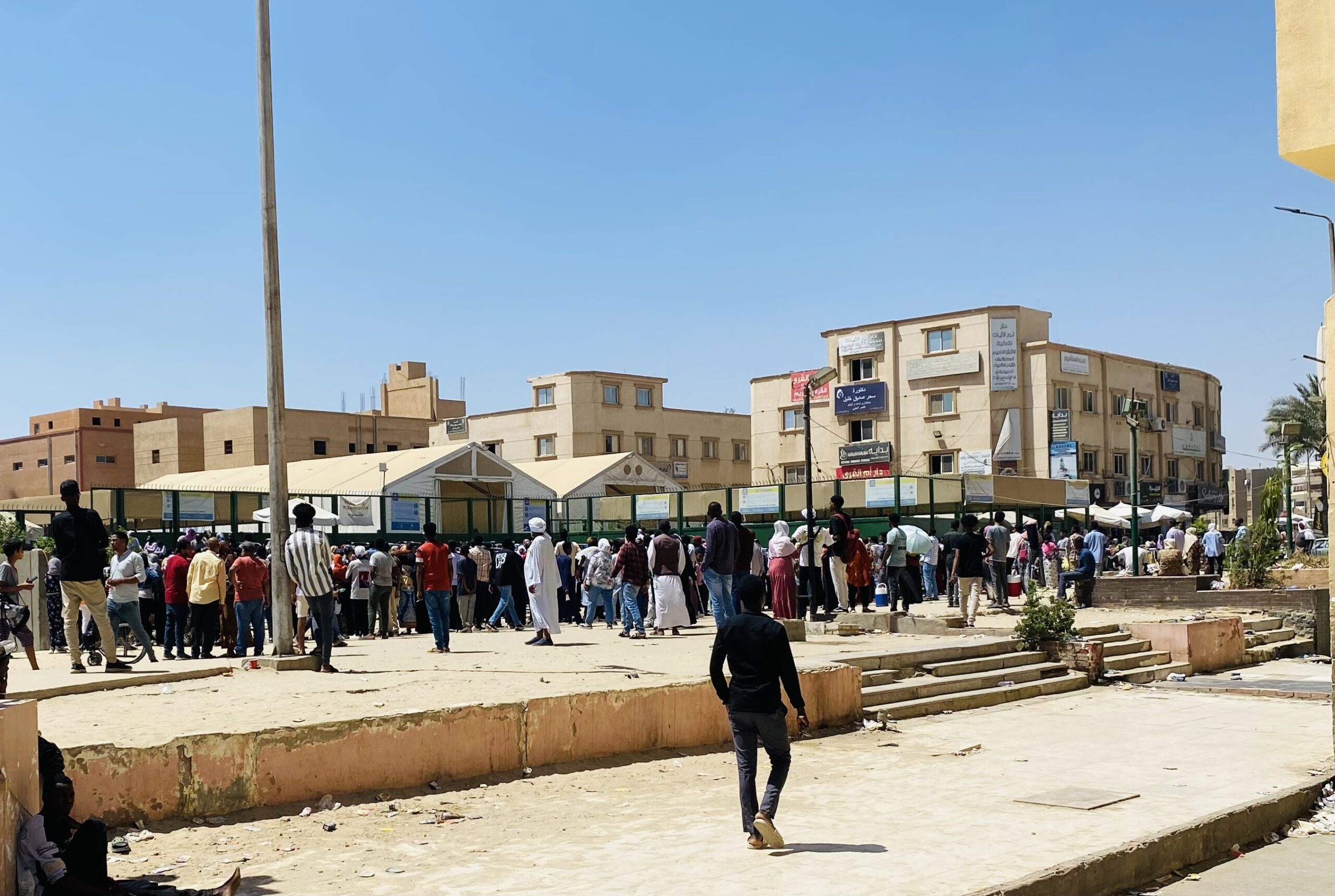
When Mada Masr visited the United Nations High Commissioner for Refugees agency offices in Cairo one morning last week, a crowd of hundreds, including many elderly and visibly ill people, was gathered outside at noon in the heatwave, waiting hours for their turn to enter the office and register.
They are just some of the hundreds of thousands of East Africans, Sudanese, and other nationalities in Egypt who now face a dilemma.
Under a new decree introduced last year, all migrants who are undocumented or whose residencies have expired must apply to “legalize their status” by June 30. The paperwork costs a minimum fee of US$1,000, and amid reports of ongoing arrest and deportation campaigns, undocumented migrants of various nationalities are increasingly concerned that they will no longer be able to live or move freely in Egypt.
Their other option — the more viable choice for many for whom $1,000 is unattainable — is to register as refugees. “If I had $1,000, why would I apply for refugee status? Why look for work here?” says one of hundreds of Sudanese people outside the UNHCR offices.
Government officials have repeatedly stated that Egypt is currently home to 9 million “guests” from around 133 countries, of whom a majority are long-term residents. Of these, only around 672,000 people from 62 countries are currently registered as refugees in Egypt. The rest have been able to live and work in the country in a relatively relaxed legal environment.
That was the case until September of last year when Decree 3326/2023 was introduced. Before then, Egypt did not have a comprehensive legal framework for dealing with migrants, an official working on refugee affairs at the rights organization Egyptian Commission for Rights and Freedoms explains to Mada Masr, speaking on condition of anonymity.
“The prime minister issued the decree and it was ratified in September in order to legalize and regulate the situation of migrants and irregular residents. It states that anyone who entered Egypt illegally, or whose residency has expired —except for refugees— must each pay $1,000, along with other required fees, and must obtain what is called ‘an Egyptian host,’ so a sponsor or a guarantor,” the ECRF official says.
The source explains that after the decree passed, “the state decided in November to give a three-month period for those affected to legalize their status, then it was extended for another three months ending on March 15. After March 15, the state came out saying it would extend the deadline for another six months. However, it later announced another extension of three months, only to end on June 30. This last deadline was published everywhere on local TV and radio channels.”
The Interior Ministry statement announcing the June 30 deadline said that all state services offered to foreigners who have not yet legalized their status will be cut off starting July 1.
If the deadline is not extended again, the groups of people who it addresses will face a serious problem, according to the ECRF source. “Let’s assume there’s a refugee family, they’re coming here escaping war and could not register as refugees because they couldn’t take any papers while escaping. If it’s a five-member family, that’s $5000 to settle, about LE250,000. If they had that kind of money they’d jump on the first boat to Europe instead.”
With undocumented migration increasingly becoming a policy issue in elections fought in Europe, the European Union has embarked on policies to outsource migration management, an aim that constitutes part of the new deal worth billions of euros between Egypt and the European Union.
EU officials have said that one of their priorities in this regard is to tackle smuggling. But the ECRF source notes that the new status requirement legislation could have the opposite effect, due to the requirement for applicants to obtain an Egyptian host. “You’re putting these people at the mercy of Egyptian hosts, which could bring us into human trafficking territory.” The source adds that this could lead to situations where hosts could abuse the migrant in many ways.
If a host is acting in good faith, meanwhile, they face a situation in which they could be held legally responsible for the actions of the person they sponsor, the source notes.
Officials have said they’re trying to establish statistics around the number of “migrants, refugees and foreigners, their geographical distribution and their impact on the economy,” though this isn’t an explicitly stated purpose of the regulation. An EU diplomat speaking to Mada Masr previously on condition of anonymity also said that the broader deal between the EU and Egypt will provide a framework for the EU to push Egypt to change the way it collects data on and provides services to asylum-seekers in the country.
MP Seham Mostafa likewise tells Mada Masr that data collection is likely part of the aim of the status regularization decree. “I expect that the new regulation is meant to survey the number of migrants in Egypt,” she says.
But she, as one of many Egyptians who have come to believe that the presence of migrants in Egypt is a major problem, is skeptical about the regulation’s effectiveness, and believes that the country is facing an “invasion” of countless irregular migrants taking over neighborhoods in Cairo who must be dealt with. She tells Mada Masr, “It is not enough to count every migrant, because many of them will not go to the government to register or settle their status.”
“We are a state weighted down by obligations and debts. We don’t have the capacity to help anyone,” she says, arguing that Sudanese, Syrian and Palestinian people who have fled wars and come to Egypt have overstayed their welcome.
Such sentiments, which have seen a growing presence on social media over the past year, have been amplified by the media, according to the ECRF source. They describe “a wave of hate-mongering and racist rhetoric spreading in the media, which I suspect may be intentional and did not happen naturally.” Several media outlets, including most prominently the intelligence-affiliated Cairo24, have seen an increase in media coverage focused on incidents that put the presence of migrant nationals in Egypt, and especially Sudanese people, in a negative light. “We wish for a direct statement from the state against this media rhetoric,” the source says.
The ECRF source also dismisses the claims that the state’s capacity is stretched by providing for irregular migrants: “What services are they offering to people without legal status? You can’t receive any without residency. Even if you are registered as a refugee, if your residency expires your SIM card gets suspended. Any services offered to refugees come through partnerships with the EU and UN institutions.”
With many unable to meet the conditions for residency due to the high cost and complicated host requirement under the legalization law, hundreds of thousands of foreign nationals who have fled to Egypt for safety from conditions in their country of birth are opting instead to apply for refugee status.
The new decree does not apply to refugees or asylum seekers and anyone who needs protection is welcome to apply, UNHCR External Relations Officer Christine Beshay tells Mada Masr.
Beshay said that the last year and two months —the period since the war in Sudan started— has seen a massive uptick in applications for refugee status in Egypt. “There is a general increase in the number of people coming to apply because of the war, to legalize their status according to the country’s laws, or even because they ran out of resources. Right now, we have 675,000 people registered from 62 nationalities. Before the war in Sudan it was about 288,000-290,000,” Beshay explained.
Not everyone applying for refugee status is doing so because they fled the war, she adds. “Some were staying in Egypt before, Sudanese people who resided here under different residencies like trade, investment, study, and now they can’t return.”
Prior to the war, an agreement between Egypt and Sudan allowed for residents of both countries to move and work between the nations with relative freedom.
With the June 30 deadline for legalizing migrant status, the rapid increase in the number of applicants to the UNHCR has put pressure on their services, slowing the application process from two to three months to almost a year for most current applicants, except for urgent cases. “Before the war, we usually saw around 800 people coming to apply on an average day at both the Cairo and Alexandria offices. Now we’re dealing with 2,000-3,000 a day,” explains Beshay, who notes that the agency has responded to the situation by expanding its 6th of October and Alexandria branches and hiring more registration staff, though the UN agency currently needs much more funding to be able to take in all these numbers.
During Mada Masr’s visit to the agency’s offices last week, one of the three Sudanese refugees applying for official refugee status explains that he is applying because he, like most people who arrived after the war, cannot afford to legalize his situation through the new regulation because he fled the country with little to nothing.
“I was working in Egypt before the war, and had a residency card that I renewed regularly in Abbasiya. But then I returned to Sudan one time and the war broke out a month later. We had to flee without anything. I can show you the signs of RSF torture on my body if I take off my shirt. Now I have to come here to register so I can continue working and because I respect Egyptian law. I am not receiving any government assistance despite what many Egyptians around me believe, where can I get $1,000?” he says.
The three Sudanese applicants describe that they and many in their communities now live in constant fear as news of mass deportations becomes more frequent. They limit their movements to within the neighborhoods they are residing in unless necessary, they say, lest they get stopped at a checkpoint and find themselves sent back to Sudan. “We have to go buy things from outside the neighborhood very late at night,” says the second applicant.
Authorities have also limited their movements as the deadline approached. The second applicant recounts that his two sisters, who work as teachers at a Sudanese school in Cairo, received a call from a police officer last week telling them not to go to work. Later on the same day, the school director told them the school was shut down until the legalization deadline is over.
The second Sudanese applicant speaking to Mada Masr at the 6th October office notes that his wife is due to give birth in August. Though they have applied to the UNHCR and have a date set for their interview to register as refugees in November, “without residency, we cannot go to a public hospital,” he says. “We cannot afford a private hospital here, so we came to the office hoping to speed up her process.”
The process for applying goes as follows: the applicant receives a slip via text message giving them a date to receive their asylum seeker certificate. They get a yellow card if they present their documents, or a white certificate if they have no proof of identity. Once they receive the cards, they are set up to apply for residency permits at the migration office of the Interior Ministry in Abbasiya, Cairo.
Many applicants therefore have a date slip for their appointment on their phones, with UNHCR phone numbers on it. The first Sudanese applicant speaking to Mada Masr outside the Cairo UNHCR offices says he applied in March, but that his registration appointment is scheduled for November. However, he is concerned the appointment slip, although it is all he has to prove he's working to obtain official status, will not offer protection from authorities now that they're checking migrants for paperwork. He adds that this is why he is waiting outside the 6th October office hoping to acquire a more valid proof of application so that he can continue going to work freely until his November registration date arrives.
He tells Mada Masr that many in the community are concerned that they are vulnerable when they only have the appointment slip. A third Sudanese applicant who was waiting at the 6th October office last week explains that a friend of theirs was deported while waiting for their UNHCR registration date. “He was stopped by the police at a checkpoint while on his way to Aswan to bring people he knew to Cairo. He showed them a printout he made of the slip, but it looks like a paper anyone can fake. He was deported.”
Mass deportations of Sudanese migrants who entered Egypt without visas or who do not hold valid residency permits have been ongoing since September 2023, according to a recent report by Amnesty International. The report said that 800 Sudanese refugees were deported during the first three months of 2024, mostly from Aswan, the closest governorate to the border with Sudan, as well as from Cairo and Giza, after being arrested by the Border Guard Forces or at regular police checkpoints inside the cities. The report also quoted UNHCR as saying that 3,000 people were deported back to Sudan in September 2023 alone. Many were questioned by prosecutors over accusations of smuggling or irregularly entering or staying in Egypt, usually without a lawyer present, and faced terrible imprisonment conditions before being deported, the report said.
An unnamed official source quoted by Al-Qahera News on Friday said that any deportation procedures take place according to Egypt’s law.
However, according to the ECRF source, “migrant and refugee status is mainly organized in Egypt by two articles in the Constitution, articles 91 and 93. The former says that extraditing political refugees is illegal, and the latter says that Egypt is committed to all international treaties and conventions it has signed, which includes the Geneva Conventions and the Organization of African Unity agreement which would be violated if any deportation or threat of deportation to refugees takes place.”
According to a second source at UNHCR who spoke to Mada Masr on condition of anonymity, people who have already acquired official refugee status, especially those who are newly registered with the agency, will be granted residency appointments at Abbasiya much later. As a result of the long wait, says the source, by the time their appointment approaches, their refugee cards might have under two months before they expire, which means they will first have to renew the card and then schedule another residency appointment — rotating through a bureaucratic spin cycle that won’t regularize their status.
The second UNHCR source notes that applicants who cannot provide proof of identity and end up with a white asylum seeker certificate are unlikely to receive a residency permit anyway, saying that the certificate will only postpone their troubles for six months.
Amid all this, Sudanese and other foreign nationals displaced by war face many other issues in Egypt. The second Sudanese source says that he and his family have faced many incidents in which racist comments were directed at them on the streets.
“The majority of people are not acting like this, of course, but we expected better treatment from our neighbors,” he says.
****
Post-Publication note: The text was corrected after publication to reflect that the regulation in question is a decree and not a law.
تقارير ذات صلة
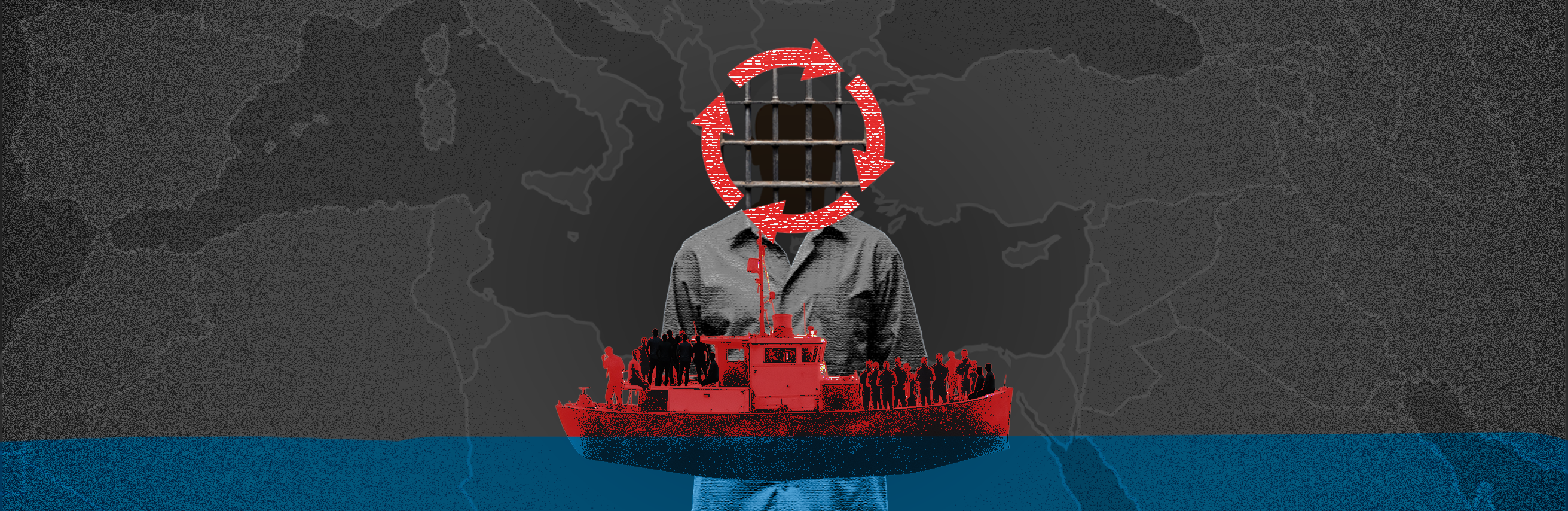
‘Recycling’ the migration books: How Egypt manipulates smuggler arrests for EU money
“Just bear with it for a while, the European Union is causing trouble. You’ll be released”
Racial bias fuels outrage against Sudanese doctor accused of female circumcision, legal advocates say
MPs warn against “foreigners’ beliefs," although female circumcision remains prevalent in Egypt.
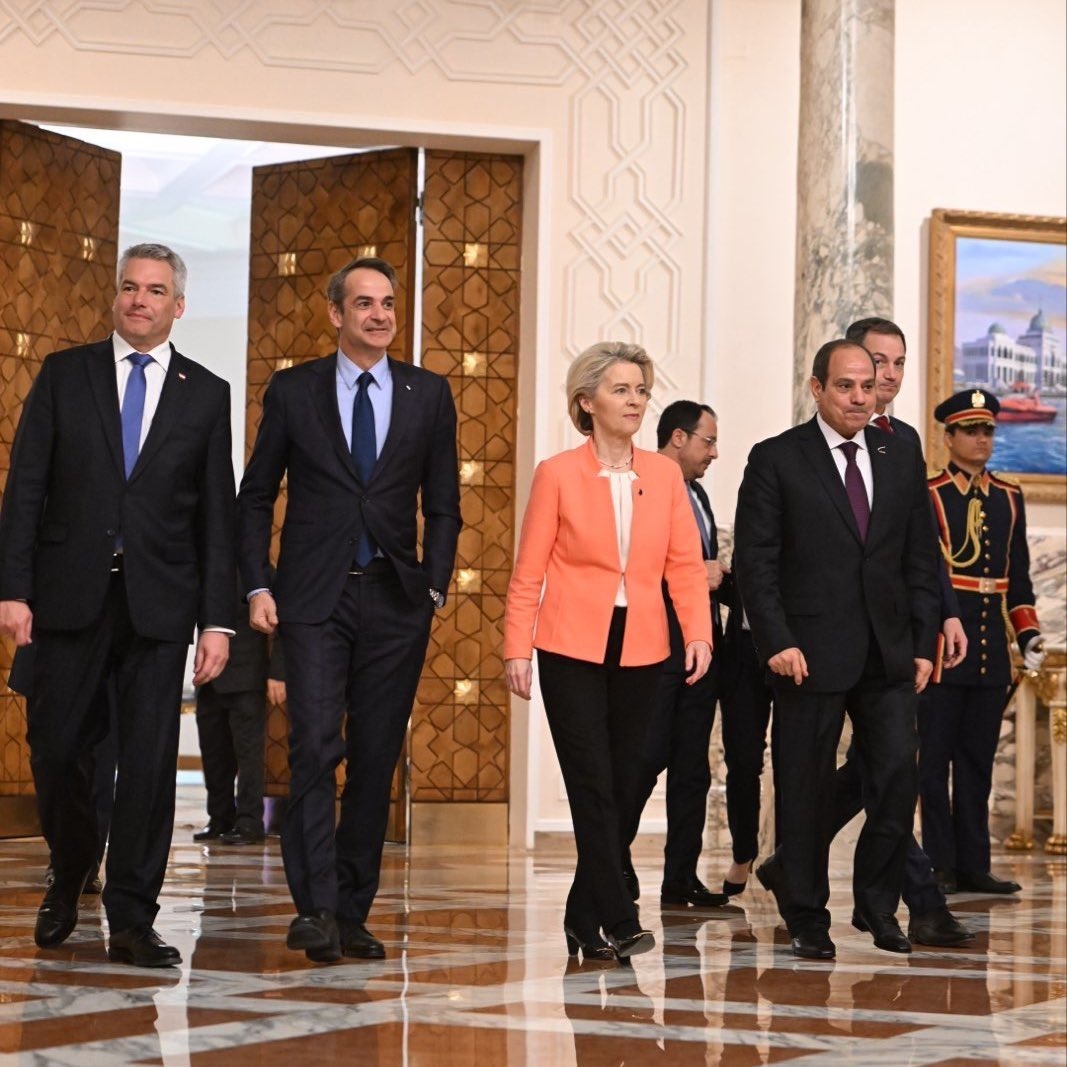

The billions of euros deal reshaping Egypt-EU relations
The partnership is set to be in effect between 2024 and 2027.
Your support is the only way to ensure independent, progressive journalism survives.
You have a right to access accurate information, be stimulated by innovative and nuanced reporting, and be moved by compelling storytelling. Subscribe now to become part of the growing community of members who help us maintain our editorial independence.
Join us