
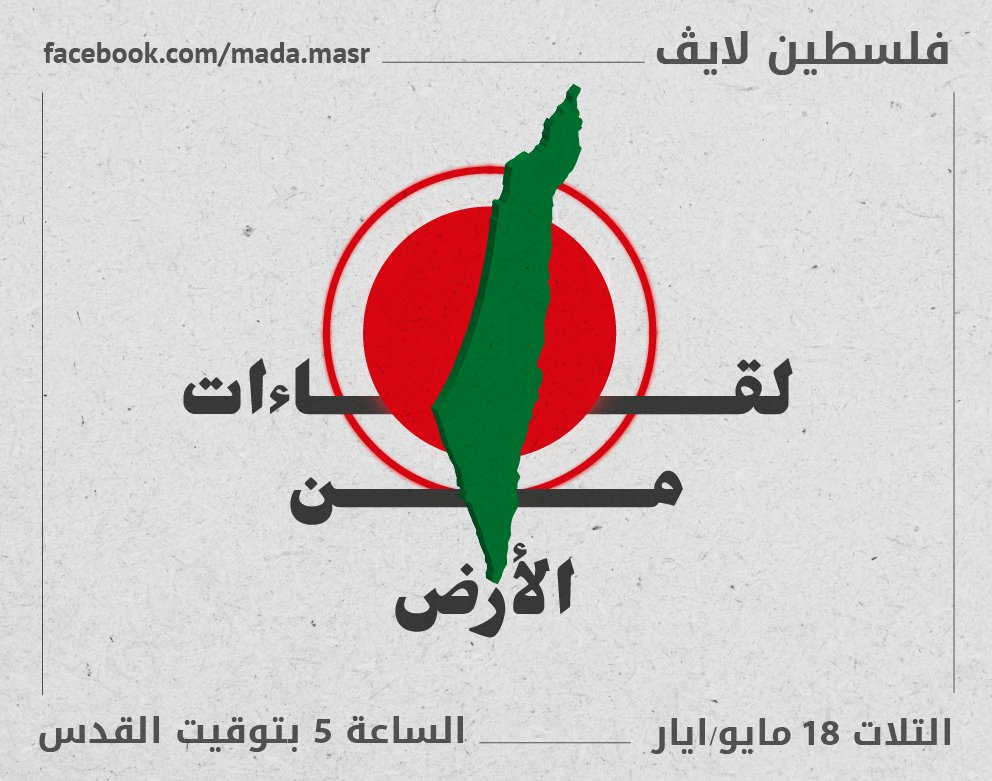
Palestine on strike | Mada live from Yafa
As tens of thousands of Palestinians went on strike against the Israeli occupation on Tuesday, both in areas that Israel annexed in 1948 and in the occupied West Bank, Mada Masr invited activists and journalists from across historic Palestine to participate in a roundtable discussion as an attempt to document some of what is happening.
The discussion, which focused on several cities across Palestinian, took places as over 64,000 Palestinian construction workers went on strike, according to Israeli news sources, which noted that for every day the construction sector is shut down, Israel loses 130 million Israeli shekels (around USD$39.8 million). Rights organizations monitored at least 48 West Bank residents who were fired from their jobs for participating in the strike.
The strike was paired with demonstrations across several cities, which were met with violence by Israeli security forces. At least four Palestinians were killed in Ramallah and Khalil, where Israeli security forces opened fire at protestors using live ammunition as well as rubber bullets and tear gas.
Yesterday’s casualties brought the total number of those killed in the West Bank since clashes began two weeks ago up to 26, with at least 5,164 injured, according to the Health Ministry in Ramallah.
In the ‘48 areas, at least 58 Palestinian citizens of Israel were arrested, while at least 23 Palestinians were arrested across Ramallah, Khalil, Bethlehem, Nablus and Tubas.
Before the protests were over on Tuesday, Yasmeen Daher from Febrayer and Lina Attalah, Mada Masr’s editor in chief, spoke with activists Yara Gharbaly from Yafa and Tahreer Araj from Ramallah.
Yasmeen Daher: For viewers who are unaware, this is one of the central streets of Yafa. Yara, Could you tell us more about this protest?
Lina Attalah: And explain to us what was being said, Yara.
[wonderplugin_video iframe="https://www.youtube.com/watch?v=pU2InKskcT0" lightbox=0 lightboxsize=1 lightboxwidth=960 lightboxheight=540 autoopen=0 autoopendelay=0 autoclose=0 lightboxtitle="" lightboxgroup="" lightboxshownavigation=0 showimage="" lightboxoptions="" videowidth=600 videoheight=400 keepaspectratio=1 autoplay=0 loop=0 videocss="position:relative;display:block;background-color:#000;overflow:hidden;max-width:100%;margin:0 auto;" playbutton="https://www.madamasr.com/wp-content/plugins/wonderplugin-video-embed/engine/playvideo-64-64-0.png"]
YD: What was said in Hebrew in the protest is: “We were always here first before the Israeli state existed. This is our country/state.”
Yara Gharably: Hey. Hope all of you are well. My name is Yara, from Yafa.
First, we cannot reduce the issue to only the latest events. We cannot separate ongoing events in Yafa from one other. We should politicize our analysis and consider that each independent incident serves the whole in terms of the occupation and colonization. Some people here are saying that all of this momentum is because of last Friday's confrontations, where groups of savages took the streets acting aggressively, burning tires, and so forth. But this issue has historical, geographical, geopolitical contexts that are tied to the persistent application of class and ethnic cleansing. A recent example is the attempt to burn and disentomb the historical Isaaf Muslim cemetery, which has been under the supervision of the Endowments Ministry since the occupation.
Yafa’s original residents, ironically, can no longer afford to live in Yafa. Prices have gone up while gentrification and ethnic cleansing have already taken place, to the point that only five percent of the original Palestinian population of Yafa could afford to continue living here after the Nakba. Now, it’s like we remaining Palestinians are trapped in Yafa, even more trapped in just the Ajami neighborhood — where I come from, where my grandmother was forcibly displaced from during the Nakba, where 20,000 Palestinians lived before the Nakba but only 4,000 of them could remain. These numbers are important especially in understanding how coastal cities, or what they call “mixed cities,” are subjected to a systematic sort of cleansing, a different kind of Nakba — not on the national or intellectual level, but the sort whereby, as we grow older, we are never certain when we’ll get thrown out of our house. I’m bringing this up so we can realize the pattern of ethnic cleansing that they are also attempting in Sheikh Jarrah. Here, in Yafa, they use the law to proceed with “evictions,” that is through Amidar, the company contracted by the Israel Land Authority to run the properties and which decides who will get evicted.
This is all intended to impact the subconscious of Palestinians. This issue is not simply the fear I’d get when I go to bed that I may wake up tomorrow and have nowhere to live. It is rather what I’d call psychic genocide. When we speak of the struggle of Yafa, and we say it is a struggle for existence, we speak also of the possibility that a Palestinian could grow up in Yafa ignorant of all the essential historical and political contexts. We blame the occupation for this — for distorting the space and erasing all the traces of a Palestinian presence or memory. This is not a struggle for survival. It is a struggle to shape the consciousness and the identity of Palestinians. At base, these actions are not against a specific issue but against the accumulation of violations against Palestinian Yafans, who are accused by some people of being apolitical or ignorant of Palestinian politics. But they are political. They might not utter the word gentrification. But they live it every day. They might not adapt postmodern theories that speak to gentrification processes, but they still experience it first hand.
I myself believe we should connect all those actions and not attempt to understand them separately. What happens in Sheikh Jarrah has been happening in Yafa, except in a much quieter Nakba, where they bring the rich, who by chance happen to be white Israelis, and kick the Palestinians out. And that’s not the only connection with Sheikh Jarrah. There have been attacks on mosques as well. In the past week, whenever anyone goes out on the street, they pay respect to and support the young people standing their ground against the excessive police siege. The police are imposing a military siege against us. In 1948, they trapped Yafans in a ghetto for two years, and today they are trying to do the same. They are amassing troubles over our consciousness. If my grandmother, who lived in that ghetto after the Nakba, would have gone out into the streets today, she would be provoked and intimidated. It really does not sit well on our consciousness. They are trying to intimidate us, to terrorize us, so that we don’t take the streets, so we don’t speak of current affairs, not only right here but everywhere.
There are already over 1,200 detained, 1,200 Palestinians arrested in confrontations between Israelis and Palestinians. Yet, all the detainees are Palestinians. Speaking from a gender perspective, I must say that our young men are aggressively targeted by police violence. Violence has been normalized in the life of young men here. A young man cannot even go out into the street without a police officer stopping him and ask him for his ID! We’re talking about minors here. When they fail to show an ID, they’re likely to get slapped, beaten, or have their bicycle confiscated, etc. This is young men’s everyday life. The impact of these incidents keeps accumulating until, one day, those men explode.
Tahreer Araj: Can you speak of the workers' strike today in Yafa and its implications?
YG: Good question. I think this is a bit exceptional in the Yafa context today. Neighboring Tel Aviv has been so normalized, that our own economy, as Palestinian people of Yafa, is almost more dependent on the economy of Tel Aviv than on that of Palestinians. We almost forget that it is a settlement. When I grew up hearing the word labor strike, I did not register the actual impact of it. Today, literally, only two shops are open in Yafa, and every other shop or service is on strike. This is telling. This is a pivotal point in the consciousness of Palestinians, especially Palestinians from Yafa. Yafa has suffered severely since the Nakba, especially at the level of public consciousness. I mean, I only learned about the Nakba in the 8th grade. Only in 8th grade did I learn what Palestine is. The crisis is severe, and the struggle is real. As I said, we’re not struggling for mere survival. We’re struggling for visibility and presence in the space, to claim the Palestinian narrative, which sadly doesn’t yet exist.

تقارير ذات صلة

‘The camp has grown tighter around us’: Palestinian refugees in Lebanon between war and internal restrictions
In the early hours of Thursday, March 5, an Israeli aircraft struck an apartment near the Khalil al-Rahman Mosque in the Beddawi Palestinian refugee camp in northern Lebanon. The attack…

The quiet power of Gaza’s One More Show
An intimate portrait of Gaza's only circus troupe and their resilience amid Israel's genocide
Your support is the only way to ensure independent, progressive journalism survives.
You have a right to access accurate information, be stimulated by innovative and nuanced reporting, and be moved by compelling storytelling. Subscribe now to become part of the growing community of members who help us maintain our editorial independence.
Join us