
Off the list
Adam Rasgon came to Cairo from California in June on a Fulbright fellowship to study Arabic at a prestigious language institution. The 22-year-old American student intended to stay the year.
Instead, on July 3, hours after Colonel General Abdel Fattah al-Sisi’s proclamation ousting former President Mohamed Morsi, Rasgon’s program ordered him and dozens of other students to evacuate the country. That same day, the US State Department ordered all non-essential American embassy personnel to evacuate and issued a travel warning for Egypt, advising US citizens to depart due to “continuing political and social unrest.”
Now, as the summer ends, Rasgon’s Arabic program in Egypt has been canceled and he will spend the year in Amman, learning the Jordanian dialect instead of the Egyptian.
“Of course I wanted to study in Egypt, ‘um al duniya’ (mother of the world), as Egypt is the center of the politics and culture in the Arab world,” Rasgon laments in a phone interview. “The Egyptian amiya (dialect) is everywhere.”
Like Rasgon, many American students of Arabic and the Middle East now find Egypt off the list of available study abroad programs and awards this academic year. With violence intensifying until recently and the political rift between Egypt and America widening, American universities and government-sponsored programs have deemed sending students and scholars to Egypt too much of a security, political and financial risk.
Some students, like Rasgon, had already started to settle in Egypt, renting an apartment and developing relationships with Egyptians. Others had been preparing for their departure for months, applying for grants, purchasing insurance and airplane tickets, and planning academic futures around Egypt.
Middlebury College in Vermont is one in a long list of American institutions that have canceled or suspended their fall or yearlong programs.
“We hope to start up again in the spring,” says Bill Mayers, the coordinator of International Programs at Middlebury. An elite liberal arts college, Middlebury runs one of the top Arabic-study programs at Alexandria University. “But we have to see how things go. Our main concern is student safety.”
Middlebury evacuated students from its Alexandria program in 2011 and suspended the program for a year, setting up a similar site in Amman to compensate.
Schools with strong Arabic and Middle Eastern studies departments, like Princeton University, are also now taking Egypt off the list. Instead, as is the case for many other universities, undergraduate students who had planned to study in Egypt will remain on campus, or participate in study abroad programs in Jordan and Morocco, Arabic speaking countries currently considered to be more secure for Americans.
Degree and non-degree Arabic programs that have long operated in Egypt are following suit.
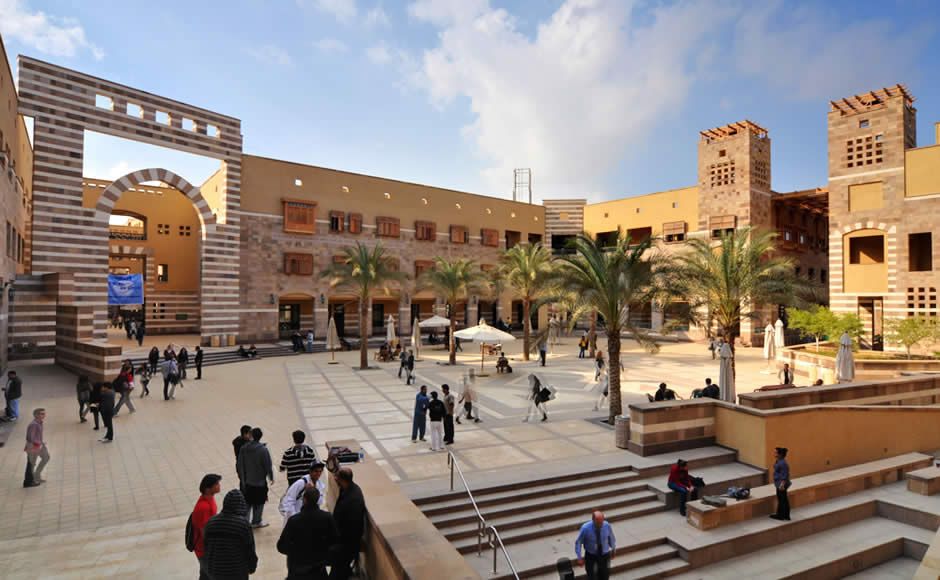
The Center for Arabic Study Abroad (CASA), an advanced Arabic program run by the University of Texas Austin, ordered its participants to evacuate in July and is relocating this year’s grantees to Amman. Students will study at Qasid Arabic Institute, rather than at the American University of Cairo (AUC) — a private Egyptian institution that is a popular study abroad site — as planned. Students who elect to stay in Egypt and study at AUC forfeit their grant and CASA affiliation.
The Flagship Arabic program in Alexandria, which is affiliated with several American universities, has relocated the 2013-2014 cohort to Morocco. The selective Flagship program, which each year hosts around 20 students, previously relocated students to Morocco in 2011, in the early days of the revolution.
American recipients of other US government-funded awards, like the Boren, Gilman and Fulbright fellowships in Egypt have likewise had a change of plans. Grantees already in Egypt in July were ordered to evacuate, or forfeit their affiliation. These competitive awards provide US students and scholars grants to study Arabic, pursue independent academic research or service work as part of a larger aim of furthering cross-cultural engagement.
In 2011 the Fulbright commission evacuated grantees, but brought fellows back after 30 days. This year's grants, however, have been terminated early, while next year's remain in suspension. It continues to support a cohort of Egyptians studying in America.
Interest in Arabic, Islamic and Middle Eastern Studies has shown a marked increase across college campuses in the decade since the September 11 attacks. According to the Institute of International Education (IIE), in 2002, there were 562 Americans studying in Arabic-speaking countries. By 2007, there were 3,399.
In the wake of the Arab spring and ensuing regional unrest, however, Egypt’s numbers have taken a hit.
According to the IIE, in 2012 40 percent fewer American students enrolled in study abroad programs in Egypt, down to 1,096 students from 1,923 in 2011.
Now, as massacres and curfews lead the daily news, AUC faces dwindling numbers of international students enrolling in the fall semester.
According to AUC Student Affairs Adviser Wesley Clark, last year in the fall the AUC Arabic language program hosted 256 international students. This year 53 were signed up as of mid-August, 27 of whom were American nationals and 20 European.
Clark says that average tuition for the Arabic Language Institute at AUC is US$12,925 per semester, meaning that the drop in enrollment this fall would represent a more than US$2.5 million loss compared to the same semester last year.
Of nearly a dozen American programs contacted, Gettysburg College in Pennsylvania was the only school still accrediting undergraduate students to study in Egypt in the fall.
Rebecca Bergren, Director of Gettysburg College Study Abroad, would not specify how many students would be studying at AUC, citing student privacy.
According to Bergren, to study in Egypt Gettysburg students must fulfill several requirements, including signing a secondary waiver that absolves the university of the “health, safety and security” of the student while in Egypt.
Bergren added that some students had recently chosen to drop out given the upswing in violence.
Egypt is one of 32 countries currently on the US State Department’s travel warning list, including Israel and Mexico. However, American education institutions can disregard the warning, with Israel and Mexico still popular study abroad spots.
In the weeks leading up to the June 30 protests that led to Morsi's ouster, many US-sponsored programs raised the alarm that students might be ordered to evacuate if the security situation was deemed too risky.
In post-revolution Egypt, these warnings were nothing new.
Then, on June 28, an Egyptian stabbed to death American college student Andrew Pochter at a protest in Alexandria. Pochter, who was reportedly a bystander at the protest, was teaching English in Alexandria through AmidEast, an education non-profit with sites across the Middle East and North Africa.
AmidEast has since relocated the remainder of its American students and suspended its Egypt program.
Pochter’s death came in the wake of a non-fatal attack in May on another American, academic Chris Stone. A disgruntled Egyptian stabbed Stone in front of the American Embassy in downtown Cairo just blocks from Tahrir Square.
Months earlier, in September 2012 protestors reportedly angered by a fictitious movie insulting Islam stormed the American Embassy’s outer wall. The same day, demonstrators attacked American embassies in Tunisia and Benghazi, Libya, killing the American Ambassador to Libya, among others.
In the months that followed, xenophobic and anti-American sentiment in the media and protest centers seemed on the rise. The American Embassy in Cairo remained closed for weeks. On August 3 the US released a global travel alert, temporarily closing down embassies in the Middle East and North Africa.
Despite these incidents, when the CASA program ordered participants to evacuate on July 3, Alexia Underwood, 30, decided to stay in Cairo.
She was one of several who chose to stay. Her experience as an independent Arabic student was far different than that of an embassy personal, she explains. The news seemed scary, but her life beyond the headlines was not.
“I didn’t feel that the security situation required me to leave Egypt,” Underwood said in an interview via Skype in mid-August. “I have spent a fair amount of time learning Egyptian Arabic as a dialect. I’ve had a lot of good experiences in Cairo so far. I had gotten an apartment. I had signed a lease. I had my life here.”
Underwood, a freelance journalist proficient in Arabic, tapped into her network of professors, friends, and Egyptian contacts before making the decision to stay. She said that many of the internationals she knew had similarly stayed put.
“There’s over nine million people in Cairo and most of them aren’t in the middle of these localized situations we see on the news,” she says. “I don’t feel that I am alone at all.”
Speaking prior to the military’s dispersal of the Muslim Brotherhood sit-ins, Underwood described a greater degree of difficulty navigating the city — with army tanks unpredictably blocking roads — but emphasized that she had not experienced any anti-American sentiment herself.
As the fall approaches and American students and scholars relocate with relative ease, Egyptian students and teachers that benefit from these programs are feeling their absence.
According to Mayers, while the Middlebury program’s director and assistance director are still working with the university, its language instructors, who are professors at Alexandria University, have lost out on this semester’s income. The same is true for professors and language instructors across the country.
“I don’t know exactly how it impacts them now,” Mayers said.
Egyptian Ahmed Sabry is feeling the personal and financial pinch.
Sabry first met Americans four years ago while an undergraduate at Alexandria University. Born and raised in a small village two hours from Alexandria, Sabry heard about the opportunity to live and work with Flagship students studying Arabic at the University.
The position was Sabry’s first formal job. He has now worked as a student coordinator and cultural facilitator for the Flagship program.
“It was a good opportunity for me,” Sabry says in an interview via Skype. He made US$350 a month, or close to LE2,450 — a large sum by Egyptian living standards. “I was able to interact with students from different backgrounds.”
His choice to so publicly affiliate himself with Americans, some of whom were known to be Jewish, did raise controversy among fellow Egyptian students. But overall, he is positive about his experiences working with and befriending his American counterparts.
“Being with students from different cultures and backgrounds is a really great opportunity, and I hope for everyone around the world to have this opportunity,” Sabry says. “I still have many good friends among the Americans and keep in touch.”
Sabry is currently applying for a PhD in public health. But now, with the Flagship program on hold, he is also looking for a job.

تقارير ذات صلة
Ahmed Bassam Zaki’s charges highlight flaws in penal code
Zaki’s sentence may ultimately come down to the judge’s interpretation of the facts of the case.

AUC students merge politics and play in graphic design exhibition
The program has recently been placing increased emphasis on conceptual thinking.

Book review: AUC and its students — irrepressible bubbles and inevitable politicization
Moataz Bellah’s bold introspective narrative tracks the rise and fall of the student movement in AUC
Your support is the only way to ensure independent, progressive journalism survives.
You have a right to access accurate information, be stimulated by innovative and nuanced reporting, and be moved by compelling storytelling. Subscribe now to become part of the growing community of members who help us maintain our editorial independence.
Join us