
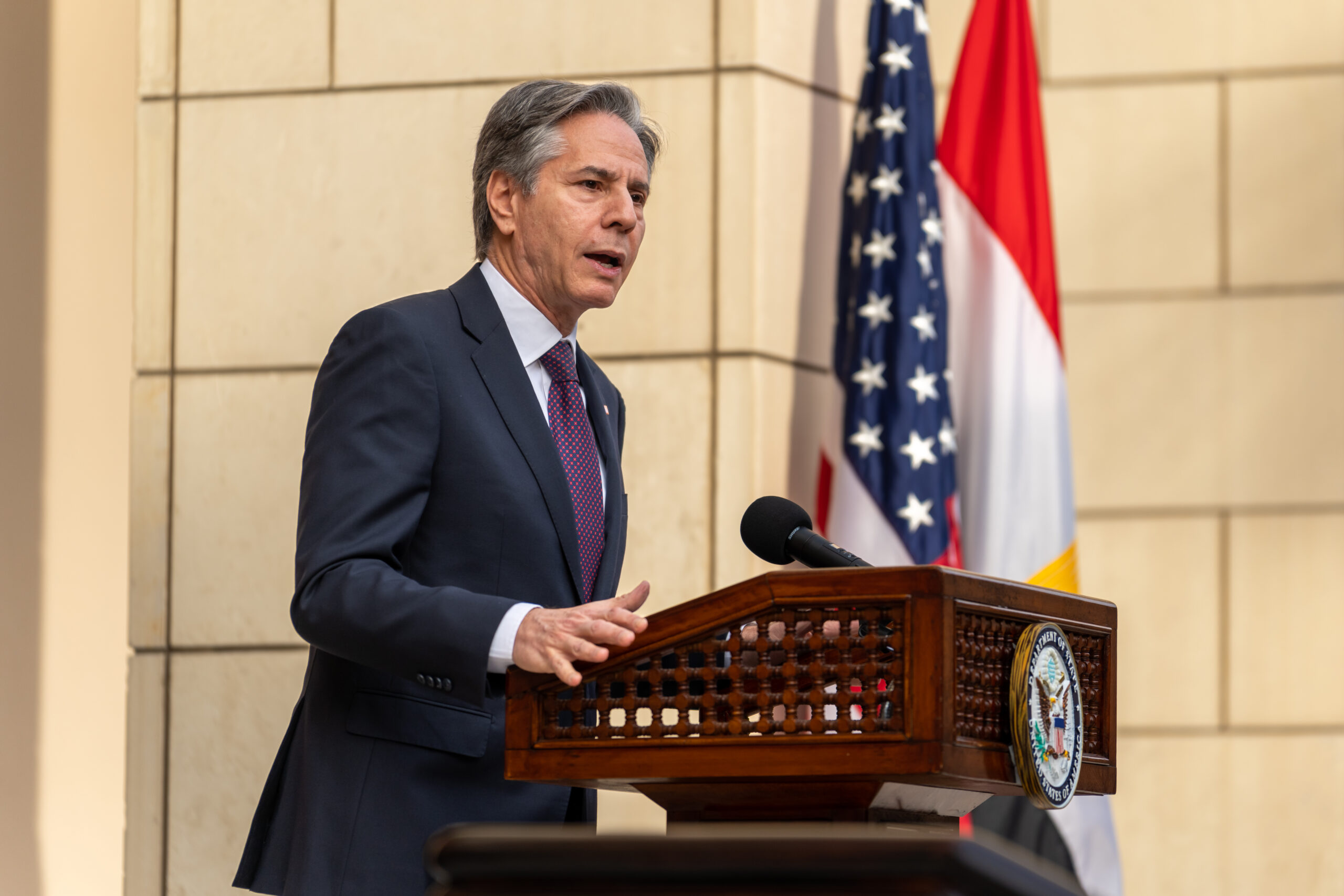
Q&A | US Secretary of State Blinken on Egypt’s economy, human rights and Israel-Palestine
“The government put out a privatization plan. These are challenging things to do, but the plan itself is a good thing. But, as with anything, it is even more important to implement it,” United States Secretary of State Antony Blinken told Mada Masr in a brief interview on Sunday, after he touched down in Cairo for a two-day trip that includes meeting with President Abdel Fattah al-Sisi today.
“We established for the first time a joint economic commission between the United States and Egypt and will meet shortly for the first time to look at what we can do to facilitate and encourage greater private sector investment in Egypt, to look at the tools that the US government has to be as supportive as we possibly can be,” Blinken said, reiterating that his administration is a “strong supporter of the International Monetary Fund program to Egypt.”
In December, the IMF approved its fourth agreement with Egypt since 2016, with Egypt set to receive US$3 billion over a 46-month period. One of the sticking points in the agreement that eventually led to the lowering of the amount pledged to Egypt, according to sources close to the negotiations, is the government and military’s exit from the national economy. While Egypt laid out a new privatization plan in May of last year, its implementation remains in question.
“I think there are significant reform plans that the government has that are always challenging but will put Egypt in a better place,” Blinken said.
Amid the global inflationary wave that followed Russia’s invasion of Ukraine, households across the world have seen steep price hikes in basic goods. This has been especially felt in Egypt, where the government’s reliance on risky short-term bonds precipitated an economic crisis when investors began looking for safer havens. The value of the pound has fallen sharply and vital commodities have been held up in ports, with the Central Bank of Egypt facing liquidity shortages and mounting debt servicing obligations.
Blinken spoke of food security interventions the US administration has made in order to alleviate the effects of inflation and rising prices. “For example, since the Russian aggression against Ukraine, we have committed $13.5 billion to food security around the world. Some of that has been directed directly to Egypt. Even when it is not, to the extent that this has an effect on getting more food in global markets, that means supplies are there, and that has a positive impact on prices, including in Egypt,” he said.
“The Black Sea Grain Initiative that gets the grain out of Ukraine from Odesa and to the world market has been hugely important, and it has been important for Egypt. For example, Egypt has taken about 30 shipments of everything, from wheat to corn to other agricultural products, under that arrangement. This helped increase supplies in Egypt and has had a positive impact on prices,” Blinken added.
Egypt depends on Russia and Ukraine for 80 percent of its annual wheat supplies, being the largest wheat importer in the world. Following Russia’s invasion of Ukraine, global wheat prices rose by up to 48 percent, disrupting Egypt’s attempt to supply wheat locally from its farmers. Diplomatic sources told Mada Masr in recent months that the Egyptian government has called for global support to shore up its food supplies, since Egypt cannot bear the brunt of internationally imposed blockades on Black Sea commodity supplies.
While the economy has been a dominant issue on the world scale and in Egypt in the last year, a key point of tension in bilateral relations between Cairo and Washington DC has been human rights. Blinken said that the Biden administration has raised specific cases of political detainees in the past. “I expect they will come up again in our meetings,” he said.
“There remain thousands of people in prison for political reasons. Initiating a process and actually engaging it and completing it are two different things. It would be important for the process to move forward,” Blinken said.
In September 2022, the Biden administration announced it would be withholding $130 million of the conditional $300 million of foreign military financing budgeted to Egypt – 10 percent of the total $1.3 billion. Numerous human rights groups and several members of Congress called on the administration to withhold the entire $300 million due to Egypt’s continued human rights abuses. After the Biden administration determined that Egypt had made some progress on political detentions, the US State Department was set to release $75 million of that withheld aid. However, Senator Patrick Leahy, chairman of the Senate Appropriations Committee, blocked the disbursement of that money over concerns about Cairo's human rights record, including holding political prisoners.
In April 2022, in the leadup to COP27 and as the government began to lay the groundwork for a national dialogue process, Sisi issued release orders and pardons for 766 people being held in remand detention or serving sentences. While appearing as a loosening of restrictions, Amnesty International documented the arrest of 1,540 people in the period between April and November.
Notable political prisoners still remain behind bars, Alaa Abd El Fattah, the writer and activist, most notable among them.
The US also withheld the $130 million in 2021. At the time, the Washington Post reported that the conditions that Egypt had to meet to see the release of that aid included ending prosecutions in Case 173, which targeted NGOs and human rights advocates, and either dropping charges or releasing 16 individuals whose names had been raised by US officials with the Egyptian government.
While the identities of the 16 people have not been revealed, an Egyptian official previously told Mada Masr that at the time, US State Department officials and members of Congress questioned an Egyptian delegation in Washington about a number of specific cases, including Abdel Moneim Aboeul Fotouh and Abd El Fattah, as well as the government's strategy for dealing with political opposition.
Meanwhile, Blinken pointed to “important steps” made in human rights in recent years, “for example, on religious minorities and on women and their integration” adding that “those deserve our support and praise.”
“For us, for President Joe Biden, human rights is a vital part of our foreign policy. It is at the heart of what we do and say around the world, not only in Egypt. We also approach these issues with humility, as we have our own challenges that we are confronting everyday,” Blinken said.
Following his meetings with Egyptian officials today, Blinken will depart to Israel and the West Bank, where tensions are rapidly rising following the killing of seven Israelis by Palestinians on Friday in Jerusalem. A day before, Israel attacked the Jenin refugee camp in the West Bank, killing 10 Palestinians.
Asked whether his insistent call for normalization between Israel and Arab states would meaningfully address the constant tension, Blinken said: “Normalization is usually beneficial for the entire region. And I think it will benefit the Palestinians. It is not a substitute for Israelis and Palestinians resolving the differences between them and ultimately for the establishment of two states for two people.”
In August 2020, the administration of former US President Donald Trump presided over the signing of the Abraham Accords — the US-UAE-brokered wave of agreements to normalize relations between Israel and the UAE, Sudan, Bahrain and Morocco.
The normalization agreements prompted concern in Egyptian official quarters, with an Egyptian official expressing concern to Mada Masr over their belief that the UAE was trying to present itself as a leading force in promoting normalization with Israel — a move that could severely curtail Egypt’s historical role as the principal mediator in the so-called Israel-Palestine peace process. Egypt’s waning influence in Israel-Palestine affairs was a serious cause for concern given its lack of other strategic points of interest with the US administration of President Joe Biden, the official added.
Since 2007, Egypt and Israel have jointly enforced a blockade on the Gaza Strip, leading to a sharp decline in living standards that includes deep poverty, crumbling infrastructure, high population density, extreme power shortages, restrictions on basic supplies, and a health care system on the verge of collapse.


تقارير ذات صلة

Proposed formulas for new US military Red Sea foothold not acceptable to Egypt
Since March 15, the US has carried out nearly daily strikes on targets in Yemen
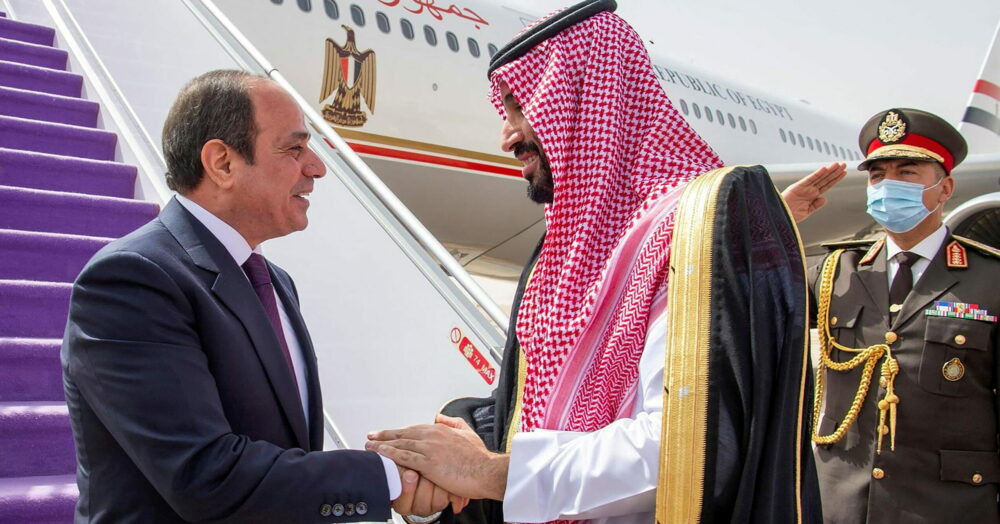
US push for new regional cooperation sets off Gulf jockeying, MBS eyes Egypt-Turkey rapprochement, managing Brotherhood to bolster position
Bin Salman hopes to be viewed by the US as “the balance-maker” in guaranteeing regional alliances
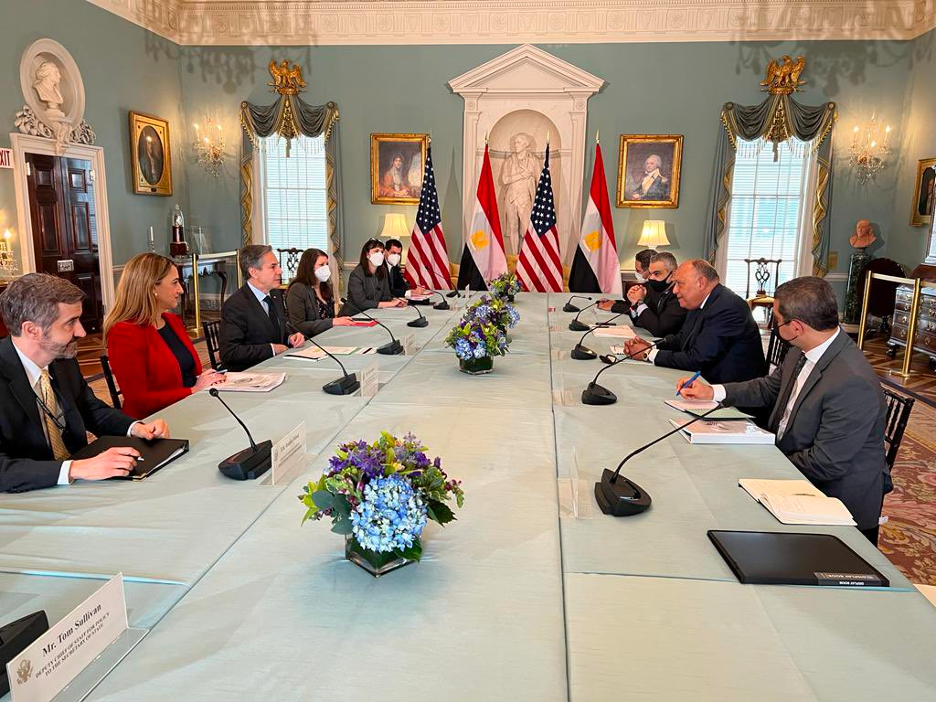
Shoukry’s DC charm offensive complicated by human rights concerns
The foreign minister's visit comes amid concerns in DC over Egypt's ambivalent stance on the Ukraine
Your support is the only way to ensure independent, progressive journalism survives.
You have a right to access accurate information, be stimulated by innovative and nuanced reporting, and be moved by compelling storytelling. Subscribe now to become part of the growing community of members who help us maintain our editorial independence.
Join us