
Nationalism and generosity fuel the defense of Tiran and Sanafir
How documents proving the islands were Egyptian were collected and donated.
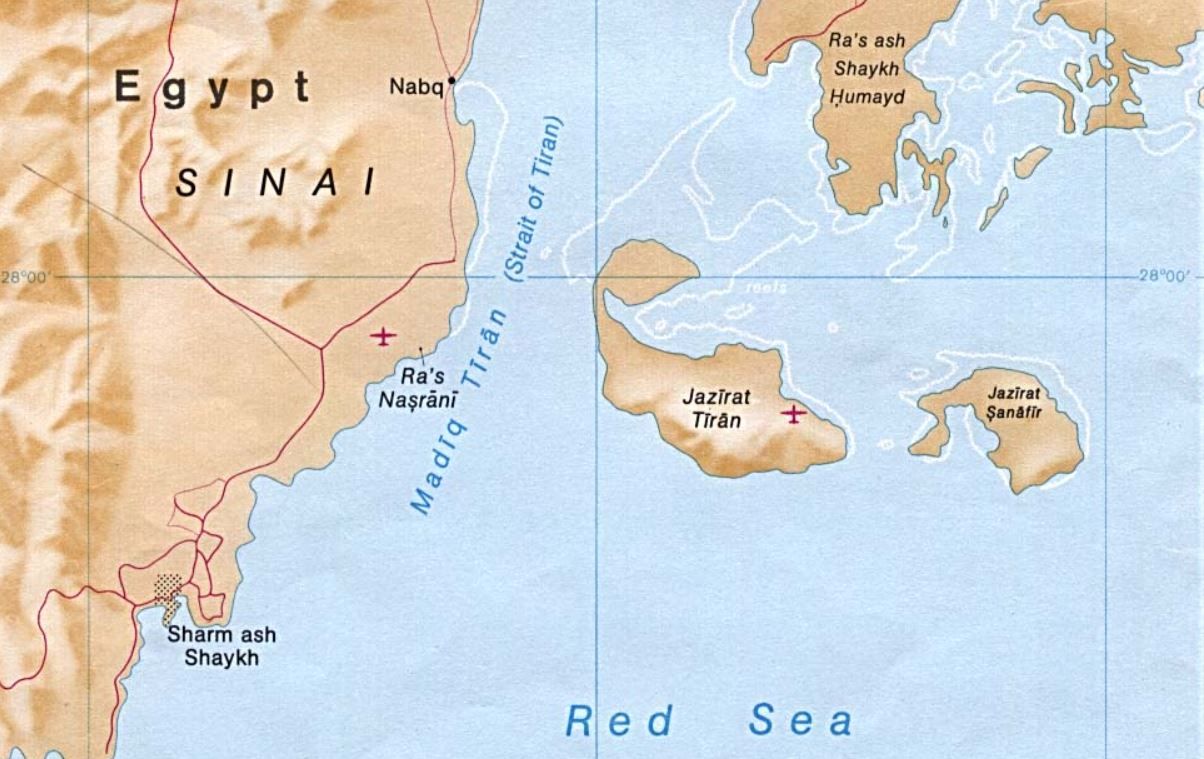
“My mom wants you to look at this map and show it to the judge, so he knows they are lying,” Asmaa Ali quotes a teenager who told her this pointing to a map in her school book that indicates that Tiran and Sanafir islands are Egyptian, contrary to claims they belong to Saudi Arabia.
Ali, a researcher and human rights activist, is also the wife of detained human rights lawyer Malek Adly, one of the claimants against the government in a lawsuit contesting the redrawing of maritime borders between the two countries in April that placed the islands in Saudi Arabian territorial waters. .
Adly was arrested in May and has been held in pretrial detention in a solitary cell, pending investigation into several charges, foremost “spreading rumors that Tiran and Sanafir are Egyptian islands.”
Asmaa received innumerable messages of solidarity following her husband’s arrest, in addition to “visits from citizens who wanted to provide the defense team with historical documents proving that the two islands were Egyptian.”
“I saw how ordinary people rose up in support of their convictions,” she says.
Adly, along with other lawyers, including Khaled Ali, Ziad al-Eleimy and Tarek al-Awady, filed a lawsuit last April demanding the annulment of an agreement signed by Egypt and Saudi Arabia during King Salman bin Abdel Aziz’s April visit to Cairo, which stipulated the transfer of ownership of the two islands from Egypt to Saudi Arabia.
On June 21, an administrative court voided the agreement based on 23 documents submitted by claimants supporting Egyptian ownership of the islands.
Despite the State Council appealing the verdict, a key element in the claimants’ victory in this case is the documents that were supplied.
None of these documents were in Ali’s possession when he filed the lawsuit. They were collected through an organic popular campaign of engaged Egyptians.
A post on Ali’s personal Facebook page appealed to people to provide him with such documents, which “led to dozens of people, none of whom we had any relationship with, to try to cooperate with us as much as possible. The cooperation was remarkable and the documents began to pour in,” recounts Hassan Mosaad, a lawyer at the Egyptian Center for Economic and Social Rights, working on the case.
“The case needs major research at the legal, historical, geographical, international, strategic and constitutional levels. That is why we are calling on whoever can help to research this case and not withhold any information or documents in their possession,” the Facebook post read.
“I was surprised by the courage that drove people to support us as best they could. I saw people who we knew or thought would be afraid of being directly involved, circumvent their fears and announce that they believed our story and not that of the government,” Ali says.
“In the beginning we needed to collect all official resolutions concerning the two islands that were published in the Official Gazette. That was not difficult, in theory, but some workers at the Gazette’s publishing houses volunteered, without us asking, to make photocopies at their own expense once they knew we needed them,” Ali recounts. “The same thing happened during my search at the National Archives for useful references … my search coincided with an annual inventory. I was surprised to find the workers stop the inventory to help me … until I managed to find the books,” he added, referring to Naoum Shokeir’s The History of Sinai, published in 1906, the Sinai Encyclopedia, and Sinai across History.
Sameh Samir, another lawyer working on the case, explains there was also support from inside government agencies. “Friends in governmental institutions helped by photocopying documents available to the public … Still, obtaining them was difficult, given attempts to withhold information in relation to the two islands.”
Besides civil servants, the document donation spree spread to include architects, journalists, professors, collectors, women and men, old and young.
“A researcher and television producer provided us with an English book issued by the Egyptian Ministry of Finance on Egypt’s borders in 1945. An architect, whose hobby is to collect old maps, provided us with an atlas by the Egyptian Ministry of Information that dates back to 1922. He was careful about holding on to his maps, but said he was happy that his contribution would help prove the two islands are Egyptian,” says Ali.
“The daughter of one of the contributors to a book issued by the Ministry of Environment on natural protectorates in Egypt gave us a copy. She came from Alexandria especially to give us the book. Another young woman came from Kafr al-Sheikh to give us a photocopy of the travel memoirs of August Falene. We later managed to get an original copy with the help of a professor at the American University in Cairo. A war veteran who participated in the 6 October War sent us a military atlas via an intermediary. A woman working in the tourism sector gave us the Cambridge University Atlas issued in 1940, which was among her family possessions,” Ali adds.
Lawyer Mosaad recounts meetings with anonymous document donors in downtown Cairo, who came all the way from other cities. Some documents also came by mail from Saudi Arabia, he says.
Meanwhile, President Abdel Fattah al-Sisi, along with other officials, maintained the islands were Saudi Arabian, despite waves of protests following the signing of the agreement, for which many protesters were later arrested and some prosecuted on charges of disseminating false news.
Ali speaks of the organic way in which the case gained momentum as evidence in itself: “The enthusiasm and extreme effort by those who collected whatever documents they could was the strongest evidence of the Egyptian ownership of Tiran and Sanafir. People defended the islands because it is their land. This is the evidence, not what the documents hold.”
Translated by Aida Seif al-Dawla
تقارير ذات صلة

Welcome to Sharm el-Sheikh: President’s City, City of Peace, City of COP27
Beneath the mask the city’s donned for COP27 are the marks of years of uncalculated redevelopment
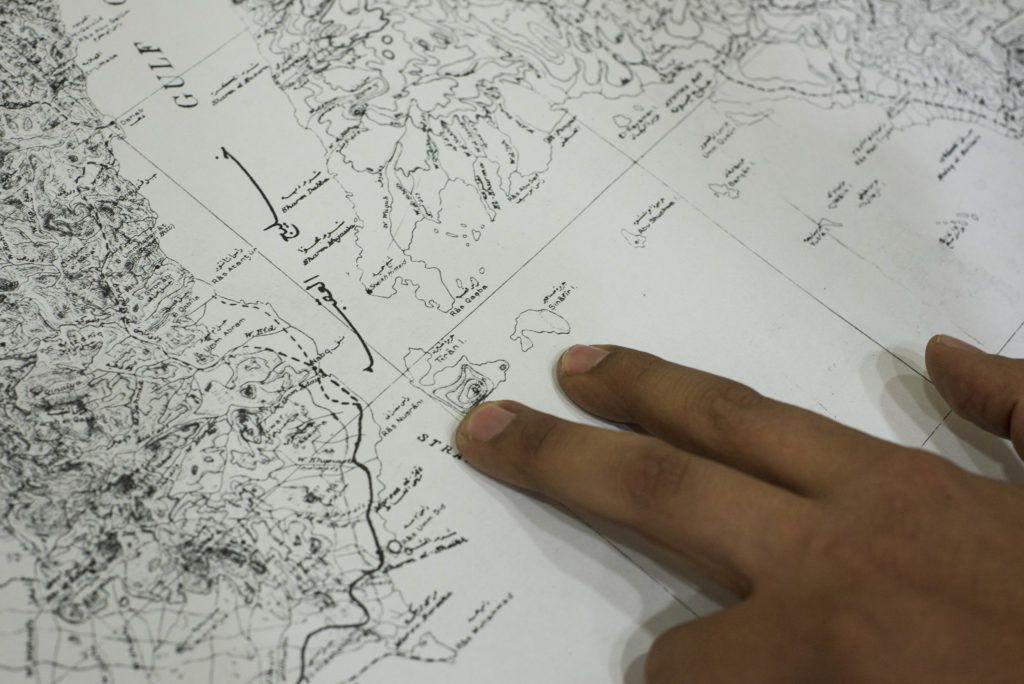
Supreme Constitutional Court validates Tiran and Sanafir treaty, overturns previous rulings
The SCC overturned previous rulings regarding Tiran and Sanafir, validating the border agreement
Sisi to ratify Tiran and Sanafir agreement within days: Source
With the legal cycle suspended, the necessary procedures for presidential ratification are taking place
Your support is the only way to ensure independent, progressive journalism survives.
You have a right to access accurate information, be stimulated by innovative and nuanced reporting, and be moved by compelling storytelling. Subscribe now to become part of the growing community of members who help us maintain our editorial independence.
Join us