
Narrow space for a ‘no’ campaign
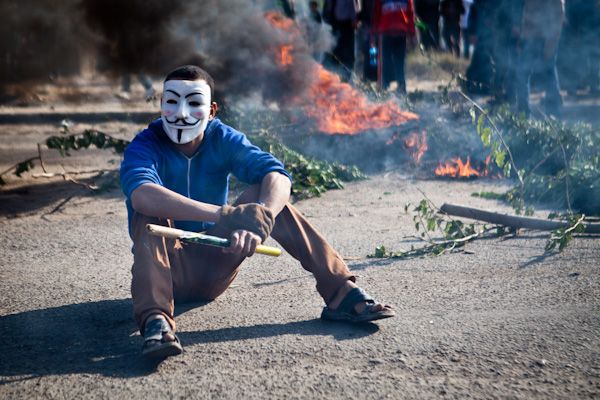
Two days before voting in the constitutional referendum was set to begin, the Strong Egypt Party announced that it would halt its campaign for a “no” vote due to the arrests of seven campaigners over the last week.
The Strong Egypt Party had announced in early December that it would mobilize for a “no” vote in the referendum, and was the only party to do so, joined only by a few political movements including the April 6 Youth Movement, the Revolutionary Socialists and the Road of the Revolution movement.
But on Sunday, the party decided to change its campaign slogan from “Why no?” to “Your referendum only has one box,” suggesting that the state is making “yes” the only choice for voters.
The crackdown on the “No to the constitution” campaigns — which were limited on the ground, especially in contrast to an overwhelmingly visible “yes” campaign — has cast doubt on the legitimacy of the referendum even before the polls open.
On the same night that the Strong Egypt Party withdrew its participation from the campaign, Nader Bakkar — the spokesperson of the Salafi Nour Party, which is campaigning for a “yes” vote — said in a television appearance that his party had hosted 50 conferences for the “yes” campaign, adding that police forces secured all of these events.
Most political parties and movements are aligned with this campaign, which was already inescapably present in the form of billboards, television and radio advertisements, and songs before the draft constitution was even finished.
As opposed to mobilizing for a “no” vote, the Muslim Brotherhood and affiliated groups called for an outright boycott of the referendum as a sign of protest against the entire course of politics since former President Mohamed Morsi was removed from office.
However, campaigning for anything other than than a "yes" vote has proved near impossible.
Despite the group’s disapproval of the interim government’s actions since July, including a harsh security crackdown on protesters, the Strong Egypt Party initially decided to participate in the referendum out of a belief that the electoral process was the only way out of the current impasse, according to party spokesperson Ahmed Imam.
However, after the recent arrests, the party realized there was no point in continuing to “take part in a decorative capacity,” says Imam, as it realized the campaign would not make an impact.
On Tuesday January 7, three party members were arrested on Qasr al-Aini Street in downtown Cairo while putting up “No to the constitution” flyers.
They were released two days later pending investigations into charges of attempting to change the basic principles of the constitution, a crime under the penal code.
Mahmoud Imam, another party member, was detained on Friday January 10 for possession of “No to the constitution” flyers after being searched at a police checkpoint while riding a bus. He was taken to the police station, then released on an LE500 bail pending investigations into criminal charges of involvement in terrorism.
Finally, three more party members were arrested in the Hadayeq al-Qoba area of Cairo on Sunday January 12 while trying to hold a campaigning event. They still remain in custody on charges of “distributing fliers, attempting to overthrow the regime, provoking citizens to reject the constitution and engaging in incitement against the police and army,” according to a statement released by the Human Rights Watch.
The “No to the constitution” flyers were confiscated as criminal evidence in all these cases, the Strong Egypt Party said.
Other members of the party were also reportedly arrested while campaigning and later released without charges.
But the difficulties that the party faced in waging the campaign were not limited to the security crackdown, Ahmed Imam adds.
The party contacted national television and radio networks to request to appear on air and defend their position, but they were met with no response, he continues.
After the closure of all Islamist and Muslim-brotherhood affiliated media outlets immediately after Morsi’s removal, the private media sources that remain are mostly owned by individuals who endorse the “yes” vote.
Some outlets, such as the privately owned Al-Masry Al-Youm (AMAY) newspaper, have publicly endorsed the “yes” position. AMAY has started texting messages supporting the constitution through its SMS news service.
Some of the most popular television hosts, such as Amr Adib, also use their platforms to openly call on viewers to vote in favor of the constitution.
Only six channels have hosted the Strong Egypt Party’s members to debate the constitution, Imam says, which he considers to be an extremely narrow space for political debate.
Holding public conferences has proven impossible for the party, as well. Imam says that venues have refused to rent out spaces to the party out of fear of being dragged into a confrontation with the state. The party was able to host only one successful campaigning event in Alexandria, he adds.
Given these limitations, the campaign turned to putting up flyers in public spaces.
Since the charter was drafted, the state has put its weight behind it using the usual tactics, equating a “yes” vote with stability and prosperity. A “yes” vote has also been spun as a vote of legitimacy for Morsi’s removal, and a stamp of popular approval for the interim government’s transitional road map.
Additionally, those advocating a “no” vote on the constitution have been castigated as Muslim Brotherhood supporters, and repeatedly condemned by media outlets as working against the interest of the country.
“Those who are supporting a ‘yes’ vote label us as supporters of terrorism and accuse us of standing in the path of advancement,” Imam says.
The recent arrests recall Mubarak-era elections, when only the state-sponsored voice was allowed to be heard publicly.
Those detained for their participation in the “no” campaign were allegedly assaulted by police forces during their arrest and interrogated about their political affiliations and stance on the constitution, according to a statement issued on Monday by Human Rights Watch (HRW) that condemned the arrests.
Some were also interrogated by a National Security officer, the statement added.
Egyptians should be free to vote either way without fearing prison just for campaigning for a “no” vote, HRW argued.
“While streets are awash with billboards and signs calling for a ‘yes’ vote, ‘no’ posters have been virtually absent from the public space,” the statement added.
HRW said the arrests were made within a larger context of an intensified crackdown on freedom expression, and arrests based solely on the political beliefs of the detainees.
A source from the HRW Cairo Office says that these practices raise serious concerns ahead of the poll.
“When you see mass arrests, intense political polarization and violations of freedom of expression, this raises major concerns,” the source says. “Safeguarding the right to free expression is an important part of the freedom to vote.”
Mohamed Othman, a leading Strong Egypt Party member, concludes: “In these conditions, where it is not allowed to voice any opinion other than ‘yes,’ participating in the referendum would be futile.”

Heba Afify
Heba Afify, known in journalistic circles as H, is a news reporter who traveled between working for local and international newspapers. She covers a variety of topics from high to…
تقارير ذات صلة
Voting in the dark: Ramming the constitutional amendments through
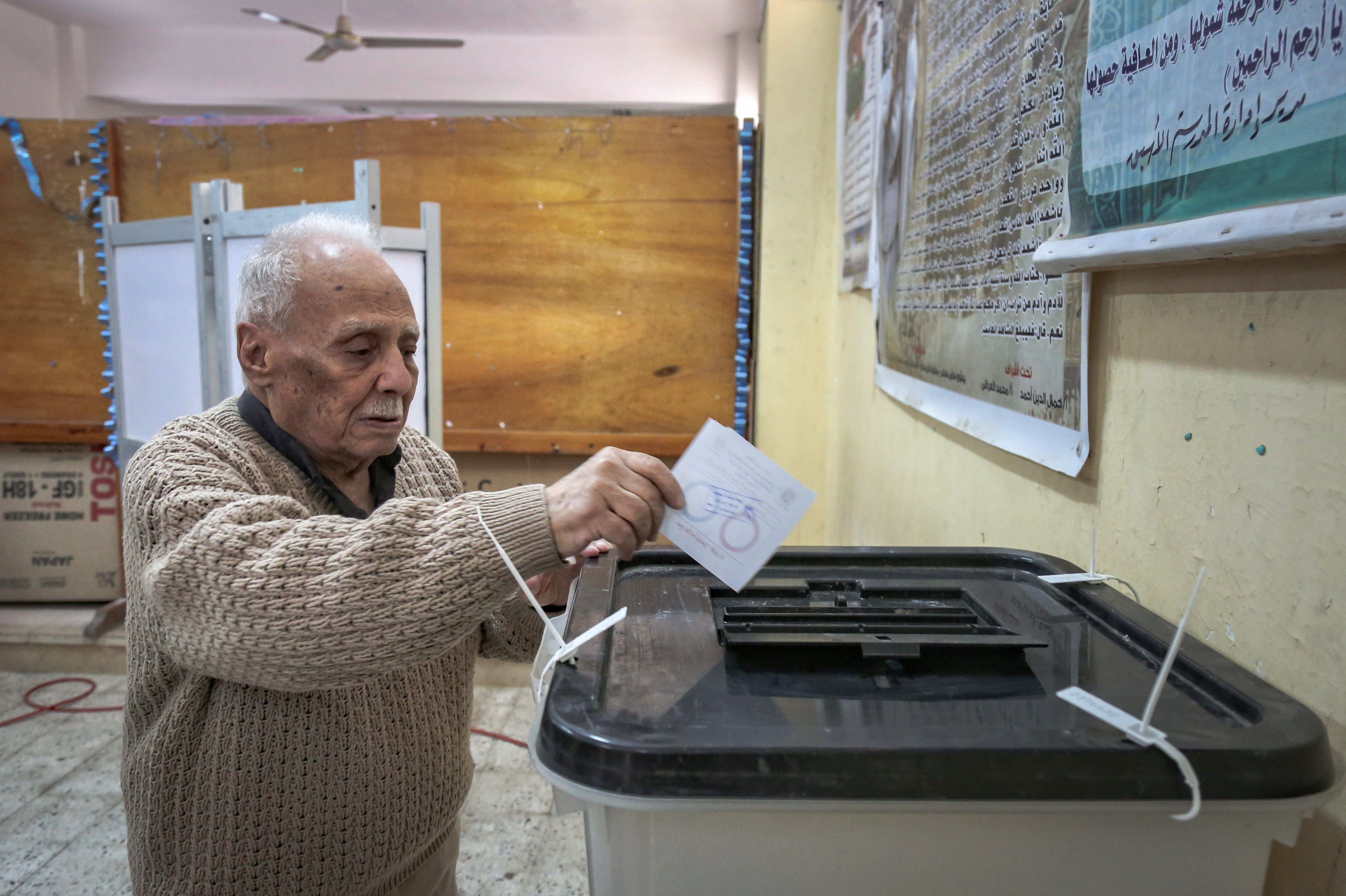
“What difference does it make what [voters] know or don’t know?” says one parliamentary source.
Ballot-box politics: What has pushed Egypt’s opposition to vote ‘no’?
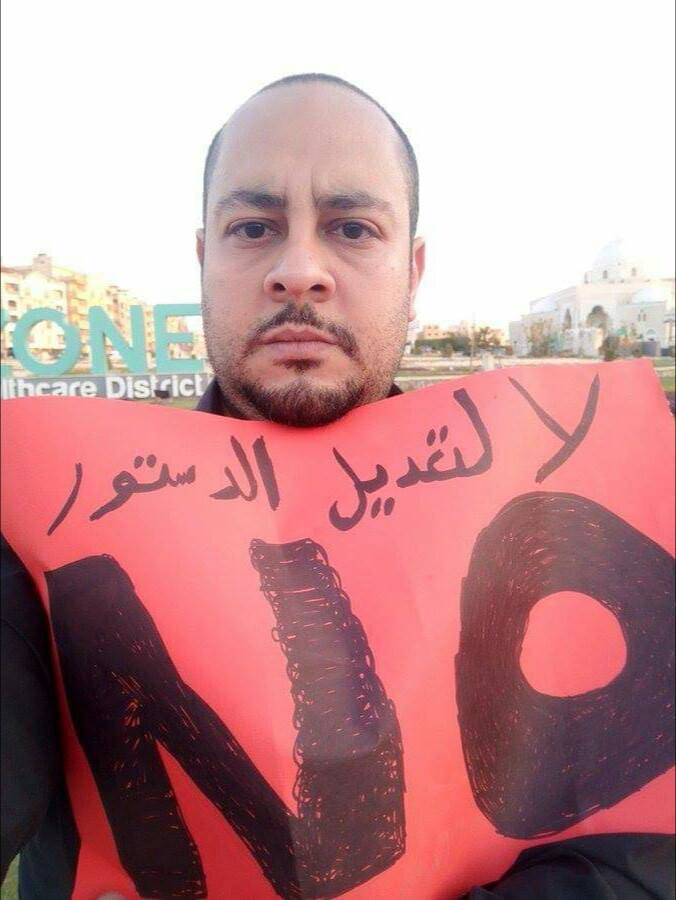
Unlike in previous votes, more opposition members are calling for a 'no' vote than for a boycott.
A disintegrating coalition: Rifts re-emerge after Dostour Party’s default leadership election
Rifts have re-emerged within the Dostour Party days after the default election of Khaled Dawoud as party president
Your support is the only way to ensure independent, progressive journalism survives.
You have a right to access accurate information, be stimulated by innovative and nuanced reporting, and be moved by compelling storytelling. Subscribe now to become part of the growing community of members who help us maintain our editorial independence.
Join us