
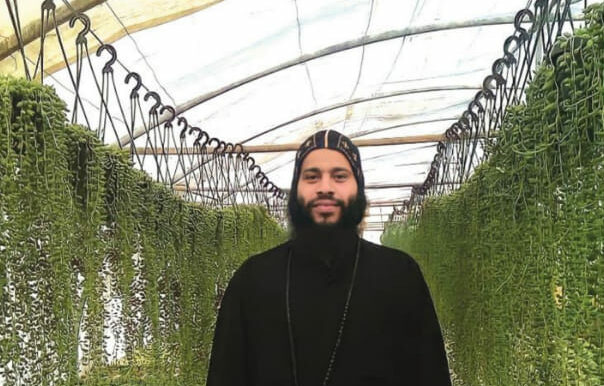
Justice served? The speedy conviction and execution of a monk for murder
At 4:30 am on July 29, 2018, Father Gabriel al-Makary, the head electrician at the Monastery of St. Macarius in Wadi al-Natroun, northwest of Cairo, was headed to the prayer hall for Sunday mass. Walking down the corridor connecting the monks’ quarters to the church, he found a monk lying face down on the floor in a pool of blood around his head. The lifeless body turned out to be the abbot of the monastery, Bishop Epiphanius.
Upon examination, the monastery doctor determined that Epiphanius had died after sustaining severe injuries to the head, including a crack in the back of the skull. The police concluded that Epiphanius had been killed sometime around 3 am, approximately 50 meters outside his own quarters in one of several hallways connecting the monks’ living quarters in an area not covered by security cameras.
After an investigation that lasted several days, and included testimony from some 145 monks, General Khaled Abdel Hamid, the deputy director-general of criminal investigations of Beheira Security Directorate, presented his findings to the prosecutor on August 9. The report stated that the murder was committed by two monks: Wael Saad Tawadros, 37, and Raymond Rasmy, 36, known by their monastic names Isaiah al-Makary and Faltaous al-Makary. Six days prior to their indictment, Tawadros had been defrocked by the Coptic Church on grounds of clerical misconduct, according to a church statement.
The case was referred to court on August 19 and the trial began on September 23. During the trial, prosecutors said that Tawadros struck the bishop three times in the back of the head with a steel pipe while Rasmy stood guard outside. In April 2019, the criminal court sentenced the two monks to death. A little over a year later, in July 2020, the Court of Cassation, Egypt’s highest court of appeals, upheld the death sentence for Tawadros and reduced Rasmy’s sentence to life in prison. Tawadros was executed on May 9, 2021.
In less than three years from the bishop’s murder, Egypt's judicial system had raced through the investigation, prosecution, trial, appeal and execution of a monk, the first state execution of a Christian clergyman in Egypt’s modern era. Yet the case is anything but straightforward. United Nations experts, human rights groups, legal analysts, and others have all pointed to flaws in the trial proceedings, case evidence, abusive treatment in detention, and other aspects of the case that raise serious doubts about the convictions. The alleged motive for the murder has also been criticized as dubious, with swirling alternative theories about why the bishop was killed. A review of the case file, along with interviews with lawyers, family members and other sources, call into question numerous aspects of a high-profile case that led to a monk’s execution.

At 8 am on May 9, Tawadros’ brother, Samuel, received a call from prison authorities informing him Tawadros had been executed that morning. “They called and told me to come and pick up my brother’s body,” Samuel told Mada Masr.
The news came as a shock. Samuel had just visited his brother in prison a day earlier. Neither Samuel or Tawadros’ lawyers had been notified of the impending execution, in violation of Egyptian law. During the final visit, five or six National Security Agency personnel were in attendance, logging the brothers’ entire conversation, as was the case every time. Authorities treated it “like a political case,” Samuel says.
Samuel later learned from the confession priest who attended his brother’s execution that Tawadros had maintained his innocence until his death. “[My brother] said he didn’t do it,” Samuel said, recalling the confession priest’s account. “He said, ‘Both my and Epiphanius’ blood is on the hands of those who pinned this on us.’”
The day after the execution, the confession priest, Abbot Dawood Girgis, posted a video recounting Tawadros’s final moments. In it, he refers to Tawadros as a martyr and offers his condolences to the family.
According to Samuel, Tawadros was viewed as an innocent victim by many members of the clergy, priests and parishioners, including noted bishops. The archbishop of Beheira rented a hearse and bought Tawadros vestments for the burial ceremony. The archbishop of Assiut, Tawadros’s hometown, led the funeral service at the local Church of Saint Macarius, where Tawadros was given an ecclesiastical funeral. A memorial service was also held at a monastery in the Assiut village of Abu Tij to mark 40 days after his death.
“The funeral and the memorial were attended by a large crowd. Parishioners came from both Assiut and Cairo,” Samuel said.
The Coptic Church leadership had a different perspective, however. A spokesperson for the Coptic Orthodox Church issued a statement on May 21 fully endorsing the outcome of the trial and reprimanding those who cast doubts on the judicial proceedings for propagating falsehoods and smearing the church and the clergy. They also denounced “using invalid labels like saint and martyr” to describe Tawadros and said that holding an ecclesiastical funeral service for Tawadros was a violation of the law.
Despite the church’s stance, it was anything but an open and shut case.
Experts say the verdicts are based largely on a confession Tawadros gave to interrogators in the absence of any legal representation after he was forcibly disappeared following his August 2018 arrest. There were no witnesses to the crime and no CCTV footage or other material evidence was presented in court.
The investigation report states that an arrest order was issued on August 9 and Tawadros was apprehended the following day at a checkpoint in Beheira, although — according to Tawadros’s lawyer, Ehab Sidra — he was in the custody of national security from August 2–11. One monk testified that he saw marks of torture on Tawadros’ body.
During the trial, Tawadros recanted his confession and told the court that it was extracted under torture, yet the judge disregarded his claims. “If he had indeed confessed to the prosecutor, why would he recant his confession in court?” Tawadros’s lawyer, Ehab Sidra, told Mada Masr.
On August 2, Tawadros tried to kill himself by drinking pesticide, according to the case files. Rasmy staged two suicide attempts of his own. The second time, he jumped out the fourth-floor window of the monastery clinic. He was then transferred to Qasr al-Ainy Hospital, where he continued to be interrogated. During Tawadros’s questioning, he stated that he was driven to suicide by the pressure exerted on him by the investigative police officer Khaled Abdel Hamid, who he claimed threatened to release footage of himself in the company of women, which could get him defrocked.
Tawadros was also forced to carry out a "reenactment" of the attack on Epiphanius on August 12, according to the case papers. The reenactment was videotaped and later presented as evidence at the trial. The court denied the defense team a copy of the video, leading them to consider submitting a request to recuse the court. After several pleas, they were allowed to view the tape. According to Sidra, instructions being given to Tawadros on how to reenact the crime can be heard on the recording.
While the monastery is outfitted with three surveillance cameras, according to the case files, none of them cover the hallway where the murder was committed. Nevertheless, the DVRs and memory cards connected to the three cameras were found either broken or empty. Upon questioning, the person in charge of the equipment stated that someone from the Interior Ministry or the prosecutor’s office asked him to disconnect the DVRs, even though he was not certified to do so and the prosecution charged him with evidence tampering.
When the case went before the Court of Cassation in July 2020, Sidra came prepared with documents and evidence. Yet the judge instructed him to keep the specifics of the case out of it and to only argue whether the verdict should be appealed on technical grounds, Sidra said. Yet the court ultimately did consider the specifics, leading to the reduction of Rasmy’s sentence and Tawadros’s death sentence being upheld.
The Court of Cassation typically either refers death sentence verdicts back to a lower level court or retries the case itself, yet the court issued a final verdict after a hearing that lasted only 20 minutes, according to Sherif Azer, the program director at the Egyptian Commission for Rights and Freedoms. Azer said the move was technically legal, since it is up to the court's discretion to determine the proper course of action, but it is unusual in death penalty cases.
In an October 2020 UN report on the case, rights experts also criticized the appeals process. “The Court [of Cassation] used the 2017 amendments to Egypt’s Code of Criminal Procedure Law no. 57 of 1959, which limits the two-stage process of appeals before the Court of Cassation, abolishing key fair trial guarantees and expediting the implementation of the death sentence. The motivation of the Court to do this remains unclear, and is only presumed as a further example of the deeply unjust treatment,” they wrote.
The report called on Tawadros’s execution to be halted and his death sentence commuted and “According to the information brought to our attention, the convictions of both [defendants] may be in serious violation of applicable international human rights standards,” they wrote, pointing to allegations of torture, lack of evidence and discrimination against the monks in detention.

In the wake of the appeals court verdict, Sidra submitted a petition in April 2021 to the general prosecutor based on what he claimed was new evidence. The petition, which Mada Masr obtained a copy of, was referred to the Damanhour Public Prosecution office three days before Tawadros was executed. The petition cites the UN report as well as a December 2020 Amnesty International report that characterized the trial as “grossly unfair,” that Tawadros was “denied the right to an adequate defense” and that “the court relied on [Tawadros’s] torture-tainted ‘confessions’ to secure a conviction.”
Sidra raised a number of questions about the alleged murder weapon put forward in the trial. The autopsy performed by the forensic authority concluded that Epiphanius’s head wound was caused by a hollow steel pipe and that an injury to Tawadros’s left hand was caused by the tip of the pipe as he wielded it in the attack. In the petition, Sidra attached a report by a sworn medical expert certified by the Justice Ministry that found Epiphanius’s wounds were penetrating and incised in a way that could not have been caused by a hollow pipe. The petition also points out that Tawadros is right-handed, calling into question the theory that he injured his left hand while wielding the pipe. Tawadros claimed during questioning that he had sustained the hand injury while cutting an onion.
“The pipe [said to have] killed Epiphanius could not possibly cause such grave head wounds,” Sidra said. “The chief forensic expert told the court that the forensic doctor [who worked on the case] misspoke about the injury. This is all a matter of record.”
The prosecution requested a forensic report showing that Epiphanius’ blood was found on the pipe, yet the case was referred to trial without the report being submitted, in contravention of the law. The report made its first appearance four sessions into the trial, according to Sidra, and while he was eventually allowed to view it, he was not allowed to contest its findings.
The report contains one of two mentions of the murder weapon in the case file. The other comes in Tawadros’s alleged confession where he says he dropped it at the scene. Yet, the investigative officer said on August 13 that after his confession, Tawadros led the police to a nearby shed where he had placed the murder weapon.

Sidra’s petition also contests the claim that the murder was premeditated. The investigation report states that the two monks had planned to kill Epiphanius on two previous Sundays as he was making his way to mass, but that Epiphanius had overslept on the first and remained in his quarters on the second. However, the defense team obtained a travel log showing Epiphanius was overseas in Australia during that period.
Additionally, 36 monks who were called as witnesses for the prosecution denied in court that Tawadros was involved in the murder. One of them testified that he and Tawadros had gone out to escort guests back to the church and only arrived after the incident had taken place, a claim that is supported by the monastery’s entry log.
Sidra also pointed to other questionable factors in the case, including the fact that none of the 500 workers who have access to the monastery were questioned, that the surveillance equipment was suspiciously out of order and that Father Zenon — who had served as a confession priest for the victim as well as the two defendants — was transferred to another monastery then died of a sudden illness while the case was being tried.
“This case is riddled with flaws. It took a highly unusual course. Was the goal to wrap it up quickly? Stop other facts from being uncovered? I don’t know. I have never seen anything like it, Sidra said, Continuances would be issued on a Saturday for the following Thursday. Criminal courts typically issue months-long continuances, unless there’s another reason to wrap things up quickly,” Sidra said. “The church leadership disengaged from the whole thing and left it to the judiciary.”
Azer, of the Egyptian Commission for Rights and Freedoms, said by defrocking Tawadros, the Church made him a perfect target for the authorities to focus the case on. Azer also points to the unusual speed of the case, saying that prisoners are typically on death row for three or four years before an execution is carried out, whereas Tawadros was executed less than a year after the appeals court upheld his sentence. “A case like this shouldn’t end in an execution. The execution was a nightmarish end to close the matter,” Azer said. He added that the unusual course of action taken by the Court of Cassation effectively amounted to a “denial” of Tawadros’s right of appeal.
“The events surrounding this case are suspicious,” says Azer. “Execution should have been off the table.” He said Tawadros was forcibly disappeared and denied visitation by an attorney or by his family for weeks (the family’s first visit came on August 28 at Damanhour Prison). For periods of time, Tawadros was not allowed a priest to hold mass and communion and letters he wrote to members of the Church were blocked.
Similarly, the Egyptian Initiative for Personal Rights, which worked on the case as part of its Stop the Death Penalty In Egypt campaign, called for the execution to be suspended after the verdict was upheld, citing multiple violations in the trial.

Wadi al-Natroun Monastery, a registered heritage site and one of Egypt’s oldest Coptic monasteries, stands opposite Sadat City along the Cairo-Alexandria Desert Road. The official survey conducted for the case shows that the monastery stretches over 4,000 feddans (16.8 square kilometers), although witness testimonies and media reports put its total area at 2,700 feddans. The monastery grows beets and olives, produces dried figs, dates and grapes, raises chickens and cows and maintains bees for honey production.
According to the case files, only 15 feddans of the total area are built upon, including churches, monks’ quarters, administrative offices and workers’ rest houses, with rest used for farming and agriculture. The monastery is enclosed by a wall nine meters high with police stationed outside the main gate. There are two other entrances: one leads to the main church and the other to the old living quarters and the farms.
The monastery, which had fallen into disrepair by the 1960s, entered an era of restoration and repair with the arrival of Father Matta al-Meskeen in 1969. Monastic activities were resumed, with the number of monks growing to more than 150. When Meskeen passed away in 2006, responsibility for the monastery was charged to Bishop Mikhail, the archbishop of Assiut. Mikhail eventually resigned as bishop due to disagreements between followers of the Meskeen school and those loyal to Pope Shenouda III. Shenouda came to oversee the monastery himself until his death in 2012, after which Mikhail took over again. A year later, Epiphanius was elected bishop.
These intellectual disagreements were pointed to by some as being a possible motive for the murder of Epiphanius.
According to the case files, some monks testified that there were no disagreements to speak of or that there were only mild differences of opinion. Others, however, described a more vicious discord that could have led to the murder. Several witnesses say the controversy began with the selection of Epiphanius to head the monastery in 2013. Epiphanius followed Matta’s theological school of thought, while other monks — including Tawadros and Rasmy — followed Shenouda.
“There’s nothing in the case files about intellectual differences. It was witnesses who brought that up,” Sidra said. “Do intellectual differences lead to murder? If so, Shenouda’s followers would have killed all followers of Matta al-Meskeen or the other way around,” adding that the topic was just a way to “obfuscate the issue.”
In February 2018, Tawadros was transferred out of the monastery, though not over the growing intellectual dispute. A number of witnesses pointed to Tawadros’s financial indiscretions, while others attributed the move to violations of proper clerical conduct. The church had initially ordered Tawadros be transferred for three years, but after a petition of support was submitted by 52 monks, he was ordered to remain confined in his quarters in the monastery for 40 days. During his questioning, Tawadros said the problem arose because Epiphanius had been strict in not allowing monks’ families to visit the monastery.
Others point to deeper divisions between Epiphanius and a number of monks, who even refused to be led by him in prayer for years. The divisions stemmed from Epiphanius’ travels, how he ran the monastery, ministerial differences and disagreements over visitation times. A number of the dissenting monks were members of a WhatsApp group titled “A voice roaring in the wilderness,” which was created to talk freely about affairs of the monastery, including criticism of the bishop.
Despite the divisions between Epiphanius and a number of monks, the investigation focussed almost solely on the conflict between Epiphanius and Tawadros over what was described in the case files as Tawadros’s “misconduct.”
Sidra believes there was an effort to smear the defendants in order to more easily convict them. This included drawing attention to the theological disagreements with Epiphanius, as well as leaking private phone conversations between the two defendants, according to Sidra and Tawadros’s brother. Azer believes that the phone calls were likely leaked by the prosecution to vilify the defendants. Some monks also mentioned during the investigation that Tawadros had previously assaulted two monks, once verbally and once physically.
While Sidra disregards the intellectual differences, Azer believes it is a reasonable motive that may have led to murder. But Samuel claims that his brother Tawadros was not in fact a Shenouda follower, but rather favored the same faction as Epiphanius.
“If it were true, if the old guard had incited [Tawadros and Rasmy] to eliminate Epiphanius as a representative of the school of Matta al-Meskeen, why wouldn’t they speak out against them under threat of execution?” Samuel argues. The extent of the disagreement, according to the brother, was about how the monastery was run, which was also the subject of discussion on the WhatsApp group.
Samuel says that Tawadros had plans to buy a plot of land and build his own monastery in Wadi al-Natroun. “He was scammed and the project failed. That’s what he was disciplined for in February prior to the incident. The issue was resolved and Epiphanius covered the losses,” he said.
Another theory is that the murder may have had something to do with a dispute over the land adjacent to the monastery with several incidents taking place in the days leading up to the murder.
Two sources told Mada Masr on condition of anonymity, that Epiphanius had previously complained about bedouins repeatedly trespassing on the premises, with the most recent incident taking place just days before his murder. The privately owned Dostor published a copy of a letter penned by Epiphanius to the Antiquities Ministry. Dated July 22, 2018 — just a week before the murder — the letter was a petition to either permit the construction of a wall around the heritage site outside the monastery or allow the monastery to buy that piece of land in the event that it becomes on sale. Meanwhile, a number of monks mentioned during the investigation that someone had attempted to jump the fence into the monastery a week before the murder. A police investigation into that incident later concluded that the person was unstable. Some witnesses also recalled a thug trying to trespass on the premises.
The land outside the monastery is state-owned with parts of it belonging to the Armed Forces. Yet there has been a larger dispute between landowners in the area over reclamation privileges since 2014. The matter was referred to the judiciary and several government officials were found to have been involved. Parts of the state-owned land outside the monastery was also assigned and reassigned several times, most notably in a December 2018 presidential decree to reassign a 1,400 feddans (5.88 square kilometers) plot of land to the Armed Forces National Service Projects Organization.
تقارير ذات صلة
The fire you cannot put out: Imbaba’s churches and the threats they can’t extinguish
There are 11 churches total in Imbaba, of which only five have obtained liscenses
Protests, arrests in Minya village point to longstanding discriminatory policies over church permits
Over two days in late January, dozens of Coptic Christian residents of the village of Ezbet Farag Allah in Minya staged a demonstration in front of the Diocese of Samalut…
Will the laity save the Coptic Church?
The death of Bishop Epiphanius reopens discussions around electing a new Millet Council
Your support is the only way to ensure independent, progressive journalism survives.
You have a right to access accurate information, be stimulated by innovative and nuanced reporting, and be moved by compelling storytelling. Subscribe now to become part of the growing community of members who help us maintain our editorial independence.
Join us