
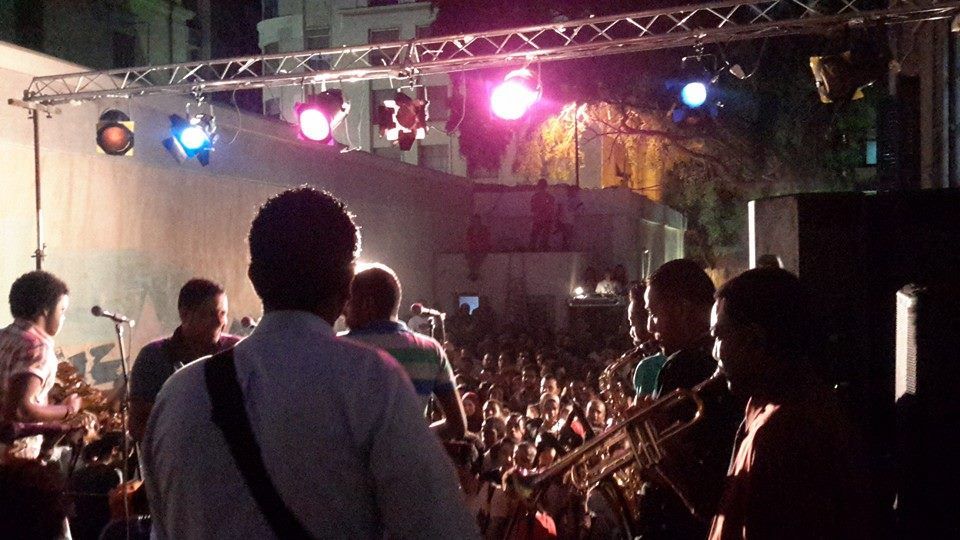
In conversation with Ayman Asfour: Oufuqy and the Alexandrian music scene
Having just finished its fourth edition, the Oufuqy music festival — or forum — is starting to become the “most favorited” festival in Alexandria by musicians and audiences alike.
I've been following Oufuqy since its inception in 2012. It started out as a five-day event showcasing 10 bands and five music films at one venue, El Cabina in Alexandria, but quickly spread to 12 days in a variety of locations with local and international musicians and workshops.
Qufuqy — which translates to horizontal or “my horizon” — was conceived to allow the audience to integrate the music into their lives, in contrast to one-day music events.
Oufuqy feels like a manifestation of the collaborative spirit that makes Alexandria’s alternative art scene so special. It is almost entirely volunteer run and the venues hosting it are a mix of the spaces of festival founder Gudran for Arts and Development, such as El Cabina, El Dokkan and Wekalet Behna, but also other spaces such as the Jesuits, the Atelier Alexandria, Goethe Institut, the French Institute, Calithia and even Odeon Cinema.
I sat down with festival founder and curator Ayman Asfour, one of Egypt's best violinists and a cultural worker with Gudran, who dedicates much of his time to establishing a proper infrastructure for the alternative music scene in Alexandria to flourish.
Ayman Asfour: So tell me.
Rowan El Shimi: This is the fourth edition of Oufuqy. When you started working on it, what were you looking to develop from previous editions?
AA: The first real difference is that Abdalla Daif, Sameh el-Halawany, the Gudran team and I started planning since November. With the instability in the country over the past few years, we never planned Oufuqy much in advance, so this made a huge difference. It gave Abdalla the chance to fundraise properly for Oufuqy and we got a grant from AFAC, which made a big difference as we've always been working low budget or even zero budget in previous editions.
RS: Previously Oufuqy was not funded, right?
AA: Exactly.
RS: I'm curious how you financed it before, since all the events are free for the audience? Even for a low-budget festival there are still some expenses...
AA: We did it in three ways: The spaces, the artists and the staff were all volunteers. The bands themselves all played for free or took very, very small fees. In any other festival the musicians’ fees can be a big sum on their own.
In Oufuqy's case, because the festival is free, many musicians like to take part in this model and appreciate its value. The same with venues, they work as partners not hosts. With the volunteers, many gain experience through participating in the festival, such as the photographers or the videographers, as then they have a finished project they can show and get other paid work.
We have our own equipment at El Cabina, and the rest we can manage. Sometimes we take the extra expenses from Gudran's music budget or we use the studio rent from bands, which isn't much but is something. We're always making adjustments.
Even though this way of working was making the festival successful, it was also putting a lot of stress on us as organizers and we left the festival exhausted. It was also difficult not to be able to pay our artists or even just cover something of their expenses.
This year we worked on two fronts: Abdalla was working on funding opportunities, and I was in Denmark at the Copenhagen Jazz Festival and Fanø Free Folk Festival creating some partnerships. We wanted this year to have an international element. We are both connected to lots of musicians around the world and wanted to create partnerships. I met many musicians who had no idea about Egypt and were very curious to get connected to the Egyptian music scene. I talked to Rasmus Stevenson, founder of the Folk Festival, about Oufuqy and the Alexandrian music scene. He came for New Year’s Eve. I showed him around and we started talking about an exchange between Oufuqy and the Folk Festival. Three bands/artists from Denmark came with the support of DEDI.
I had also met Daniel Merrill last year, and we had a strong artistic and conceptual connection. Through his European tour, I got in touch with artists I believed would enrich Oufuqy, so Abdalla spoke with the British Council about supporting these artists to come. They also suggested Oliver Coates, as we were looking for someone playing cello in a totally new style. He's one of the highest rated cello players internationally. He ran a workshop with Alexandrian cello players on new approaches to playing the cello.
RS: This is a usually problem with festival programming. Bringing international acts is very expensive, and so usually you have to opt for European acts because their respective cultural centres cover their own artists. This means regional artists are not able to meet so often and collaborate as much as they do with Europeans.
AA: That's true, but it's changing. Programs such as AFAC, for example, gave me the ability to pay some of the fees of Sudanese artist Alsarra and all the fees of Rouh Trio to come from Amman. There are other programs like Mawaeed and Safar fund. A smart festival programmer should focus on syncing their activities with these programs. It does need effort and more of these regional programs to exist.
RS: But was it a priority for you while programming to have regional artists present?
AA: Yes. We were looking for a mix of local artists, regional and international ones. We were especially aware, when looking at the local artists, to get a balance between acts from Cairo and others from Alexandria. Last year and the year before, I felt we dragged ourselves toward hosting lots of acts from Cairo, while there were lots of Alexandrian bands that wanted to perform. This year we were very focused on having artists from Alexandria: Samir Nabil (Object Obscure), Solo, Storm, new promising progressive rock band Paranoia, Tranzit, and others.
RS: I wanted to also talk about how Oufuqy has grown since 2012. What steps has it taken in the past four years?
AA: Our first year, we had all our activities at El Cabina. This meant it was very different on an organizational level. It was much shorter, only five days. We had a smaller audience, but also that meant fewer volunteers and artists. For me, it was one of the best editions. It was a special time. No one knew where things were headed. It was happening at the time of the presidential elections, in fact the announcement of [Mohamed] Morsi winning happened during the last day's sound check. It was a big challenge, but for me it was one of the best versions because it was within our capacity and it was also the time when musician Khaled Kaddal co-founded Oufuqy with me.
The second version was during the lead up to June 30, which ousted Morsi. During the festival there was the artists’ take-over of Beram Tonsi theater in Alexandria. For me the second and third editions were learning processes for us, since the festival was growing and we were experimenting with having it in a multitude of spaces and for different periods. We were learning how to grow our sound team, video team, on the ground team, etc.
Oufuqy II and III were successful, but we would leave exhausted as there were way too many details. In the third Oufuqy, we had a bigger audience, but we discovered a new space: Odeon Cinema, which is abandoned. We opened it and cleaned it up ourselves and hosted Ali Talibab in it last year. That year, the lights went off and we didn't have a generator, so we learned from that.
This year, we had better organization after learning from these issues. We realised we needed to have stronger volunteer units. We gave the volunteers workshops on sound. Same with video shooting and editing. There was also a focus on strong coordination between the units and scheduling and checklists. Then Abdalla and Roger Haddad took over the administration and leading of the volunteers and syncing their work with Gudran's already existing units. This was very important for me, because for the first time it allowed me to really focus on the artistic component of the festival and to deal with the artists and meet their needs.
I'm really happy with the organization this year. Even though its our biggest edition yet, we are all coming out of it comfortably, not sick or exhausted like in previous years.
RS: What's next year's plan?
AA: I really want to move on from the curation. But I don't know if it will happen next edition or the one after. I'd like to have different curators come in and choose the content. I want to see Oufuqy surviving on its own, without me. Because I need to focus on other elements of my larger project for independent music in Alexandria, The Green House. Oufuqy is a milestone in that project.
The Green House has many aspects. One of which is to have more venues for live performances. Another is to have more rehearsing and recording studios, like the one we hosted in El Cabina. To have round-tables and conferences around music. To have music criticism in Alexandria. To have festivals. This doesn't mean The Green House has to do all of this itself. But my work in Gudran is to share this vision with many in Alexandria. We also want to have a modern music academy, but this is still a more long-term plan.
RS: Do you feel like this vision of the Green House is starting to come to life — whether through your work in Gudran or through other people's initiatives in Alexandria?
AA: For sure. Four years ago The Green House was supporting four or five bands. Now there are 40. We had the vision to have a small festival showcasing the Alexandrian music scene and connecting it to the Cairene one. Now Oufuqy is an international festival and one of the biggest festivals happening in Alexandria.
The Green House had the vision to have several studios in Alexandria, like the one we have in El Cabina, which is low-budget and within bands’ financial resources. Now there are 10 or 15 studios that are sprouting up around the city.
There are three or four spaces that also use the model of how we present music in El Cabina: 40-50 people sitting on the ground and someone presenting their music to them in an intimate setting. Similar to ROOM in Cairo, which is in my opinion one of the best models for music venues in Cairo, and its one of my dreams to see others like it. If we have others there will be a huge difference in the music scene in Cairo and Alexandria. Because the alternative music scene is still confused between working in small spaces, in a real alternative way, and being alternative but having all their concerts in big spaces.
The label will be launched soon. Hopefully by the end of this year or the start of next year. We are challenging the idea of CDs. We are looking into alternative models of producing and distributing for Alexandrian artists. We will start small, and let it grow organically.

Rowan El Shimi
Rowan El Shimi is a culture journalist from Cairo, but she often finds herself working on stories all over the country, especially Alexandria. She covers a range of topics in culture, mostly…
تقارير ذات صلة
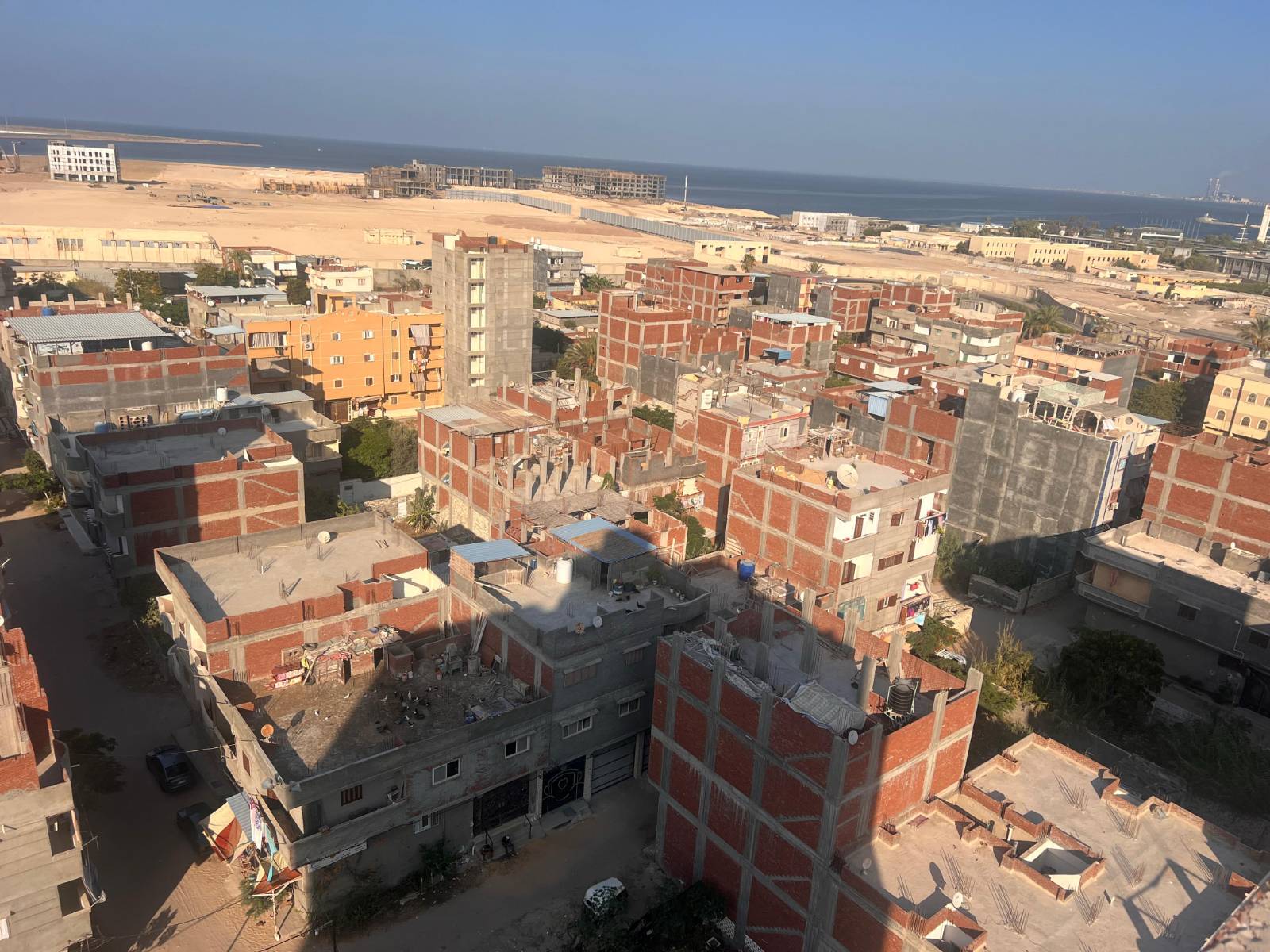
Govt to tear down Toson residential area of east Alexandria
Tension between the residents and local authorities has built over the course of the year
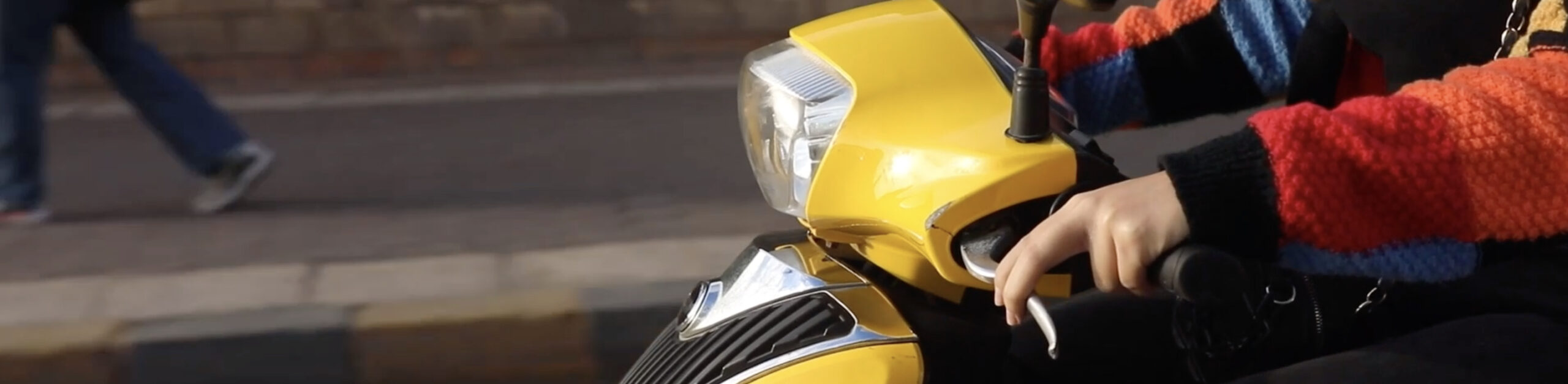
Video | Making her way
Mada hit the streets with three women in Alexandria who ride scooters in different contexts
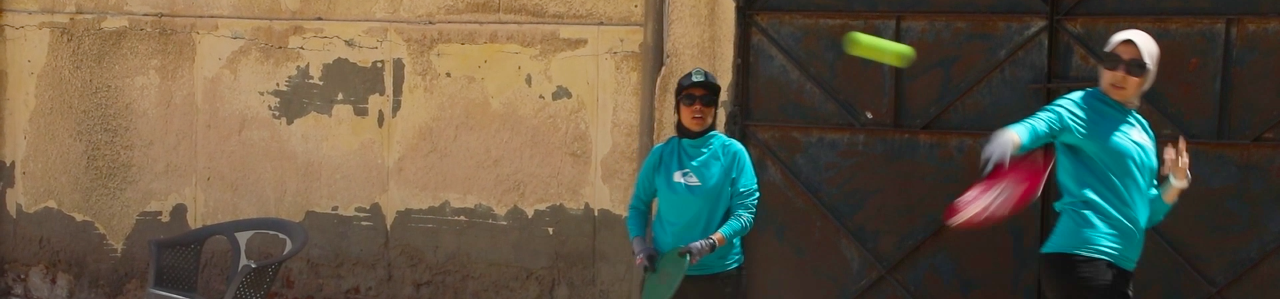
Video | Keeping their eye on the ball
Some are trying to form professional teams in clubs, striving to compete internationally.
Your support is the only way to ensure independent, progressive journalism survives.
You have a right to access accurate information, be stimulated by innovative and nuanced reporting, and be moved by compelling storytelling. Subscribe now to become part of the growing community of members who help us maintain our editorial independence.
Join us