
FestBeat: Day 3 prompts questions about CIFF’s character
We are almost midway through and I have questions.
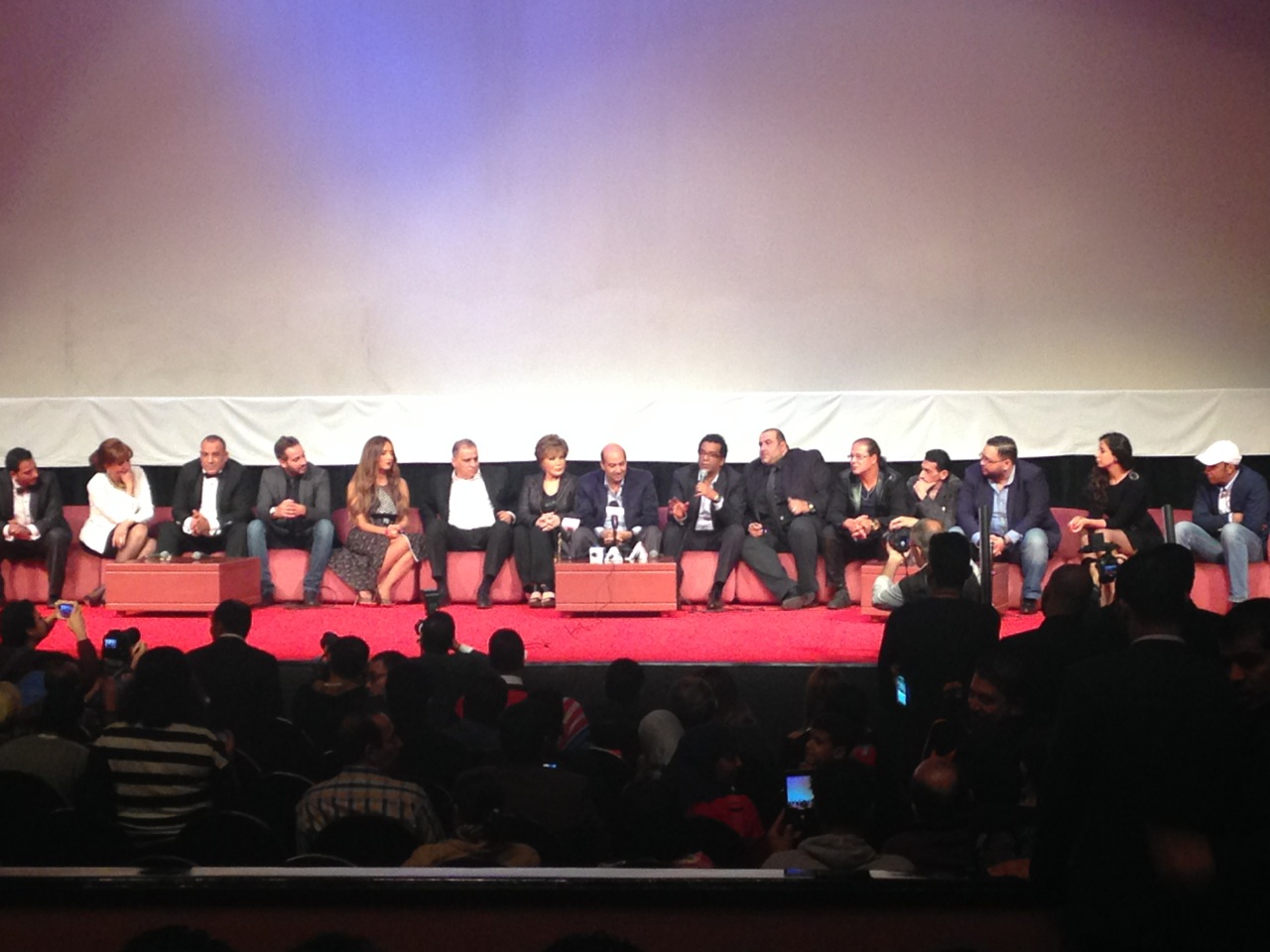
Yesterday saw the world premiere of Sameh Abdel Aziz's Al-Leila al-Kebira (The Grand Night, 2015), one of only two Egyptian films in the festival's International Competition. If we ask “what is cinema today?”, the answer The Grand Night gives is categorically different from that given by Madame Courage (Merzak Allouche, 2015) or In Your Arms (Samanou Sakhlstram, 2015). How can these three films all be competing for the same prize? If the programmers are making an argument, then they need to make it clearer — perhaps by having a discussion series or Q&A sessions in which they define the concerns or questions this edition of the festival aims to explore. Otherwise, people like me are left confused and frustrated.
Centered around a moulid, The Grand Night is a film that's trying hard not to be boring. It gives the crowd what it wants, from its punch lines to its emotionally intense drama. But it doesn't seem to know what it wants to do apart from maintain the audience's attention. It does not innovate in its camera work, sound design or frame compositions. It lacks imagination and ambition in its images. It has poor editing and seemingly arbitrary cuts to documentary footage — I actually wondered if they were there by mistake. A key difference between The Grand Night and the other films in the competition I have watched thus far is its view of cinema as a propaganda machine. It preaches and moralizes. It doesn't champion private passionate relations of love or loss. Where the other films suspend judgment in favor of an emotional exploration of a state or mood, this film has very clear messages. This is why I have to ask about the vision behind the programming of the 37th CIFF.
We all agree that the basic question is an age-old one: “What is possible in this medium called film?” But to have a coherent program there has to be a better defined hypothesis for what the organizers of the 37th CIFF think is possible through the medium. I turned to the poster design to try to find an answer but failed to find one.

Faten Hamama is the face of the Cairo International Film Festival this year. Cannes also used a film star as the face of its festival earlier in the year. Writing about this decision, the programmers for the 68th Cannes Festival wrote, “Hollywood star Ingrid Bergman was a modern icon, an emancipated woman, an intrepid actress, and a figurehead for the new realism.” Although a similar argument could be made for Hamama, who passed away this year, the CIFF doesn't articulate it. So I'm left wondering whether having Hamama as the face of the CIFF in its 37th run is mere nostalgia for a “golden age” of Egyptian cinema.

There are huge innovations taking place today in storytelling as a result of new technology. Critics and academics are again asking what cinema can be. Is the poster and the programming with its tributes and panoramas an attempt to start dialogue around this question within the context of CIFF 37?
People trek the cold trails to Utah in the USA every January to attend the Sundance Festival because it's hip, young and fiercely innovative, has a dark indie vibe and some of the best parties and food around. On the other hand, Kenneth Turan, a veteran critic for the Los Angeles Times, has said he heard a survivor of Cannes likening the experience of being there to “a fight in a brothel during a fire.” The grande dame of film festivals makes people acutely aware of where they stand in the hierarchies of the film world.
Winning the Palm d’Or is not the same as winning the Golden Lion, because each festival has its take on things and unique set of concerns that evolve over time. What does winning the Golden Pyramid in 2015 stand for? The program and visual identity should reflect a vision, a set of concerns or questions. As much as I appreciate the effort put into organizing the festival this year, so far I am left hoping for more.
تقارير ذات صلة
Whose narrative are we writing?
Tamer El Said on censorship, the Cairo International Film Festival and his film’s leak
Is it really possible to avoid politics in a place like Egypt? A conversation with Mohamed Hefzy
Can writer and producer Mohamed Hefzy evade political confrontations and compromises?
Poison into medicine: On watching Poisonous Roses
Ismail Fayed reviews Ahmed Fawzi Saleh’s debut feature film, Poisonous Roses
Your support is the only way to ensure independent, progressive journalism survives.
You have a right to access accurate information, be stimulated by innovative and nuanced reporting, and be moved by compelling storytelling. Subscribe now to become part of the growing community of members who help us maintain our editorial independence.
Join us