
Egypt’s media four years on: Lamenting the loss of truth
Four years after the ouster of Egyptian President Hosni Mubarak, journalists are once again feeling the pressure of limited press freedoms, which some say are even more restrictive than before the revolution.
Following Mubarak’s removal from power, journalists witnessed an ambitious opening of the public sphere and caught a glimpse of what press freedom could really look like. While the state still maintained control over the media, journalists enjoyed a larger margin of freedom than ever before, both in state-owned and privately owned platforms.
Violations against journalists and freedom of expression in general still persisted during the consecutive rules of the Supreme Council of the Armed Forces and the Muslim Brotherhood. But a new level of restrictions has emerged since the military removed the Brotherhood from power in 2013.
A polarized political sphere resulted in similarly polarized propagandist coverage, divided between equally histrionic pro-military and pro-Brotherhood outlets. But with several Islamist channels taken off-air, Egyptians are now left with a voluble pro-military chorus, and no dissenting voices to counter it.
Today, journalists who aren’t aligned with either camp are lamenting the loss of truth.
One television producer, who asked to remain anonymous, spoke of the “soft power of censorship,” as he unpacked how the media has reached this point. Restrictions are not imposed via direct orders, he explains, but rather through a set of unspoken regulations within media outlets themselves.
He previously worked for a popular nightly talk show broadcast on a leading privately owned television channel, and says, “I had to negotiate all the time with senior producers and the channel’s administration to present objective news.”
“They would never tell me I was prohibited from filming certain reports with anti-regime views. But they would ask me to soften the criticism in order not to cause problems; or they would say that we shouldn’t mention facts that cast the Brotherhood in a positive light, because they are terrorists,” he asserts.
And it’s an increasingly uphill battle to interview dissident guests that challenge state-authored narratives, the producer adds.
He recalls fighting to allow a member of the No to Military Trials for Civilians group to call into the show, which was hosting two guest speakers supporting military trials in that particular episode.
The rules governing which guests are allowed to appear are largely unspoken, the producer says, but he does recall one instance in which he was explicitly asked not to call or host specific guests.
“The only time I received a direct order not to host certain guests was [when I was told] not to interview any of the activists associated with the January 25 revolution,” he recounts.
This black list included liberal academic Amr Hamzawy, activist Mostafa al-Naggar, former television host Abdel Rahman Youssef, April 6 Youth Movement founder Ahmed Maher — before he was sentenced to prison — activist Alaa Abd El Fattah — before he was also sentenced to prison — and No to Military Trials founder Mona Seif, among others.
Brotherhood guests are equally unwelcome. The producer explains that bringing in a voice to represent the Brotherhood is always a problem, because the channel’s management believes the group’s members should not have any kind of “publicity.”
Some have tried to resist the monologues created by guests that only represent one side of the political spectrum.
An anchor with a privately owned television channel, who also asked to remain unnamed, explains that he particularly struggled with military-affiliated strategic experts who insist on calling the Brotherhood a terrorist organization.
“I shouldn’t use judgmental language, so I have struggled with certain terms, like ‘terrorist’,” he says. Challenging his guests on these topics lead to on-air confrontations and, consequently, angry guests have at times complained to the management. Soon, he found himself treated as a troublesome staff member.
Banning “unfriendly” figures is a relatively mild form of omitting divergent views from mainstream media. In more extreme examples, some journalists say they were forced to black out entire events from their reporting.
Ahmed al-Fiky once worked for the Egyptian desk of a leading Dubai-based channel, whose name he preferred not to disclose.
As a field producer during the Rabea al-Adaweya sit-in organized by the Muslim Brotherhood, he reported on the events from inside the protest camp until its bloody dispersal on August 14, 2013. He also filmed the Republican Guards massacre on July 8, 2013, in which more than 50 pro-Brotherhood protesters were killed in clashes with military forces.
“None of the material we filmed was aired, and six correspondents stopped working in protest,” says Fiky. “The channel’s administration told us later it was subject to pressure from the military, and that there should be some compromises to keep the wheels turning.”
The anchor working for the privately owned television channel recounts how the only videos he was permitted to air on August 14 were those showing the “safe exit” security forces offered protesters to leave Rabea al-Adaweya.
“On the other side [of the square], the killing continued, and all I could do was mention the numbers of those killed as they increased, as per the Health Ministry’s count,” he recalls.
Since then, the rising anti-military sentiment among Brotherhood supporters and secular activists has barely been reported in the media.
“I used to bring material to my editors that included criticism of the military. But eventually, I was told that no material with the phrase ‘down with military rule’ would ever be published, so as not to harm the military or serve the Brotherhood,” says a video journalist working for the online portal of a mainstream privately owned newspaper, who asked to remain anonymous.
In response, she pulled away from reporting on this type of news.
“I decided not to work on anything contentious,” she says. “I prefer to cover press conferences or any other casual news.”
Some have taken the extreme measure of quitting journalism altogether. Fiky left his job after little more than a year with his Dubai-based channel. He says there was simply no space left to operate.
However, some cracks are starting to appear in this wall of silence.
Ahmed Samir, a producer for the “Akher al-Nahar” talk show on the privately owned Al-Nahar Channel, says that hysterical voices supporting the military are starting to quiet down inside media institutions, which supported the current administration only out of fear that the Muslim Brotherhood could return to power.
"Those outlets used to present mindful and balanced coverage, but the hysteria that followed the Muslim Brotherhood’s rule made them look at the military as the only way out,” he says. But now, he explains, the wave of support is not as robust.
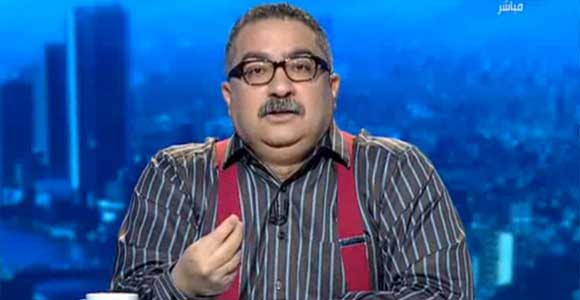
For example, in a recent episode of his show on the privately owned ONtv channel, host Youssef al-Husseiny — previously an avid supporter of President Abdel Fattah al-Sisi — harshly criticized the president after at least 22 football supporters were killed on Sunday when security forces attempted to prevent them from attending a game. Similarly, Ibrahim Eissa — another ONtv talk show host, who has been a staunch supporter of Sisi and the military — leveled fiery criticism against the government on his show after the football supporters’ deaths, lamenting state failure.
This slightly waning support goes hand-in-hand with a public that increasingly feels alienated by propagandist coverage, Samir says.
"There is a state of disrespect for this kind of media, which will push the people to look for other alternatives. Historically, this also happened in 1967, when people shifted to listen to the BBC and Monte Carlo, and then Al Jazeera in the 1990s,” he points out.
This same shift also occurred in the mid-2000s, when privately owned television channels and newspapers emerged to offer a viable, more convincing alternative to state-owned media.
But today, it remains to be seen if there will be another shift to alternative media outlets, or if non-state-owned media channels will reorient their coverage and regain their former credibility.

Mai Shams El-Din
Mai graduated from the American University in Cairo with a degree in journalism. She worked mostly for local English-language news outlets but has also been writing in Arabic, particularly when…
تقارير ذات صلة
Beating the block: Mada Masr launches Tor mirror
This cat and mouse game has been going on for too long now.
The project of Mashrou’ Leila
The frightening power of a multi-layered politics
Waiting for Shady
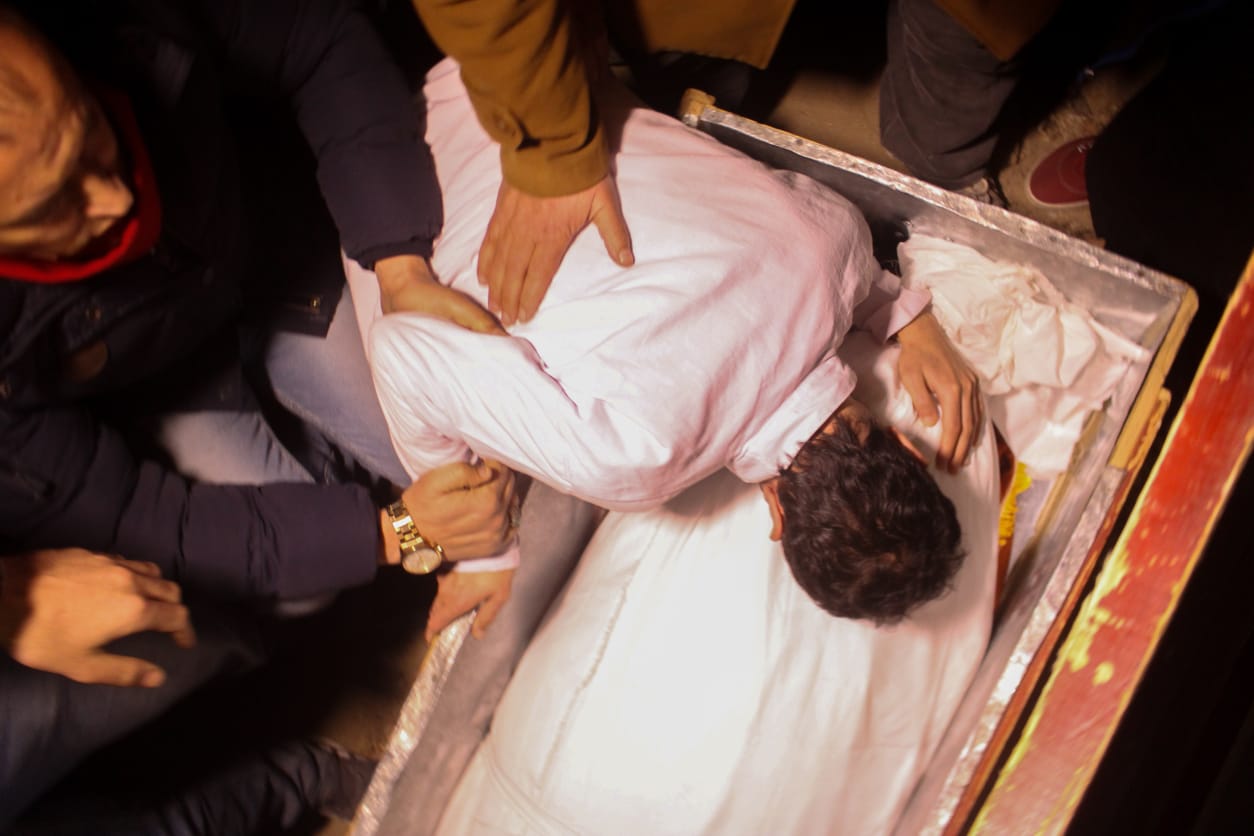
Witnessing the burial of incarcerated video blogger Shady Abu Zeid’s late father
Your support is the only way to ensure independent, progressive journalism survives.
You have a right to access accurate information, be stimulated by innovative and nuanced reporting, and be moved by compelling storytelling. Subscribe now to become part of the growing community of members who help us maintain our editorial independence.
Join us