
Egypt’s cinematic gems: Have a Good Day
A struggling artist stands on a stage as the lights are turned off one by one. In his wild imagination he flies to France, America's wild west, Russia and China, singing on their stages in the (sometimes rather painfully made-up) language of each country.
A harsh sentence wakes the dreamer up, reminding him he is theater-less, homeless and broke: "No artist can afford to pay his rent, Mounir."
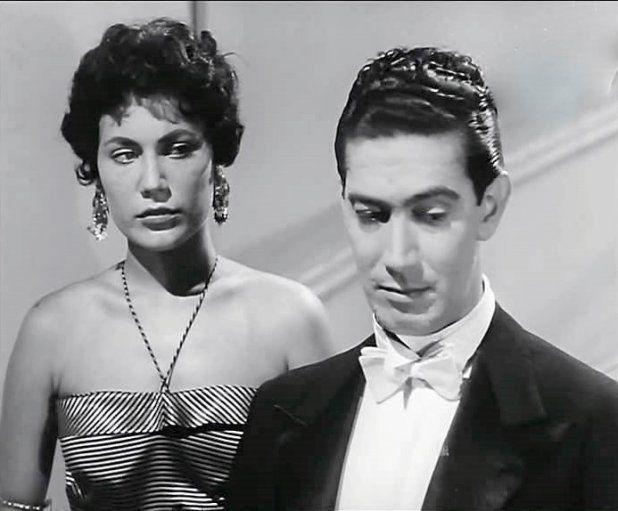
Fateen Abdel Wahab’s exuberant feel-good musical comedy Naharak Saeed (Have a Good Day, 1955) focuses on a societal malfunction in the early 20th century — a contempt toward actors and their profession.
After Khedive Ismail built the Egyptian National Theater in the Azabakia district in 1869, a theatrical wave hit the capital. One after another, theater companies started emerging, from Khalil Qabany's troupe, Salama Hegazy, Aziz Eid and George Abyad all the way to Naguib al-Rihany and his spouse Badeia Masabny, renowned dancer and owner of several Cairene clubs.
These troupes not only created the Egyptian theater scene but also shaped hundred of talents that later found their way into cinema. They changed the face of acting in Egypt, a profession that had been frowned upon by most Egyptian families.
The story of the struggling theater troupe has been depicted repeatedly on the big screen, in films such as Henry Barakat's Afreeta Hanem (Miss Devil, 1949), Aly Reda's Agazet Nos al-Sanna (Mid-Term Vacation, 1962) and Gharam Fel Karnak (Love in Karnak, 1965). The list is long and diverse, but the common factor is that they’re all musicals, and there’s always a love story (usually between the lead singer and the solo dancer) as a subplot.
In Have a Good Day, Mounir (Mounir Mourad) a multi-talented, innovative young artist and his colleague Souad or Suzy (Souad Tharwat), the solo dancer of his talented but penniless troupe, struggle to bring their art to the world.
"There’s a huge difference between my social class and yours," says Mona, Mourad’s ex-fiancée, as she storms out of his backstage room.
The story sheds light on a struggling artist in an increasingly money-oriented world, represented by the persona of the fabulously named father, Shaker Shaker Shaker (Serag Mounir), the owner of a soap factory and a vehement hater of actors and acting, although his wife Amina (Mimi Shekib) is a retired theater actor.
From the point handsome Mounir is thrown out of his wealthy father's mansion for choosing an acting career up until the opening night at the movie’s end, viewers are entertained with dozens of light musical skits composed by the genius Mourad himself, with fluffy, extremely funny lyrics by his career-long companion, poet Fathi Qora.
A rather simplistic plot by Ibrahim Mourad is brought to life by these skits, dances and a hilarious script, which are no doubt all the reasons it’s now considered one of the best musicals in Egyptian cinema.
Mounir Mourad was a winsome actor, a funny impersonator and a great composer, whose progressive approach to music infused many foreign tunes into Egypt’s music scene. His organic talent, mixed with the ingenious craft of comedy guru director Abdel Wahab, gives Have a Good Day a pleasant feel of spontaneity.
Many believe that the lyrics of most skits were written during improvisation sessions that included Mourad, Qora, Abdel Wahab and most of the (brilliant) cast, then a very unusual technique in the industry. The reason for this approach, apparently, was Mourad's inability to compose a tune for prewritten lyrics — it all happened at once.
The result is very engaging, especially as there are various points where the actors look as though they’re trying not to laugh as things get quite silly. The acting is expressive and physical, complemented by a variety of perfectly constructed costumes.

The mid-1950s was a “sensitive” time in the history of this country, and many cinematic productions of the era adopted a socio-political approach, telling the story of the common worker. Mourad, however, was more interested in a more lighthearted and glamorous Hollywood style, making his movies daringly anomalous.
Have a Good Day isn’t just convincing for its humor, music, acting and tangible passion for all things show business. It’s also beautifully crafted, shot in dramatic velvety black and white with carefully lit, considered compositions. Overall, it's a film that will probably actually improve your day.

Amany Ali Shawky
Amany is a Lifestyle and Society Reporter with Mada. With 10 years in journalism and publishing, she has written for everything from news to culture, environment and fashion, street politics…
تقارير ذات صلة
Egypt’s Cinematic Gems: The Open Door
Ismail Fayed explores Henry Barakat’s adaptation of Latifa al-Zayat’s 'The Open Door'
Egypt’s Cinematic Gems: Love’s Last Story
Raafat al-Mihi’s third feature combines symbolism with an unflinching awareness of reality
Egypt’s cinematic gems: Sleepless Nights
Hany Khalifa's frank film broke the prudish "clean cinema" trend in 2003.
Your support is the only way to ensure independent, progressive journalism survives.
You have a right to access accurate information, be stimulated by innovative and nuanced reporting, and be moved by compelling storytelling. Subscribe now to become part of the growing community of members who help us maintain our editorial independence.
Join us