
Egypt’s cinematic gems: ‘Ard al-Ahlam’
The "company's buildings" are one of the landmarks of Heliopolis. These oriental style apartment buildings are the off-white beauties that guard Korba with their majestic presence. Along with the nearby palace at Orouba, they are almost all that is left of the legacy of Baron Empain and his early 20th-century Heliopolis Oases Company.
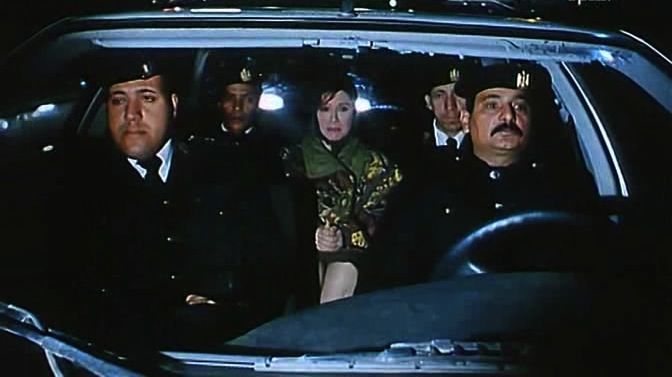
Narges Rihan, the heroine of Daoud Abdel Sayed’s Ard al-Ahlam (The Land of Dreams, 1993), is a middle-aged, wig-wearing, traditional upper-middle-class woman. She is a resident of one the company’s buildings and an eligible candidate for immigration to the land of dreams, America, as her eldest son is a resident there. Her family, fed up with life in Egypt, pushes her to apply for immigration, but she’s not ready for it.
Twenty-four hours before her morning flight to the US, she realizes that she has lost both her passport and ticket. Full of dread that she will ruin the immigration plan, Narges (played by Faten Hamama, aged 63 at the time) embarks on a quest around the city in pursuit of her false dream.
The film’s first few shots tell you how banal Narges' life is. She is an inexperienced driver with a severe lisp, an atrocious sense of fashion and an undying love of wigs, a fad from the 1960s that she couldn’t let go of. She plays an English coaching tape in her car. During her last reunion with her childhood friends, she admits that all her life she has wanted to stay out until dawn one night, but has never had the chance. After a moving goodbye scene with her mother Afifa (Amina Rizk, aged 83), the latter wonders if her daughter is really happy.
By chance, she meets Raouf Habashy (Yehia al-Fakharany, aged 48), a reckless, desperate magician who drinks alone in the mornings and evenings at Chantilly, a renowned bistro and bar in Korba, the old and beautiful center of Heliopolis. She will follow him around the city, from Korba to a selection of Downtown’s five-star hotels.
For this role, Hamama mastered the character of a traditional but weird woman in extraordinary conditions. She portrays anxiety, stress, confusion, fright, thrill, desperation and happiness with convincing brilliance. You feel her rush and anguish as she hunts for a passport and ticket to a place she already loathes. In the course of her search for the life she feels obliged to lead, she lives her true dream and stays up until dawn on New Year's Eve.

Abdel Sayed's protagonists are usually beautifully imperfect. Their social ineptitude often manifests itself in a speech impediment, like Narges’ lisp, or a stutter, like that of Yehia in Rasayel al-Bahr (Messages from the Sea, 2010) and of Sheikh Hosny, the blind protagonist of Kit Kat (1991). They struggle because of it and that struggle makes them unique. Despite their problems in communicating with those around them, they are deeply rooted in their faded locality, whether it's Heliopolis, or a shantytown area like Kit Kat, or a wealthy neighborhood in Alexandria, and that is what gives them their strength. That's why a big part of Abdel Sayed's movies are about a place, or the relationship of a person to a place. His heroes and heroines are loners, they talk themselves, sing to the Nile or yell at the sea. They are flawless in their own peculiar way.
Abdel Sayed is the master of the little details that life is made of. The wig, the hair pins, the bad driving skills, the lisp, the squeaky, annoying voice of the distressed Narges. Hamama, despite her talent and fame, had never come anywhere near playing a character as unusual as this before. The result is phenomenal, perfect: an enormous acting talent with years of experience meets a new, neo-realist directing technique.
This ideal duo is backed by a brilliant scenario by Hani Fawzy (who recently directed Family Secrets), which impeccably scripts the predicament of the missing passport and the strenuous search in the rain, among the boozers of New Year's Eve, the nightclub clientele, the police station and a strange annual meeting of magicians in the desert.
Another thing Fawzy and Abdel Sayed succeeded in doing was drawing the characteristics of the neighborhood, a posh district of a time long gone that has now become a sanctuary for the Egyptian upper-middle class, with its high ceilings, old churches and a fast-growing younger generation with a foreign lifestyle and set of beliefs, superficially represented in the film by a group of drunken young men and women dancing the night away in the clammy streets of Heliopolis.
This 1990s gem was shortlisted in 1994 for the Academy Award for Best Foreign Film but didn’t win. Ard al-Ahlam was also not only Rizk’s last role, but the final movie Faten Hamama starred in, ending her 60-year career in cinema.


Amany Ali Shawky
Amany is a Lifestyle and Society Reporter with Mada. With 10 years in journalism and publishing, she has written for everything from news to culture, environment and fashion, street politics…
تقارير ذات صلة
Egypt’s Cinematic Gems: The Open Door
Ismail Fayed explores Henry Barakat’s adaptation of Latifa al-Zayat’s 'The Open Door'
Egypt’s Cinematic Gems: Love’s Last Story
Raafat al-Mihi’s third feature combines symbolism with an unflinching awareness of reality
Egypt’s cinematic gems: Sleepless Nights
Hany Khalifa's frank film broke the prudish "clean cinema" trend in 2003.
Your support is the only way to ensure independent, progressive journalism survives.
You have a right to access accurate information, be stimulated by innovative and nuanced reporting, and be moved by compelling storytelling. Subscribe now to become part of the growing community of members who help us maintain our editorial independence.
Join us