
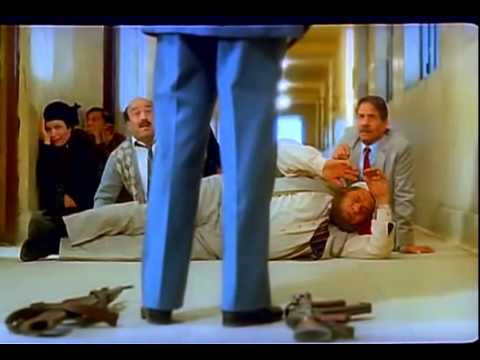
A lot of the world's fans of conservative ideology believe that human nature is a sinning nature. A lot of them also believe that without organized frameworks for people’s ethics the world would probably sink into the wells of lust. In laws and restrictions that control people’s behavior, lots of conservatives find a guarantee for safe ethical standards that will protect people from their own evilness and ugly deeds.
Let’s ignore all the criticism hurled at this idea — that it enforces guardianship over people, and invests in people’s fear of punishment rather than any inherent desire to evolve — because some conservatives I know don’t find these negative aspects, they think they are actually advantages.
Let’s talk about one of the mechanisms created in the realm of ideologies of that sort. It’s censorship.
The Egyptian censorship authority is called “Al Riqaba,” which is an Arabic word meaning to closely inspect or observe someone or something, usually discreetly. And it also means to wait for something, or look forward to something. I don’t think that the person who decided to give the Egyptian censorship authority that name was planning that it would devote itself to spying on creative minds without them knowing. I guess he or she was probably imagining the committee watching a film carefully, eagerly waiting for the moment there would anything that they could find “naughty” to strip out of the film, bringing back its chastity and purity.
In my early teenage years I read The Memoirs of a Censorship Official by Aatidal Momtaz (the author's name translates into “Excellent Moderatism”!) It was the first time in my life I read the word “panty.” It was in a bit where the author describes in detail a scene she once cut from an old Egyptian movie. In fact most of the book’s text consisted of detailed descriptions of hot sizzling scenes that were almost eternally deleted from the memory of Egyptian cinema, except that the censorship official’s kind heart couldn’t bear to not document them for posterity. The book was one of my favorites at that period of my life, for hormonal reasons that you can easily predict. I won’t throw hollow accusations at the author, but I’m sure that one of the selling points was the nice photo section at the end.
The Egyptian censorship authority did its job for many years to tear apart Egyptian and non-Egyptian artworks, their scissors never — with God’s help — missing a moment that would — God forbid — pollute the innocent eyes of our celibate-by-nature society. Or did they?
This space would never be enough for me to take on responsibility for listing every single poisonous message that flew past the noses of our respectable censor ladies and gentlemen when they were busy rewinding sex scenes, so please allow me, my dear readers, to encapsulate my point through the works of our most beloved, eternal superstar and comedian of all times: Adel Imam.
Before I start I’d like to remind you that Imam, before he got so much starship, played — in the movie The Half-Hour Marriage (1969) — the role of a stuntman who was meant to take a beating from a mob of baddies in place of the lead actor — played by Yousif Shaaban — who was the one who got to kiss the actress. We all remember — or some of us do — how Imam deviates from the script, escapes the fighting scene, and darts at the actress, trying to kiss her while hysterically crying: “I want to kiss! I want to kiss!”
Anyway
In Terrorism and Kebab (1992, directed by Sherif Arafa, written by Waheed Hamed), which is a film that you could embrace for many reasons — especially if you’ve watched it — Adel Imam is trying to find an employee who is supposed to help him finish his paperwork in Tahrir Square’s most famous administrative complex, the Mugamma. Imam is trying to find the errant employee in a fancy hotel near the complex where he is rumored to be using the toilet. In the hotel Imam runs into two tourists at random, a man and a woman. He has a cursory conversation with them that ends with him — out of horniness and nothing else — kissing the woman for no obvious reason. The girl responds with a naive smile, he kisses her again, and the scene is over.
This story echoes in lots of Adel Imam’s work. I recall off the top of my head Hello America (1998), Bakheet and Adela (1995), and The Leader (1998), a theater play. Sometimes Imam even spanks women he doesn’t know in his movies, or practices other forms of harassment that are always appreciated by the women in question. His films never criticize these acts or show any disapproval toward them. Indeed, the contrary. These scenes flew past the censorship people because their ethical compass didn’t see anything wrong with it. Apparently 95% of Egypt’s women today say that they have been harassed. Men don’t like talking about that. And lots of Egyptians unfortunately think that foreign women will kiss anybody they don’t know.
In most of his works, or at least in a very big percentage of them, Adel Imam slapped characters played by extras, or little-known supporting actors, on their faces in a gemeral context of abasement which was supposed to be funny. Usually the character that gets slapped in the movie or play is a personality of lesser social status than Adel Imam (assistants, chauffeurs, or someone with some other not very privileged job). Despite how inhuman this behavior is, despite its reflection of decadent classism, and despite it being a very lowly way to make people laugh, the censorship authority saw no reason to censor it. We all watched it, young and old, and laughed at it alongside everything else we laugh at. The result: count the number of face slaps in any of today’s mainstream box office comedies (try any film produced by El-Sobky Film Productions) and compare that number with a quick look at the crime pages in any given newspaper — the bit where there is usually a news item about domestic violence.
I didn’t know that the biggest enemy for the regime, the thorn in Hosni Mubarak’s side, was political Islam until I grew enough to be able to read about that time. But even before I knew how to read I was capable of hating anybody with a beard in any of Adel Imam’s movies. Imam’s “war on terrorism,” whatever that phrase means, was wider, a lot more comprehensive, and a lot shallower than Mubarak’s war. The censorship authority never worried about the dangerous generalizing in films that almost only showed religious people as bad people, they also failed to notice that such an approach was actually doing the opposite of what it was trying to do. I think the result is obvious.
I won’t let my angry feelings take me as far as to claim that marketing Adel Imam as an action hero was a part of a conspiracy aiming to dismantle logic in the minds of Egyptians, but the way he always insisted on smoking Marlboro cigarettes regardless of the financial state of the character he was playing definitely has something to do with the switch in the Egyptian economy from socialism toward open market policies.
This same censorship authority is the one that very comfortably removed the ending scene from Al-Baree (The Innocent), where a central security veteran opens fire on his superiors in revenge for them killing an innocent political prisoner. It’s the same authority that banned, and is still banning, films that discuss homosexuality or religion or any topics they find a bit difficult to understand. The same authority that doesn’t mind films that make fun of little people, people with dark skin, or people with mental problems.
It’s censorship that is loved by tyrants and hated by free people. It’s censorship that is trusted by those who are very worried about their daughters watching a kiss on TV, but don’t notice that their daughters are being violated every day against their will on the streets. It’s the censorship that has saved us from ending up like Europe.
And thank God we are not like Europe.

Andeel
Andeel was born in Kafr al-Sheikh in 1986. His uncle told him that his paternal grandfather was a filmmaker who made a feature film called “Horses,” which he took to…
تقارير ذات صلة
Comedy 2000: The Principal wins
Looking back at how Egypt's current trend for young, comic cinema began.
Egypt’s cinematic gems: The Artful
An ill-fitting day job, elating football games in the afternoon and occasional one-nighters with a colleague
Sex in Arab cinema
In 1929, the Ministry of Interior banned Wedad Orfi's Masat al-Hayah (The Tragedy of Life). The reason: "The story as we saw it revels in self-indulgence, overshadowing the good part…
Your support is the only way to ensure independent, progressive journalism survives.
You have a right to access accurate information, be stimulated by innovative and nuanced reporting, and be moved by compelling storytelling. Subscribe now to become part of the growing community of members who help us maintain our editorial independence.
Join us