
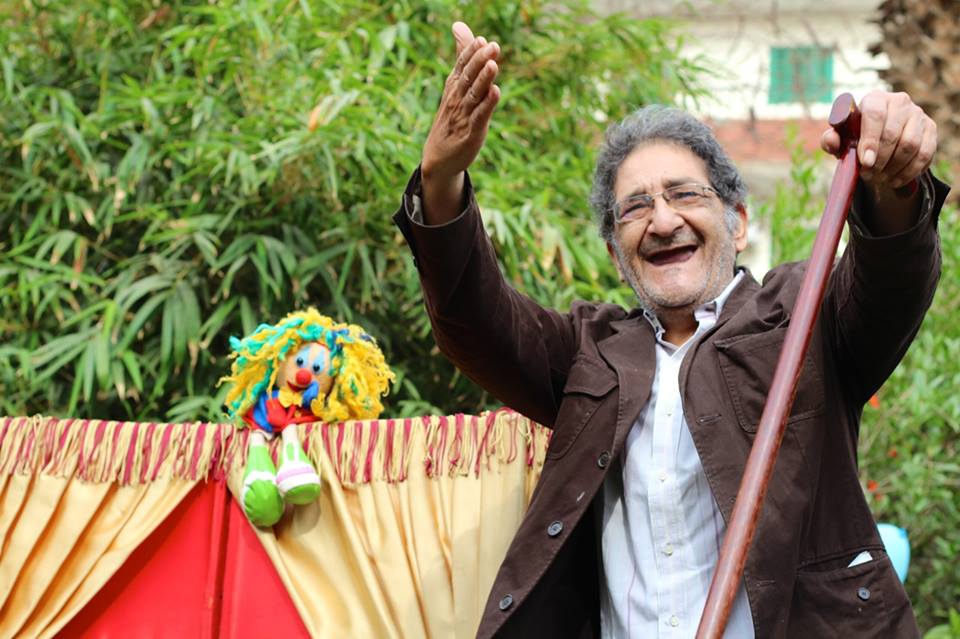
Blog: The revolution of Ahmed Seif al-Islam
Yesterday marked the second anniversary of the passing away of the leading light of the Egyptian human rights movement Ahmed Seif al-Islam. The day passed while his son Alaa and his daughter Sanaa are in jail, which is how it was when he died. This article is not about mourning him nor speaking about how he supported the human rights movement in Egypt. It is about his own revolution — a revolution that started 40 years ago and is still alive through his children, students and colleagues.
The start of the revolution
Seif left his village in Beheira, and arrived to Cairo to study political sciences at Cairo University in 1969. Finding an active student movement — it was two years after the 1967 war — Seif got involved as a leftist. In January 1972, he was arrested for the first time after the clearance of a Cairo University sit-in calling for the liberation of Sinai.
Seif was released before the 1973 war and joined the newly formed leftist organization called Al-Matraqa. His involvement in the student movement delayed his studies and he graduated in 1977. Around that time, leftist organizations started to think about the armed struggle against the regime and Seif got involved in the conversation about violence.
Seif remained involved in activism and was arrested for a second time in 1983 and faced torture.
“I didn’t start in human rights. I started as a communist in an underground organization. I was tortured in 1983. Under torture I had to give a lot of information. I was turned into a wreck of a human being. A small example: each time I had a meal of torture, there was the sound of a bell. Since then, whenever I hear the sound of a bell my body shakes,” Seif recounted in a conversation with Human Rights Watch’s Joe Stork in 2007.
Prison and torture were the turning point in Seif's career — it became clear to him that there would be no benefit from political work without also dealing with human rights. He studied law while serving five years in jail and was released in 1989. Moving on, he dedicated the rest of his life to fighting torture, defending human rights, supporting the rule of law and particularly the right of prisoners to a fair trial.
A revolution in between
In the early 1990s, Seif started to work with Hisham Mubarak, who was the director of the Center for Human Rights Legal Assistance. Following Mubarak’s death, Seif, along with a group of friends, decided to establish a center in his name. The Hisham Mubarak Law Center — of which Seif director for many years — was a pioneering center for the human rights movement in Egypt.
With his involvement, alongside a few other lawyers, in the Queen Boat case in 2001 — when over 50 men faced charges of debauchery and obscene behavior — Seif gave the human rights movement and civil society defenders one of his lessons. Seif continued his lessons of prioritizing human rights over political differences by defending people of all walks of life, from Islamists to leftists.
With his involvement, alongside a few other lawyers, in the Queen Boat case in 2001 — when over 50 men faced charges of debauchery and obscene behavior — Seif gave the human rights movement and civil society defenders one of his lessons.
The revolution continues
When hundreds of thousands of Egyptians took to the streets in 2011 demanding freedom and human dignity, Seif felt successful in his own revolution.
Seif described himself on Twitter as “Ahmed Seif the leftist not the Islamist, the grandfather of Khaled, the father of Sanaa, Mona and Alaa, and the husband of Laila Soueif.” He was the father of thousands of Egyptians who learned from him on a daily basis. He is the father of thousands of human rights defenders from all over the world.
Seif’s revolution succeeded when people took to the streets demanding their freedom. Seif’s revolution succeeded because there are thousands of his students, children and colleagues continuing his revolution, championing the principles of human rights and fair trials for all.
تقارير ذات صلة

Defeat’s possibilities: 3 activists recount 1967 as formative
1967: the moment that fractured the new nationalism; politically formative for generations to follow
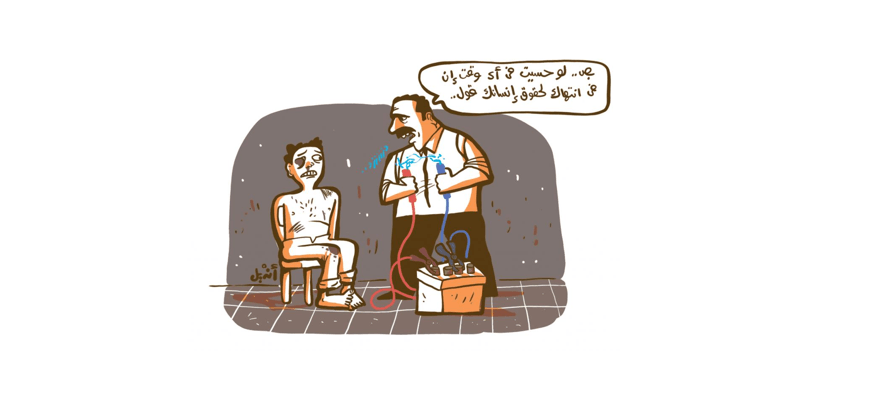
Human rights in focus: A series of conversations
This is an introduction to a series of interviews by Mada Masr with human rights workers in Egypt that attempts to situate the struggle for rights within the context of…
Ahmed Seif: A compassionate fighter, a legal scientist
In a memorial organized by the Law and Society Research Unit and the Law Department at the American University in Cairo, colleagues and family members of late human rights defender…
Your support is the only way to ensure independent, progressive journalism survives.
You have a right to access accurate information, be stimulated by innovative and nuanced reporting, and be moved by compelling storytelling. Subscribe now to become part of the growing community of members who help us maintain our editorial independence.
Join us