
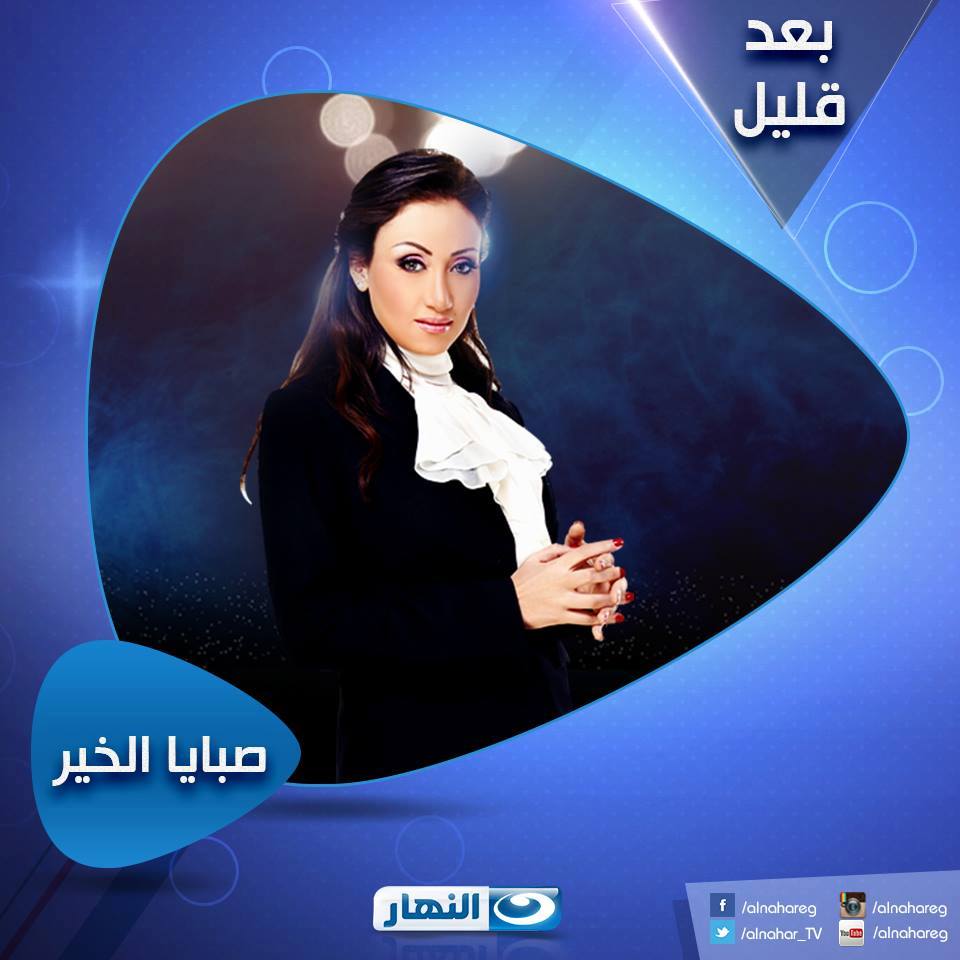
A year of Reham Saeed: An insufferable phoenix rises from the ashes
Reham Saeed is one of those figures in the Egyptian media sphere who baffles, amazes and horrifies in equal measure.
She revealed a bit of her zany self in 2014 when she kicked an atheist off her show Sabaya al-Kheir (Charity Girls) for saying the Quran was written by humans, even though Saeed had invited the guest to specifically discuss her atheism.
But Saeed really got her chance to shine in 2015: She stole private photos, she insulted refugees, she moralized to harassment victims — she incited so much internet hatred that her program was cancelled only to have it come back, like an inexplicably popular shambling zombie.
But Saeed remains one of the most popular television hosts in Egypt — her Facebook page has over 8 million likes and the host has over 83,000 followers on Twitter. She is at the vanguard of moralizing TV and queen of behavior policing.
Her actions have been met with public censure, and not one, but two Twitter campaigns have attempted to get her show removed from the air.
Below are a few of the most memorable moments in this year’s epic rise and fall — and rise again — of Reham Saeed.
Saeed uses the death of Syrian toddler to make a point about the Egyptian army
After the picture of drowned Syrian-Kurdish toddler Aylan al-Kurdi went viral internationally in September, Saeed had a telephone interview with the boy’s father, Abdullah al-Kurdi.
Saeed took the interview as an opportunity to point to Syria as a stark warning to the Egyptian people that they should trust in the military if they do not want Egypt to end up like Syria.
Immediately before Kurdi’s father came on air, behind her a blown up image of the dead child, Saeed introduced the segment with, “This is not the only one who has died because of Syria … We think this is because of war. We also have a war — our military is at the borders stopping that from happening,” she continued, gesturing at the picture. “I’m sorry, but what animal would say ‘Down with the military’?”

She insults Syrian refugees while handing out food to them in Lebanon
Later the same month, Saeed used the crisis in Syria again to make the point that the Egyptian people should support their Armed Forces.
The episode showed Saeed distributing food and clothing to refugees in a Syrian refugee camp in Lebanon. She also took the opportunity to insult refugees as they took clothing from the truck.
Saeed said of the refugees, “These are the people who are dispossessed, who are divided, and are ruined. This is the fate of people whose country is destroyed … They leave their children on the ground and fight each other.”
She and her crew filmed a group of refugees, mostly women and children, taking food and clothing from the vehicle and said, “As you can see, we have lost control and they are attacking the car.”
Saeed concluded the show by pontificating on how the Syrian civil war has changed the nature of the Syrian people, saying, “I am glad we were able to help them, even though they were not respectful.”
This incident inspired the first round of Twitter backlash against Saeed.
Prominent journalist Yosri Fouda — like other progressive voices, largely absent from today’s television scene — described Saeed as the “sewer of the media.”
“She exploited the tragedy of [the Syrians] in order to terrorize the Egyptian people,” he wrote on his Facebook page, “claiming to do so on behalf of the Egyptian people more than once.”
She airs private photos of an assault victim
A few months later, Saeed invited a woman on the show who was attacked at a Cairo mall. A video of the woman being slapped twice by a man following her, before security intervened, had quickly spread on social media, provoking outrage.
But Saeed did not feel outrage — instead she took the opportunity to shame the woman, Somaya Tarek, for the way she was dressed, saying she was wearing “revealing clothing.”
It wasn’t enough though to police the way the woman was dressed. Saeed resorted to the time-honored tabloid tradition of airing private photos of Tarek.
The photos showed Tarek on a beach with friends, holding a bottle of whiskey and wearing a swimsuit.
Saeed said she was disappointed by the photos and felt a duty to air them so that viewers could get a full picture of the harassment incident.
“Just as there are harassers in the streets, some girls have really gone off limits. You won’t like this, but this is the truth. Keep your girls in check and they won’t be [harassed],” she said.
Saeed continued, “I would have been really mistaken if I overreacted and criticized the police and mall security had these photos not been sent to me. We should not believe everything we see.”
Tarek later stated that she believed Saeed’s team stole the images from her phone while she was charging it during the interview.

And then a social media campaign forces her show off air
At this point, it seems like the general social media-using public had had enough of Saeed and a Twitter campaign with the hashtag “Die Reham” kicked off with the aim of forcing her show off the air. A strong online boycott campaign ensued, calling on all companies sponsoring the show to end their contracts.
The campaign’s Facebook page stated that they were boycotting not only because of the incident with Tarek but because, “We don’t want to see Saeed again, we did not do this only for what happened with the [harrassment], we are fed up with Saeed in general.”
Famous comedian and political satirist Bassem Youssef — like Fouda, now largely absent from Egyptian television screen — joined in, tweeting that he would promote companies if they withdrew their advertising from the show.
“Why would you spend millions advertising on a program when five million followers can see you here?” Youssef tweeted and followed through with endorsements for companies that boycotted Saeed soon crowding his Twitter feed.
The campaign led to something pretty magical— 15 companies announced the end of their contracts with the show. The companies included juggernauts like Chipsy, Persil and Dove. Al-Nahar channel promptly announced her temporary suspension and the contentious episode was removed.
Meanwhile, some local media outlets rallied to her cause. The privately owned Youm7 published an op-ed after she was removed from air titled “Has Facebook become a god that rules over us?” The author bemoaned social media users who, from their ivory tower, ignorantly judge without understanding that the show touches the hearts of ordinary people by doing good and standing with the marginalized.
Saeed herself responded to the social media pressure by tweeting that she prayed to God for strength and protection from evil creatures. Her tweet received 1,777 likes and 457 retweets. Since then, Saeed appears to have been mostly silent on social media — she has not tweeted and her Facebook page only contains repostings of articles supporting her and official announcements from her show.
But then Reham and her show are back — after just one month of being off air
Al-Nahar announced in late November they were bringing Saeed and her show back, possibly because of her soaring numbers of followers. Saeed — much like Donald Trump — seems to only become more popular the more terribly she behaves.
Her return was greeted with joy by some local media outlets who bemoaned the power of social media campaigns to instigate boycotts. The privately owned Al-Bawaba published an article arguing that mass social media campaigns violate freedom of the press by silencing voices like Saeed’s and snottily point out this is despite the fact that most social media activists actually say they wish to defend the freedom of the press.
The state-owned Al-Ahram also published an article on the return of Reham Saeed that was less celebratory. The article speculated that the channel brought her back after just one month because the move was initially simply about assuaging public anger and that the channel cannot sneer at the financial benefits of Saeed’s presence.
The author suggests that the advertisers will follow despite the boycott campaign, and laments the role of money and advertisers in shaping what we see on television.
It is unclear whether the companies that said they would boycott Saeed will remain true to their word once the social media frenzy died down.
In its statement announcing the return of Sabaya al-Kheir, Al-Nahar said the show would run without sponsors or commercials for an indefinite period. The series will have a renewed focus on philanthropic work and continued support to charity organizations that suffered during its suspension, the channel added.
Sabaya al-Kheir — and its host — return in order to “perform the charitable, humanitarian and nationalist role” for which it is known, the statement said.
We can only look forward to what the insufferable phoenix will bring us in 2016.


Pesha Magid
Pesha Magid is a reporter at Mada Masr. She has previously published work at Egyptian Streets, Tunisia Live, Your Middle East and Egypt Today. She is graduate of the University of…
تقارير ذات صلة
Practice review: a year of producing, surviving and learning
It’s been another year of fighting many woes at Mada. The obvious one aside – namely an unprecedented retreat in freedoms – it’s also been a fight with fatigue, boredom…
A year of cracks in the love apparatus
In 2014, this was Andeel’s reflection on the state of the people in the wake of the military’s grip on power since the ouster of the Muslim Brotherhood: When I…
A year in critical culture writing
From poetry and criticism to interviews and explainers, and from Suez and translation to cinematic nudity and Ramadan TV - highlights from Mada's 2015 culture section.
Your support is the only way to ensure independent, progressive journalism survives.
You have a right to access accurate information, be stimulated by innovative and nuanced reporting, and be moved by compelling storytelling. Subscribe now to become part of the growing community of members who help us maintain our editorial independence.
Join us