
17-yr-old convicted of ‘prostitution’ based on social media content used to convict ‘human trafficker’ of sexually exploiting her
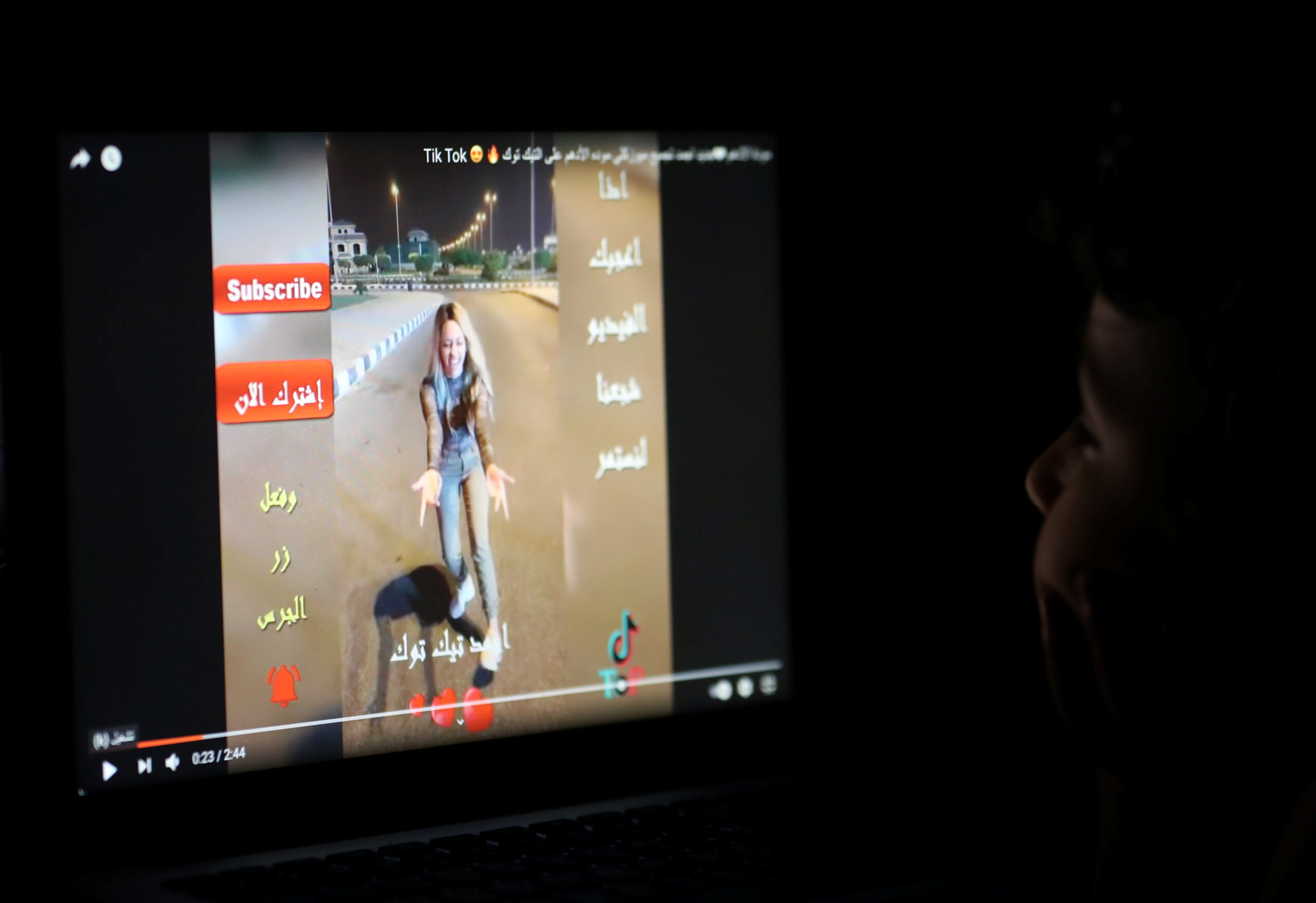
TikTok content creator Moka Hegazi, 17, was convicted in February of “prostitution, and inviting debauchery” by a juvenile court that leveraged photographs and video footage shared on her TikTok account to evidence the ruling, her lawyer, Aziza al-Taweel told Mada Masr.
Yet, shortly after her conviction, the Cairo Criminal Court convicted a young man of “trafficking” Hegazi and “exploiting her sexually and commercially by sharing photos and clips of her” in an investigation that used the same photographs and video footage as evidence, according to Taweel. “This must be the most absurd of all the TikTok cases,” she said.
Hegazi’s ongoing case is just one in at least a dozen investigations that authorities have launched since 2020 into young women creating short-video content on applications including TikTok and Likee.
“The conviction of Hegazi’s trafficker clears the child of legal liability for those acts and thus invalidates the court’s conviction of her on charges of ‘inviting prostitution’ based on footage that she did not capture or publish herself,” the Egyptian Initiative for Personal Rights said in mid May, after the conviction against Hegazi was upheld during an appeal session that merely reduced her total sentence from three to two years in prison and a year of judicial probation. “What’s worse is charging a child with ‘engaging in prostitution’ in contravention of the Penal Code, which does not recognize a child’s consent in sexual assault crimes and regards them as victims even in the absence of the use of force or coercion.”
Morality charges relating to prostitution, family values and human trafficking have been upheld in various court circuits against men and woman accused of managing, recruiting and creating content for social media accounts, most notably in the ongoing investigation into Haneen Hossam and Mawada al-Adham.
Moka Hegazi — born in January 2005 — was arrested in July 2021 without a warrant from the prosecution, said Taweel, and without being caught committing an offense, but rather in response to what the police investigations referred to as “citizens calling for her arrest on social media.”
The Interior Ministry’s investigations were based on a report from prolific litigator Ashraf Farahat, who, according to Taweel, “is known to target and sue female content creators on social media, especially those who come from poor socioeconomic backgrounds.”
The Public Prosecution, said Taweel, interrogated Hegazi without a lawyer being present, using her social media content to levy their accusations against her.
A few days later, the prosecution began to interrogate a man they accused of trafficking and sexually exploiting Hegazi, after she told the prosecution that he directed all the videos and photos that the prosecution used as evidence, and that he owned the mobile phone used to shoot them.
After seven months, during which Hegazi was subject to multiple interrogation sessions and kept unlawfully in adult detention facilities, according to official documents viewed by Mada Masr, where her lawyer said she was subject to harassment by adults being detained at the same facilities, the Public Prosecution referred Hegazi on February 15 to a juvenile misdemeanors court and referred her alleged trafficker to criminal trial.
Following a brief trial, Hegazi was sentenced on Feb 24 to two years for “inviting debauchery and prostitution” and one year for “prostitution,” just one week after the referral. Her accused trafficker was sentenced on April 13 by the Cairo Criminal Court to three years in prison and a fine of LE100,000.
On May 31, the appeals circuit of the juvenile court rejected an appeal against the conviction, upholding the reduced two-year prison sentence for inviting prostitution and replacing the one-year sentence for prostitution with one year of probation, “a shocking and arbitrary ruling,” said the Egyptian Initiative for Personal Rights, which urged the Public Prosecution to “immediately stop bringing morality charges against victims in cases of sexual violence, sexual exploitation and human trafficking.”
Hegazi’s only remaining hope to challenge the ruling is by appeal at the Court of Cassation, although Taweel hopes that the presidential amnesty committee, recently re-formed to enact releases in a series of politicized cases of arrest and detention, will include Hegazi on its lists.
At least 25 China-based live-streaming apps have launched in the MENA region since 2014, with Egypt acting as a gateway from Asia to the African continent. Competitors have included 7Nujoom, BIGO and Likee, all of which are now owned by Chinese live-streaming giant YY, followed more recently by TikTok.
With just a mobile phone camera and an internet connection, Egyptian nationals — of whom around 29.7 percent live under the national poverty line of LE735 per month (around US$39) — can easily make money via the social media platforms. In April, just three years after its MENA debut, TikTok became the most popular mobile application in Egypt, according to the country’s telecoms regulator, with some 20 million users.
The business model is funded in part by virtual gifts that can be purchased by viewers and “gifted” to streamers during live broadcasts, making up the core of the income redeemable at the end of each month for content creators.
In June 2021, 14 Egyptian human rights organizations condemned the sentencing of TikTok and Likee content creators, calling on Egyptian authorities to “stop these trials, release these defendants and close these cases.”

Ahmed Medhat
Ahmed Medhat is a journalist and independent researcher who worked with international media offices in Cairo. He holds a BA in Islamic Studies and Linguistics from Al-Azhar University. Past projects…
تقارير ذات صلة

35 ordered detained in post-Ramses arrest campaign
Egyptian authorities have moved to hold dozens of people in remand detention in the last few days

Innocence behind bars: The fate of Egypt’s minors at the mercy of criminal and military courts
Mada Masr looked into 35 cases of minors who have appeared before criminal and military courts

Minors caught up in political turmoil
A group of students were protesting in front of Mansoura University last year, amid the heavy crackdown on campus dissent. The ensuing arrests did not leave bystanders out. Ibrahim Reda,…
Your support is the only way to ensure independent, progressive journalism survives.
You have a right to access accurate information, be stimulated by innovative and nuanced reporting, and be moved by compelling storytelling. Subscribe now to become part of the growing community of members who help us maintain our editorial independence.
Join us