
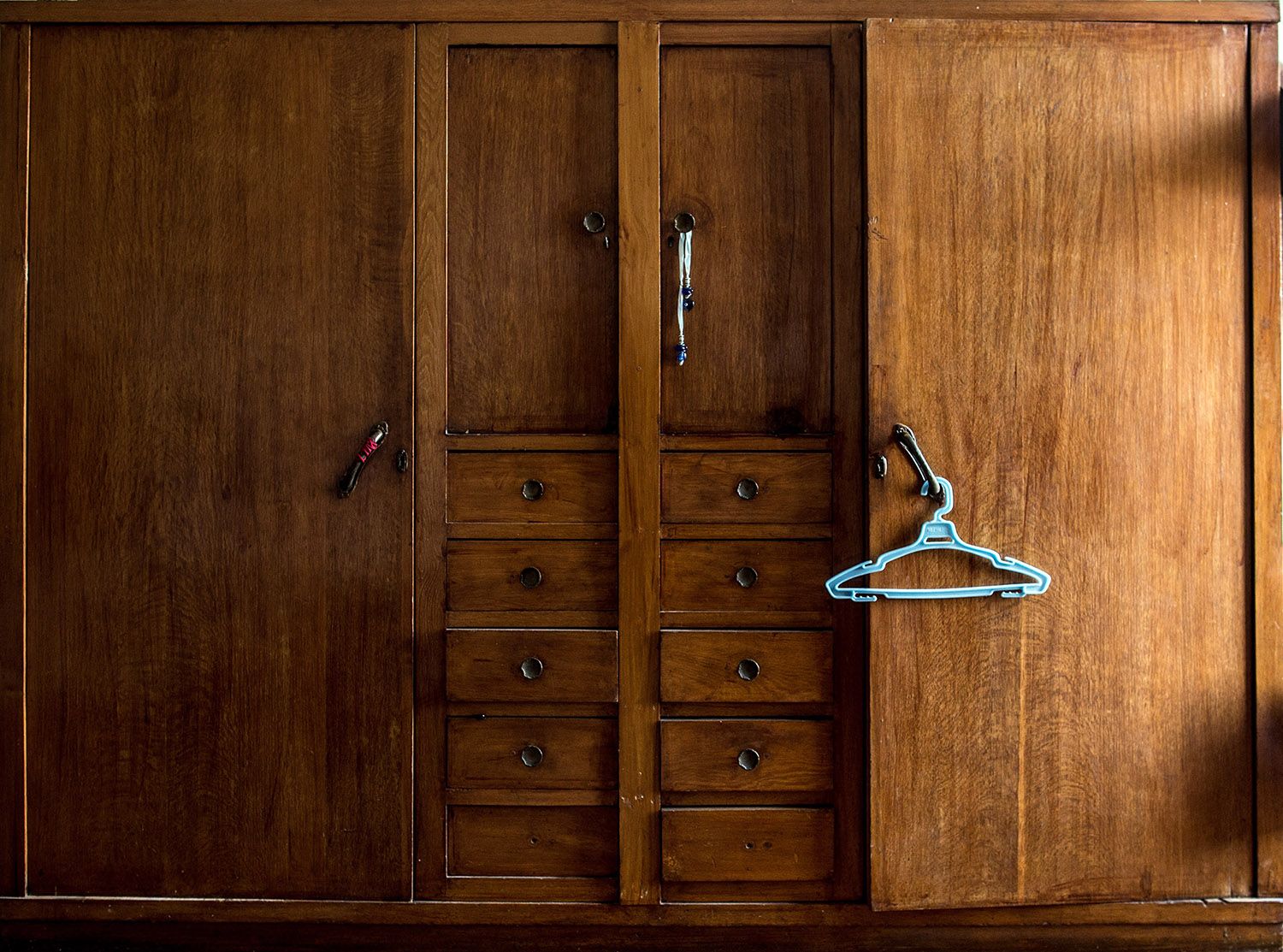
Roger Anis on “Closets of Dreams”
As published on Time Lightbox:  Why are many of the subjects in your photos people you already know? This is how I started my research, by asking people close to me what they think. “Do you have an item of clothes that you can’t wear? Tell me more.” Maybe it was easier to get permission from people who already work in media, because they are familiar with what I do, and know that by participating they can convey a message. With people who are unfamiliar with the role of media, they need more convincing. This isn’t my comfort zone. I contacted a woman in Luxor, but she asked for money. I contacted someone in Minya, but she was hesitant. Because of my tight timeframe, I couldn’t keep on trying. In a lot of cases, even people that I knew hesitated, canceled appointments, or didn’t show up. It’s not fake, even if you are telling stories about people you know. You have to be patient and understand why people fear the media and being exposed. Most media in Egypt takes what you say and alters it, so I can understand why people are fearful. For example, many people agreed to participate after I showed them photos on my phone. I had to help them understand and visualize the idea that I had in mind.
  What attracted you to this project? For social projects like this, photos can make a difference. Images of harassment that have appeared on social media have been picked up by the media, and the attention has pushed the government to take action, even if only with small changes. I did this piece on my mobile. I wanted to do something different, as the topic has been covered a lot. At the time, I’d heard from a lot of my female friends, “I have this piece I can’t wear,” or “I can’t wait to go to the beach to wear this dress.” I kept hearing stories like this while chatting to co-workers in the office and my girlfriend, or on Facebook.
  What was your original concept for the project? My first idea was to do a portrait of a woman and the clothes she dreamed of wearing. But, it developed into a wider project about the stories behind pieces of clothing: those she dreamed of wearing, was scared to wear, wore before but won’t again, or won’t buy because she won’t wear. I experimented with photos and interviews. Sometimes the interviews were more important than the photos, and some interviews were with people who didn’t participate, but gave me ideas.
  What was your idea about using mannequins? My idea was that, if women wouldn’t go out in the street in certain clothes, I would put mannequins in their place, and photograph the reactions of people around them. I didn’t feel as though I had to show violence as it was happening. Even with the mannequins, it was more about making something impossible a reality. But, I didn’t use the mannequins in the end. Most people I spoke to thought it would detract from the stories of the real women I spoke to. One of the things I learned in school is to keep the idea simple, so people can understand it and relate to it.
  Now that you have created a body of work, where do you want to publish it? And how do you edit it for different mediums? I would like to continue working on it and eventually publish it in a book format. With a newspaper, you can only include say 5-6 images, while in a printed magazine it’s more like 14, but really small, or 5 to 10 larger photos that are well laid out. However, when publishing online, for example with TIME Lightbox, we had unlimited space, but had to be careful not to be repetitive, so readers don’t get bored. In the book I will add more stories. I also need to find some interest vignettes of the street and society, as well as stories to break up the portraits. For someone in this society the stories will be familiar, but for someone outside Egypt, I want to explain things more. For example, the photo I took of the policewoman catching sexual harassers during Eid. It isn’t a perfect photo, but it shows movement on the issue by the government, and tells a story. I noticed, for example, when this was published in TIME, the title was “Sexual Harassment in Egypt,” but it seems your story was broader than that. It’s important that this story is about Egypt, not just wider harassment. It touches on oppression, fear and dreams. I wanted to clarify this, but it was already published.
  How do you get things published outside Egypt? It’s all about networks. For example, with the Norwegian paper, I sent the story to a journalist friend for feedback, and he proposed it to a photo director and it was published. I kept contacting photo editors and asking for feedback. I sent short messages that highlighted the photos. I didn’t send small PDFs, but linked to my website. I sent it to one editor in Denmark, and he said, “Wow, it is a nice story, but we don’t publish stories like this in our paper.” Another said, “It’s really nice, but we only publish local stories. But, feel free to keep sending me your work.” Now I have a contract with them. It’s important to get feedback and keep learning, not just about getting published. You need to go to photo editors with thought through concepts and almost finished projects, because they are busy. Unless you meet them face to face, and this is a problem for photographers in Egypt. Over email it’s harder to make a personal connection. Why would they invest time in emailing back and forth about a vague idea?
  How can you afford to work on these longer-term projects? Why do you do them? All photojournalists ask themselves why they do something that doesn’t pay well, but it is magical to see your work published and to inspire people to talk about what you do. Images can provoke discussion and social change, which is affirming. All of us want to get our work seen internationally, but it doesn’t mean we should leave our jobs in local newspapers, because this is where we learned and how we establish our networks in certain areas.
  What do you think of the future of long term projects like this in Egypt. Do you see new places to publish them? For photographers working in newspapers, we have to fight to get our pictures published. We have to lay them out and get approval. In the past, photos would only be seen in print publications, but the rise in photo stories online is inspiring others to get involved. I have many friends in Egypt now who are photojournalists and ask for advice on creating stories. It isn’t just about photos, but the stories behind them.


Your support is the only way to ensure independent, progressive journalism survives.
You have a right to access accurate information, be stimulated by innovative and nuanced reporting, and be moved by compelling storytelling. Subscribe now to become part of the growing community of members who help us maintain our editorial independence.
Join us