
Nights of Mermah
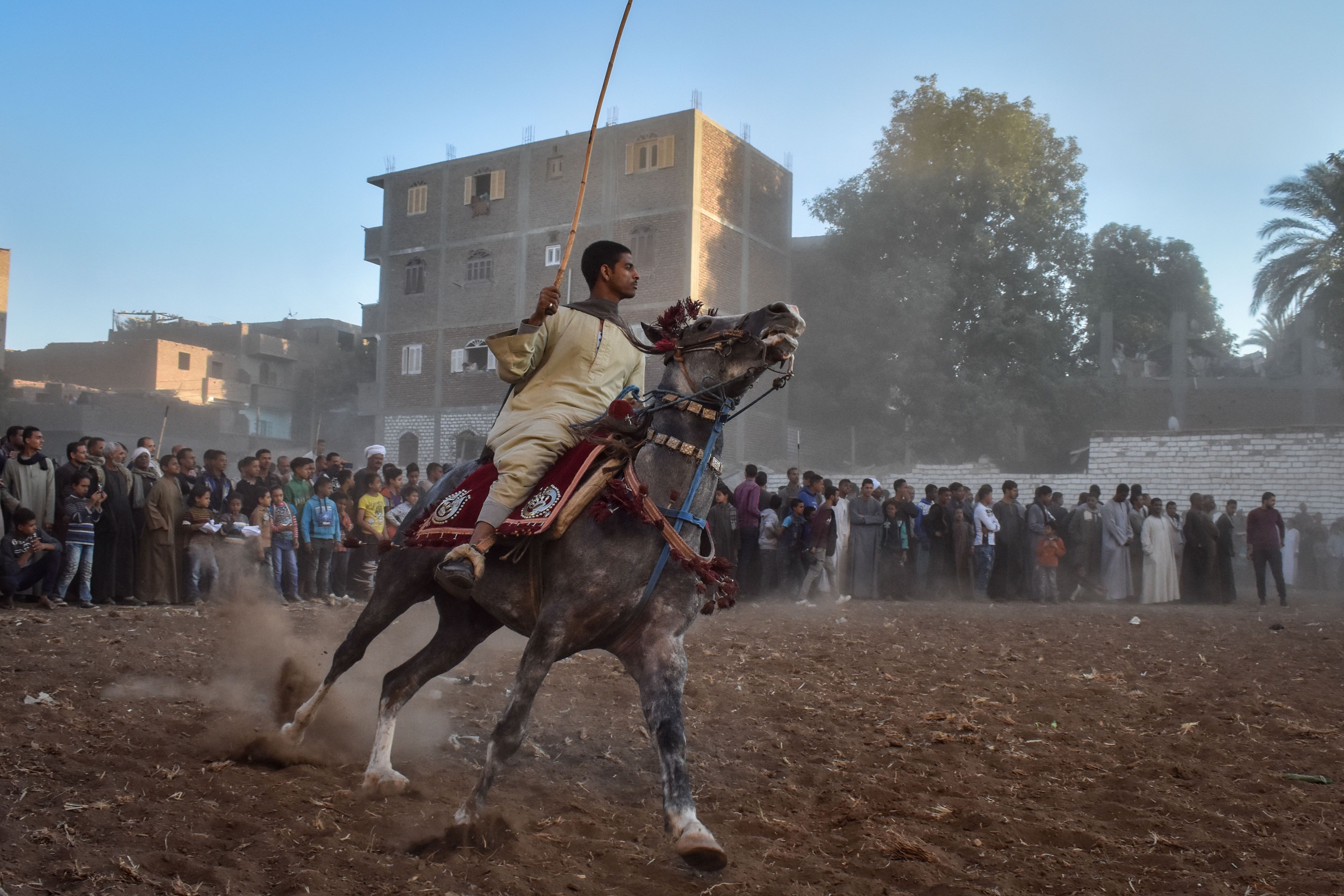
In Qena, about 600 km south of Cairo, residents ready themselves to celebrate moulids — festivals that mark the birthdays of holy people — by enacting a very specific tradition they have inherited. Wearing white robes and turbans, they prepare a large arena for the “mermah.”
In this practice, thought to have been brought to Egypt from the Arabian Peninsula during the Islamic conquest, men compete to demonstrate their fencing and horse-riding skills. Once associated with military training, mermah is now part of the celebratory repertoire of Upper Egypt, present in weddings and moulids.
Equestrians race against each other and fence amid a crowd of onlookers. To tunes played on the mizmar, the Upper Egyptian flute, families gather at the prepared area, some parading their horses and sticks.
The sticks vary in length between 1.5 and 2 meters, making them slightly longer than those used in traditional Arabic stick dances, or tahtib.
Holding their sticks and using colorful saddles and bridles, the jockeys parade their horses and show off their skills. Mermah is a source of pride with no financial reward.


بانوراما أخرى

Metro: A Parallel, Underground World
Me and the Moulid
After Gaza ceasefire, Egypt works to alleviate Hamas skepticism of Israeli commitment to truce
Hamas informs Egypt of its skepticism of Israel’s commitment to last week’s ceasefire agreement
Your support is the only way to ensure independent, progressive journalism survives.
You have a right to access accurate information, be stimulated by innovative and nuanced reporting, and be moved by compelling storytelling. Subscribe now to become part of the growing community of members who help us maintain our editorial independence.
Join us