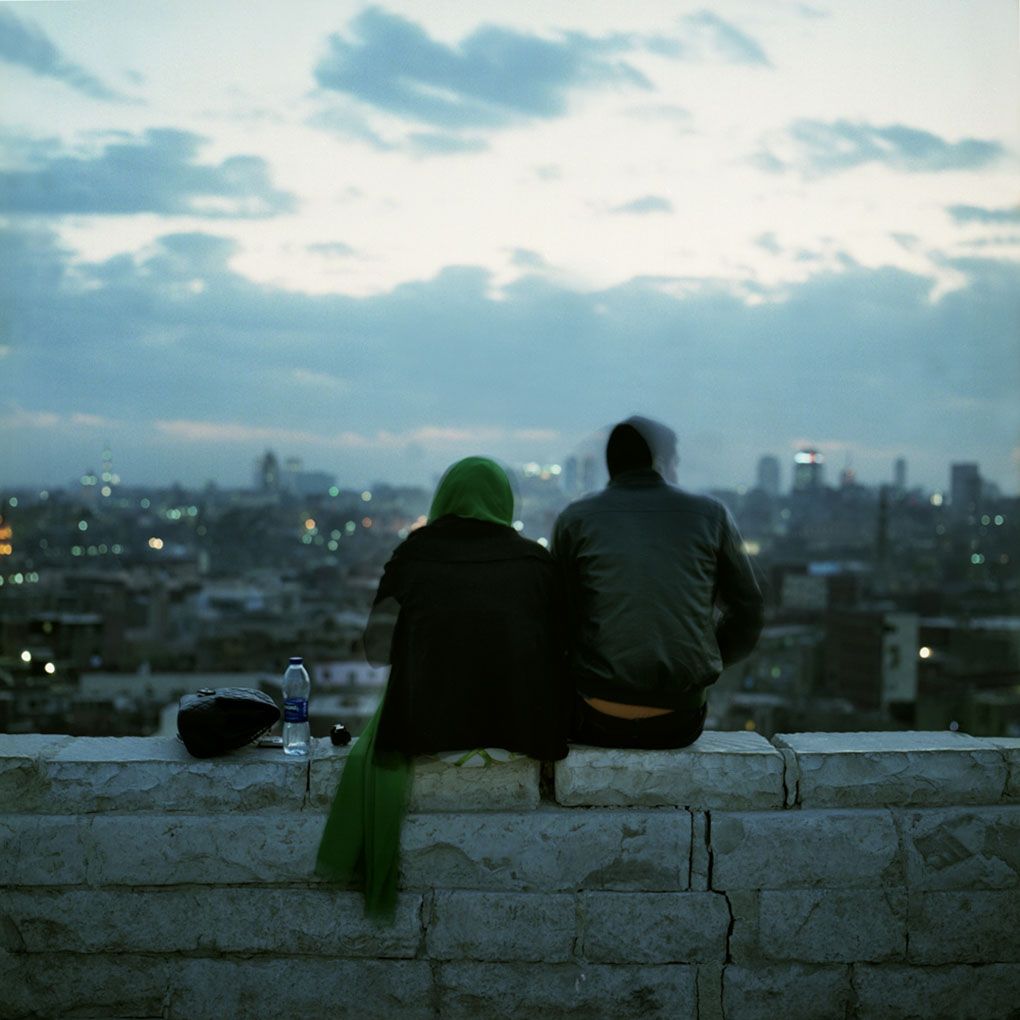
“Make a Wish” is a photo essay looking at the hopes and dreams of young people. Youth is the time of infinite possibility, when aspiration is not yet conditioned by experience. Young people have a tendency to believe that everything is possible. They may even believe in miracles. The aim is to create a testimony of youth in our time. Each photograph presents an individual and his or her dream. The image and text may show markers of origin, cultural heritage, religion, politics, climate and geography. But the overriding theme is freedom. D’Aki photographed young Egyptians in the aftermath of the 2011 revolution, before the election of the recently ousted President Mohamed Morsi. “There was still a lot of optimism and hope in the air back in those days,” she says. “People were convinced that the revolution would pay off and bring them their longed for freedom, and this atmosphere did somewhat affect the majority of the young people I photographed. “When portraits are taken during a time of tension, change, conflict or, in this case, in the aftermath of a revolution, the dreams and aspirations tend to be linked to a stronger sense of nationality, of patriotism. The youth tend to aim for greater deeds that include not only the individual. It’s different in quiet, peaceful places, where dreams often concern only the individual and his own personal gratification.” In addition to Cairo, D’aki has also photographed young people in Italy, Iran, Israel, Gaza and Turkey. Freedom, in its various forms, was the universal aspiration. “In Gaza, freedom would refer to open borders; in Jerusalem, to the end of the occupation and religious restrictions; in Istanbul, to moral and social liberty; in Tehran, to freedom of speech and expression. But in Cairo, I am not sure that they could even put their finger on what kind of freedom they want,” she says. “I set out with the idea that a person has to make her dreams come true. But then I realized that what really matters is that dreams and aspirations exist. Some dreams will come true, some aspirations will be reached, while others might not. And when these aspirations aren’t reached, then they will transform, mutate into new forms. What matters is to keep on aspiring.”
Dina is one of the players selected for the Olympic team. Both of her parents are ping-pong players. She has a dream: “To be one of the top ten players in the world in the senior’s ranking.”
Afternoon light in Dokki-Giulia’s staircase.
Dina Elabd grew up in California and Cairo. She recently started a publishing company producing children’s books in Egypt. She has a dream: “To inspire children to lead their best lives. To use media and other forms to broaden children’s mind creatively … I hope to make leaders of Egyptian children, in whatever field they choose so long as they are open-minded to art, education and others.”
The Gezira club in the affluent Zamalek district of Cairo.
Mohammed (alias “Beka”) is a member of the Ahlawy Ultras. He goes to all the games and participated in a protest outside Parliament after the tragedy in Port Said stadium. Seventy-three people died during a soccer match between Al Ahly and their rivals Al Masry. Beka has a dream: “To become a Capo Ultras.”
Early evening view on Sharia al-Nil.
Imen, 16, a committed supporter of the Muslim Brotherhood, taking part in a pro-Mohamed Morsi rally in Tahrir Square in the run-up to the presidential elections. She has a dream: “To become a doctor.”
The headquarters of the ruling National Democratic Party was set ablaze on January 28, 2011, during violent protests that led to the removal of President Hosni Mubarak. Mubarak had been in power for 30 years, taking office after the assassination of President Anwar Sadat on October 6, 1981.
Mohamed, 17, lives in Nasr city and works as a vendor at a small shop in the upscale Cairo neighborhood of Zamalek. He has a dream: “I want to be a rich man.”
An early morning view of Cairo.
Bara’a and his family left their home village near Damascus to escape the Syrian civil war. They now live in an apartment in 6 of October city, on the outskirts of Cairo. They are part of a network of people who help Syrian refugees in Egypt get residency and work permits. Bara’a has a dream: “I just wish to go to heaven.”
A government worker sweeps the street in New Cairo outside a partially constructed apartment building. Cairo’s rapid expansion to the largest city in the Arab world and Africa has forced the construction of luxury villas into the city’s desert surroundings.
A young girl looks out the window of her family’s apartment on the outskirts of Cairo.
Mounds of recycled pieces of plastic at Ayman’s recycling factory.
Mina is a Coptic Christian who was born and raised in Cairo. He is a student at the Naval Academy in Alexandria. He is not happy about recent developments in Egypt. Mina recently got a tattoo of a crucified Jesus on his back. He has a dream: “Try to solve the problems between Christians and Muslims. To give Christians their rights in the Middle East.”
Imen, 16, takes part in a sit-in by supporters of Ahlawy Ultra’s outside the Parliament. They demand justice for the 73 people killed during a soccer match between Al Ahly and their rivals, Al Masry, at Port Said stadium. She has a dream: “To just take all the people who died and make them come back here.”
Early morning view, Al-Fath Mosque.
Aiman, 20, was born and raised in Moqattam, also known as Garbage City. Today he runs a small plastic recycling factory in the neighborhood. He has a dream: “I want to go to Italy. This is my wish. ”
A morning walk near Ramsis Square.
One of Ayman’s employees working the night shift inside the recycling plant. The air is thick and hot, filled with the toxic fumes of melting plastic.
Framed photographs of Aiman’s grandparents hang on the walls of his apartment in Moqattam.
Mohamed in his family’s home in Heliopolis. He had just returned from a bike journey across Egypt. He has a dream: “My dream is about traveling, seeing new countries without borders, helping whoever is in need, discovering the world as it really is, facing both the evil and the good people.”
Loulou d’Aki is an independent photographer based in the Middle East. She is originally from Sweden, and studied music and art before obtaining a Master’s degree in photography at the…
Your support is the only way to ensure independent,
progressive journalism
survives.
You have a right to access accurate information, be stimulated by innovative and nuanced reporting, and be moved by compelling storytelling. Subscribe now to become part of the growing community of members who help us maintain our editorial independence.