
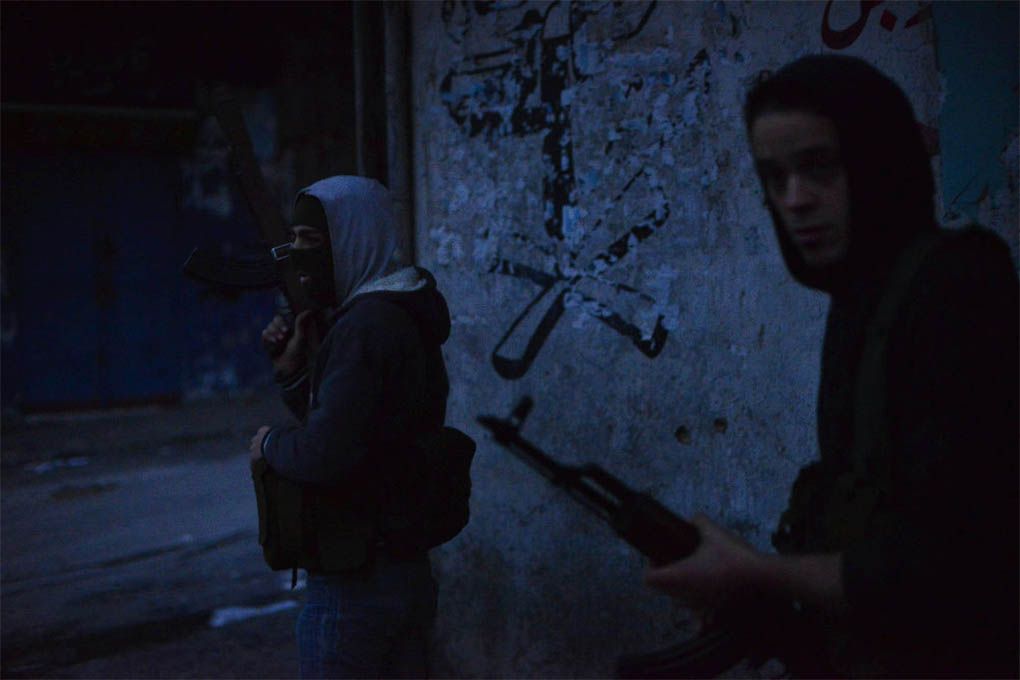
Conflict on the border, Tripoli, Lebanon
Late morning sunlight, warm and inviting, poured into the tiny apartment as four women gathered around Um Ahmed to offer their condolences. Half a dozen children huddled together on the stairs, their backs to a wall pockmarked with bullet holes. As Ahmed Sheikh's family mourned, the familiar pop of gunfire sounded on Syria Street, an audible reminder of the latest round of clashes in Lebanon's once-great city of the north. Conflict between Sunni-majority Bab al-Tebbanne and Alawi Jabal Mohsen traces its roots back to Lebanon's civil war. Yet the civil war in Syria has spilled into Tripoli, heightening tensions and leaving 19 dead in this round of conflict alone. In late November, a number of Lebanese Sunni fighters were killed by pro-government forces in Tel Kalakh, Syria. Videos of their posthumous mutilation brought tensions to a boiling point. Thus began a weeklong battle between the rival neighborhoods — the fifth such confrontation this year. Nearly two weeks later, only three of the bodies have been returned to Lebanon. On a rooftop in Mankoubin, a neighborhood aligned with Tebbanne, young men proudly showed the videos and photos of their friends who were recently killed in Syria. "They were all like our brothers; they were martyred. ... They are smiling even in death," said Jihad al-Hajj Dib, brother of Malik, one of the deceased. Many people on both sides — Tebbanne and Mohsen — claim the conflict in Tripoli will continue, even if the war in Syria comes to an end. The fear of growing hostility is not unfounded. The Alawi-Sunni feud that began during the civil war has never completely calmed, and neighborhood clashes could, with the right influence, easily drag Lebanon down once again into its own civil war. Photographs and text by Alex Potter.


Your support is the only way to ensure independent, progressive journalism survives.
You have a right to access accurate information, be stimulated by innovative and nuanced reporting, and be moved by compelling storytelling. Subscribe now to become part of the growing community of members who help us maintain our editorial independence.
Join us