
A critical look at “Fire in Cairo”
Fire in Cairo can be read at the CIC Library in downtown Cairo.
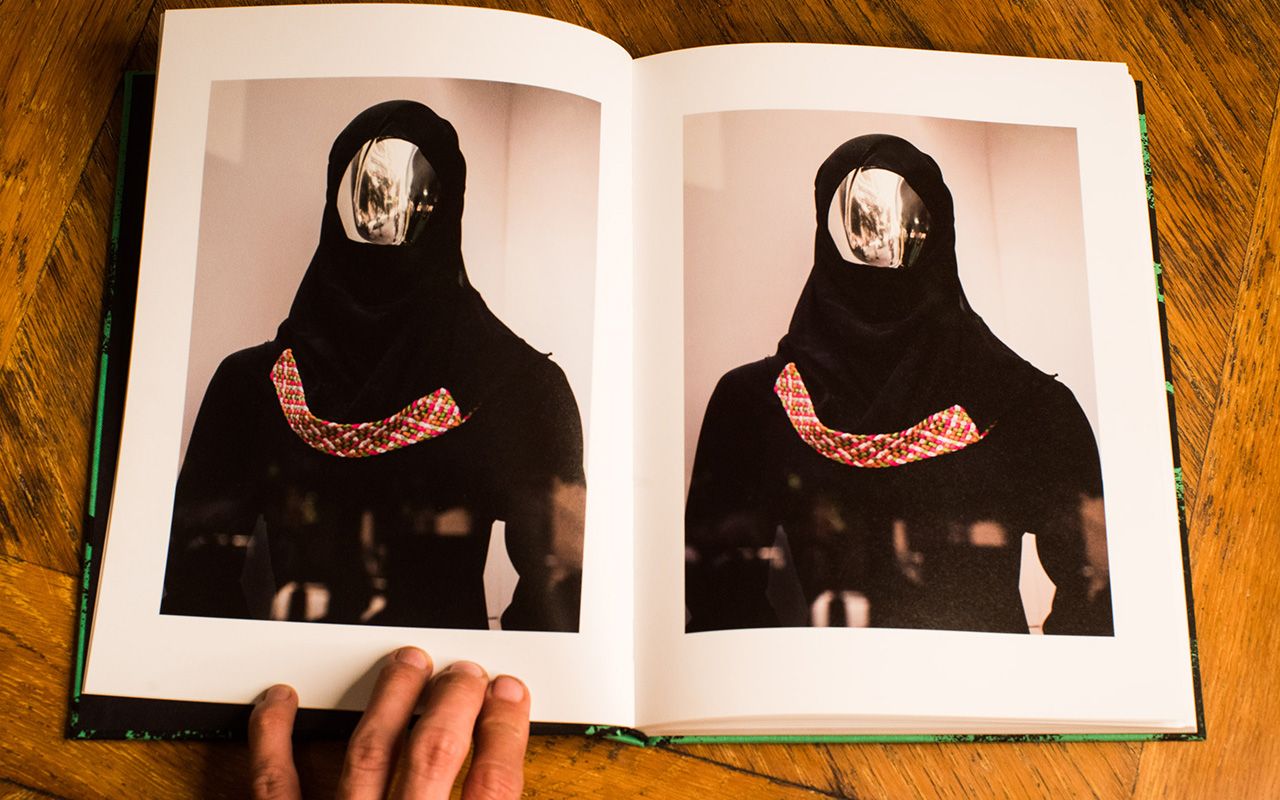
 Fire in Cairo is a new photography book by New York artist Matthew Connors. The images are from the battle-hardened streets of Cairo in 2013, when opposition groups rallied against Muslim Brotherhood President Mohamed Morsi.
  It has received a remarkable amount of attention, given its form, and was featured by the Paris Photo festival in one of the most influential international photography forums. But much has been lost or mistranslated in the reproduction and translation of the images. A review in Frieze Magazine, for example, read the image sequence backwards, from left to right, and Adam Bell misunderstood the context when he described the book as part of an “unfolding revolution” for Photoeye. “The ongoing repercussions of the 2011 protests continue to this day,” he asserted. The book presents an experimental approach to narrative structure, shifting wildly in a mystifying avant-garde fashion, but gives no contextual information. It reads from right to left, contrary to most English language books, in an apparent nod to its Arab subject matter.
The photographic sequence opens conservatively with a series of fairly orthodox black & white portraits of street protesters. Each image was taken and printed twice. This binocular vision presents a minute-time shift, prompting the viewer to move between the images, which are not identical. The portraits are of a number of Cairo characters in various contexts, depicting both turmoil and excitement. Some have battle-scarred faces and clothing, others more distant stares, perhaps suggesting hidden trauma. As the series advances, each face becomes slowly more covered, either reflecting religious conviction or protection from tear gas. There are no captions and we are left to project our own readings onto these anonymous faces. Almost a third of the book is composed of the black and white portraits before the sequence is paused by two striking color images of fire, shrouded in darkness, as the first signs of violence appear. From this point onwards, the photographs have a more frenetic energy, with masked protesters interspersed with images of riots, residues of violence and close-up details of debris, displaying a keen eye for traces of street battles. For example, there are bloodstains on a pristine BMW car wheel in one image. The chaos of conflict is mixed with the everyday, offering an alternative perspective to the spectacle or climatic moment, the staple of many photojournalists. The images are assembled by shape or color, rather than a more conventional story-based flow. Objects take on new aesthetic dimensions, as teargas canisters explode into the empty sky or green laser beams leave their trail in the darkness. This raises questions as to when artistic license distorts documentation. Should such visual projects contribute to our understanding of political and social upheaval, or can the creative, imaginative realm create spaces for more open engagement and provide an escape from the unrelenting brutal realities of history?  Connors has compiled a translation of his own experiences in Cairo, which he acknowledged in an interview with Time magazine on September 30: “I wanted this element of confusion and I wanted to mimic my experience of being in Tahrir, where the ground was constantly shifting and I really wasn’t sure who was on what side.” While his artistic vision presents an interestingly oblique look at street politics in Egypt, it risks perpetuating existing pejorative tropes on the Middle East. It could be seen as reinforcing a Western preoccupation with an external gaze, placing anonymous street protesters within visceral photographs that somehow transform violent street battles into a collection of beautiful sculptures. This fetishized aesthetic image shrouds its subjects in mystery at the expense of political or ideological critique. It has a striking green and black hardback cover that opens with a short essay by the artist, which he says was “inspired by Donald Barthelme,” a writer of experimental fragmented narratives. This establishes a subterranean city space beyond the images that is overtly literary, rather than creating a useful equilibrium between image and text, missing an opportunity to anchor the photographs within a context for those interested in more than the surface image.
  Fire in Cairo is similar to Connors’ previous project, a year-long series of street portraits of Occupy protesters in New York, titled General Assembly. These images were also shot in black and white within a single frame, but this time Connors named his subjects. While personal artistic takes on global politics like Fire in Cairo can produce effective artistic works that add to a canon of conceptual, evocative photography, there is a responsibility that comes with this to produce representational discourses on the Middle East. The interpretation of events is important, as is a wider sense of knowing beyond orientalist charm, however alluring it may appear.
Published by Self Publish and Be Happy (SPBH)
Publication date: June, 2015 Edition: 1,000 Format: Hardcover Size: 19.9 x 25.4 cm Number of pages: 160 pages Type of printing: Lithography
Other reviews include: Photo-Eye, 1000 Words, TIME, Conscientious Photography Magazine

Your support is the only way to ensure independent, progressive journalism survives.
You have a right to access accurate information, be stimulated by innovative and nuanced reporting, and be moved by compelling storytelling. Subscribe now to become part of the growing community of members who help us maintain our editorial independence.
Join us