
What does revolution mean to you?

We have entered the moment of looking back. Reminiscing on our lives, those defining moments as shaped by a seminal political moment in history: the Arab uprisings that changed a generation. It starts in Tunis, will move to Cairo, then Benghazi, Sanaa and Deraa. Those in the more recent throes of this moment in Algiers, Khartoum, Baghdad and Beirut will read with either early disillusionment or the grit and determination that they will be different.
Policymakers and influencers will churn out their articles, papers and reports over the next few months. Journalists will reflect detachedly on the decade that made their careers. Those of us now dotted all over the world will think back to that moment, where we were and how we felt. Those of us who still go home to the same place we lived in 2011 will look at the walls and pictures and reimagine one particular night or that one particular event when everything changed, maybe even change the ending in our heads.
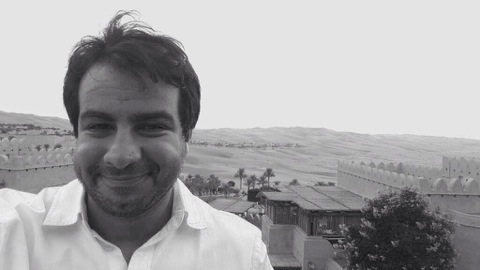
Everyone will have their own way to decipher the emotions churning at this time. For me, there is only one name, one moment that brings me back to Tahrir, the square, the revolution and the possibility of change: Bassem Sabry.
I have never written about him. I have barely spoken publicly about him, but Bassem himself was the embodiment of the uprising. His outsized presence and loss are defined over an arc of time that encapsulates the moment for political and social change in Egypt. I was not fortunate to have him in my life for significant time, and yet his role in my life has — in part — defined what I am and who I have become.
I was 24 when the protests erupted. Less than a year later I sat in the Ministry of Justice offices being interrogated by investigative judge Ashraf El Ashmawy for alleged crimes relating to my work with US NGO the National Democratic Institute. That ordeal (for me) would last seven more years, include felony trial, courtroom cages, written judgments confirming I was a “joint Mossad/Muslim Brotherhood spy”, before finally being put to bed with exoneration in a retrial in December 2018. The origins of that investigation still continue to this day, ensnaring hundreds of other innocent civil society actors across the country.
Bassem used to beg me to leave Egypt. We had long, deep conversations during 2013 — following Egypt’s second political earthquake in two years — and debated what this country had left to offer us, what we might still be able to achieve, and how we might continue to realize the original plan for a pathway to self-determination for Egyptians.
I used to ask Bassem why he didn’t leave, even just for a little while, to take advantage of the abundance of opportunity he had to do so. “I have to stay here. There is nowhere else I can be,” he said.
It took me until 2019, 13 years after I first arrived in the city of my father’s birth, before I finally acknowledged that I was no longer able to work safely and securely in Egypt. I still spend half my time there, with my family.
My father, born in Abbassiya, Downtown Cairo, who spent over 40 years in the U.K. and gave his career as a surgeon to the National Health Service, has come full circle, now settled into semi-retirement in Cairo with my (Iraqi) mother. Thrown into self-imposed exile because of corruption and violence during Nasser’s Egypt, he returned to Cairo permanently in December 2009. Despite his age and generation, he would sneak out to spend hours in Tahrir, hobbling on an eroding knee, protesting police brutality and military rule. He kept protesting in the square for months. By November 2011 he was still in Mohamed Mahmoud, sending me (in Upper Egypt, working), photos of tear gas canisters he was picking up from the pavement. He eagerly took me to vote in 2011, proud that at 66 he would cast his ballot for the first time. His mother, born in the 1910s, had lived through monarchy, world wars, the free officer’s coup, the assassination of a president, revolution and a democratic election before she died, in her 90s in August 2012. My Iraqi grandmother, born and raised in Baghdad, who fled Saddam’s Iraq amid assassination attempts on her and my grandfather, to settle in her home in Surrey, England, eventually came to Cairo to die after a painfully long battle with dementia on June 22, 2013.
I have not lived the kind of colorful life my parents and grandparents have lived. The pain and struggle they experienced gave me a quiet, unexciting, yet stable and extremely happy childhood in the southwest of England, with summers spent along Egypt’s Mediterranean coast. In many ways, 2011 felt like my moment, my chance to justify why my parents had sacrificed so much, my proof to them that no matter our Britishness, I remained tied to their motherlands. These days, I half-joke that I am “martyred to the region”, but in truth, the last decade has brought me full circle. I am able to look at Britain and be as grateful as my parents were in the 70s when they sought refuge and understand my values more clearly. I am able to look at my friends and family in Cairo and Baghdad and elsewhere in the Middle East and see that same value set and understand that as citizens, humans, we are not that different.
The Bassem of 2011 was something to behold. He wasn’t just hopeful, and sincerely, genuinely happy. He was determined, committed, settled. He was at peace. He was always a man of so many talents, one who smoothly shifted from art and film, to politics, to law. He attracted friends and acquaintances from every single corner of society, and he made everyone feel seen and heard and equally valued. He gave everything and everyone the same space and attention. Without exaggeration, he was the physical human embodiment of that societal utopia the uprising (it was hoped) could bring about.
And over the course of 24 months it came to be a burden. It was an impossible task, to be that perfect friend, perfect representative — socially, politically or otherwise — and eventually it broke him emotionally. The violent clearing of the square at Rabaa, preceded by significant violence across Cairo and the June 30 protests changed something in him and he hurtled at lightning speed to the depths of despair. He had so personally owned, enjoyed and taken on the responsibility of the success of the uprising that its slow failure felt like a personal indictment. He felt so much pain that it was all-consuming, hidden from sight but eating away at him. One night, in early 2014, we sat in his office listening to his favourite guitar melodies on Youtube, eating salads and for the first time I could physically see the pain in his eyes as he looked past me and lost himself somewhere beyond.
At one point he looked out the window and barely whispered, “I can’t breathe ...”
As I reflect on that period before he died, I have come to realize that he all but disappeared emotionally a long time before he left us. Since his untimely death in 2014, there have been many moments where I wonder what he would think of this moment in time, what he would say about protests raging across other countries in the region, and how he would feel about Egypt now. Sometimes I am grateful, believing that God simply spared him from the torment, pain and violence of the rest of the decade that he didn’t physically experience. Sometimes I think of his life and his loss as some kind of metaphor for the way we once were in 2011 and where we ended up after 2013.
But mostly, I just smile when I remember him. I only had him in my life for a few fleeting years, only a little bit more than Egypt’s historical moment of freedom, but I have found lifelong friends and empowered and enriching personalities — most of whom I met through him. All of whom I met because of 2011 and that moment in Tahrir.
They say that revolution never dies, that hope is not lost. To be frank, as we get older and life moves on, it doesn’t really matter. I truly believe that it is not what we have lost that defines us, but what we have gained. And I have certainly gained more than I have lost in the last 10 years. Even if we lost him far too soon, Bassem’s legacy is still building a generation of thought leaders, critical thinkers and committed citizens, eager to keep hope alive even in the darkest of times.
As 2020 turns into 2021 I have returned to Cairo to spend more time with my family amid a raging pandemic, but also, maybe, subconsciously, to be here when that big anniversary rolls around. It feels like something has pulled me back here, for that day, for this moment, even if I’m in lockdown at home. One of my best pastimes is to spend late evenings outside in the cool winter breeze just staring up at the stars, looking out into the silent darkness of the cultivated desert where my parents live, not that far from where Bassem himself is buried. Whether I mean to or not, I always end up thinking about 2011, 2013 … and 2014.
He has been physically gone for more years of the last decade than he was here, but we can still feel him, he is still here. Indeed, there is nowhere else he can be.

Hafsa Halawa
Hafsa Halawa is a political analyst and development specialist working across the MENA region and the Horn of Africa.
آراء أخرى

Can the January revolution still surprise us?
«What happened in 2011 had more specific coordinates in time and space.»

January letters: To Malak
«I want to focus on life and not death, on natality and not mortality»
Absurd history, absolute future
«Revolution is not a given, but a constantly changing concept.»
Your support is the only way to ensure independent, progressive journalism survives.
You have a right to access accurate information, be stimulated by innovative and nuanced reporting, and be moved by compelling storytelling. Subscribe now to become part of the growing community of members who help us maintain our editorial independence.
Join us
لا توجد تعليقات بعد