
The juridical breakthrough in Nicaragua’s case against Germany at the World Court

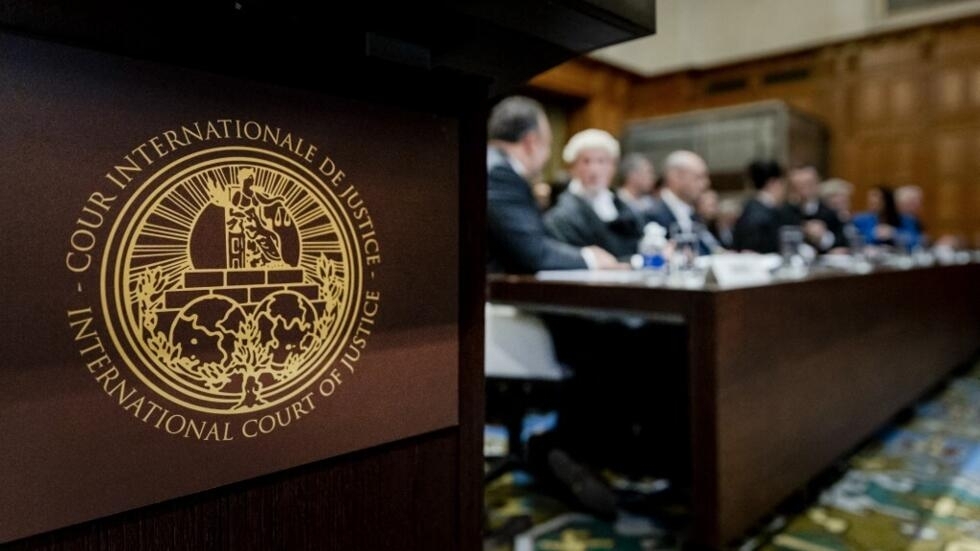
Following South Africa’s lawsuit against Israel at the International Court of Justice, Nicaragua instituted proceedings against Germany on March 1, requesting the court to review its claim against the latter for complicity in Israel's war crimes and genocide in Palestine.
In its application, Nicaragua accuses Germany of breaching its obligations to prevent genocide and war crimes, as well as facilitating and participating in these crimes. The scope of the claim against Germany is broad, addressing not only its role in acts committed in Gaza falling under the Genocide Convention but also encompassing war crimes committed in all of Palestine’s occupied territories, according to the Geneva Conventions and its Additional Protocol I.
While Nicaragua is confronted with a significant challenge regarding the ICJ’s jurisdiction, overcoming this challenge would mark an unprecedented lawsuit.
Nicaragua’s claim is that Germany’s provision of “political, financial and military support to Israel”, with knowledge of the crimes being committed, especially through the use of German military equipment, constitutes a crime.
Nicaragua's request is founded upon two legal grounds that criminalize Germany's actions. First, it cites the Genocide Convention of 1948, accusing Germany of breaching its obligations under the convention by providing political, financial and military support to Israel. Besides providing weapons to Israel, Nicaragua also accuses Germany of effectively facilitating genocide by halting funding to the United Nations Relief and Works Agency for Palestine Refugees (UNRWA). Nicaragua views the cessation of funding to UNRWA, which plays a crucial role in relief efforts and documenting the situation on the ground, as a higher level of complicity in the crimes committed.
The second legal basis that sets Nicaragua's case apart from South Africa's is international humanitarian law, particularly the Geneva Conventions of 1949 and its Additional Protocol I of 1977, making its claim broader in scope compared to South Africa's, as it pertains to the commission of numerous war crimes in all occupied Palestinian territories since 1967, not just genocide in Gaza.
South Africa's lawsuit specifically accuses Israel of a narrowly defined crime — genocide — and does not address any other crimes in its claim. Proving genocide is challenging, while demonstrating Israel's commission of war crimes that fall under international humanitarian law would be relatively easier. But South Africa aimed to bring Israel before the court with its strategic move.
Normally, a state cannot be compelled to appear before the ICJ unless a dispute between two or more states is presented to the court with the states’ consent under a specific agreement regarding the dispute (Article 40 of the Statute of the International Court of Justice). Israel would never do this.
What South Africa's lawsuit did was put to use a specific legal provision that grants the ICJ jurisdiction without the parties' consent as long as the dispute relates to the Genocide Convention (Article 9 of the Genocide Convention). Due to this jurisdiction issue, South Africa was forced to narrow its claim against Israel to the accusation of genocide, despite the difficulty of proving it, and make no mention of charges related to war crimes, which are easier to prove but necessitate Israel's consent for the ICJ’s jurisdiction to apply.
In contrast, Nicaragua's application is predicated on the fact that both Nicaragua and Germany signed a declaration recognizing the jurisdiction of the court “as compulsory ipso facto and without special agreement” (Article 36 of the Statute of the International Court of Justice). Germany lodged this declaration in 2008, rendering the ICJ’s jurisdiction compulsory toward it without requiring its prior consent.
Israel and the United States have not made such a declaration, as they fear being subject to the ICJ’s jurisdiction. Both countries have historically exploited international law to advance their interests and are notable non-signatories to major international agreements out of fear of falling under international law — including the Additional Protocols to the Geneva Conventions, the Arms Trade Treaty, the International Criminal Court’s Rome Statute, etc. — which is precisely why Nicaragua filed its claim against Germany rather than the United States, for example.
Given the absence of the jurisdictional impediment, Nicaragua's request to the ICJ addresses a critical matter, claiming that Germany’s political, financial and military support of Israel constitutes a breach of its obligations to ensure respect for international humanitarian law (common Article 1 of the Geneva Conventions) and customary rules which dictate that states “may not encourage violations of international humanitarian law by parties to an armed conflict. They must exert their influence, to the degree possible, to stop violations of international humanitarian law." (par. 17, 18 of Nicaragua’s application; Rule 144, International Committee of the Red Cross’ International Humanitarian Law Databases).
According to Nicaragua, Germany's failure to meet these obligations warrants the ICJ’s intervention against Germany and even the issuance of interim measures to compel Germany to cease its support of Israel’s military operations.
The significance of Nicaragua’s request lies in its potential to set a legal precedent that would deter countries from supporting military operations involving serious international crimes. The case could lead to the unprecedented enforcement of states' obligations to refrain from actions such as engaging in arms trade and exports to countries committing serious international crimes. In the case of the current war, this deterrent extends not only to countries backing Israel’s actions in Gaza since October 2023 but also in the occupied territories since 1967.
But there are challenges to Nicargua’s quest.
There is still an issue of jurisdiction. We are dealing with a dispute between two countries — Nicaragua and Germany — but the dispute concerns the behavior and interests of a third state that is not a party to it and will not accept the ICJ’s jurisdiction under any circumstances — Israel. According to ICJ’s precedents, the court cannot consider a dispute between two parties involving a third party without the latter's consent (known as the Monetary Gold Principle).
We are also in the process of determining Germany's complicity in Israel’s genocidal acts, but we do not yet know, in terms of a judicial ruling, whether Israel has indeed committed genocide.
In this matter, the ICJ has two choices. The first is to summarily reject Nicaragua's request on the basis that Israel has not accepted the court’s jurisdiction in this dispute and that Israel's alleged behavior involving Germany has not yet been judicially determined as genocide.
The second is for the ICJ to consider the current situation as unprecedented and consider that, despite Israel’s absence in the case as well as the absence of a judicial ruling determining that Israel's actions constitute genocide, Germany is already legally obligated to refrain from supporting Israel's military operations in Gaza. This obligation stems from the interim measures issued on January 26, 2024, declaring that the situation in Gaza as "plausibly" constituting genocide.
The ICJ could therefore simply issue a preliminary ruling stating the "plausibility" of South Africa's accusations against Israel as a basis for imposing an obligation on Germany concerning military operations in Gaza. The decision is left to the court’s political will and discretion.
Nicaragua's claim against Germany for supporting Israel’s war crimes also hinges on a prior judicial ruling that establishes Israel's war crimes. However, this is an issue that the ICJ cannot possibly determine, as its jurisdiction in South Africa's lawsuit is limited to genocide and it is not permitted to issue any rulings or conclusions on whether Israel's military operations constitute war crimes or not.
Therefore, even if the ICJ acknowledges its jurisdiction based on South Africa's case to rule on Israel's compliance with the Genocide Convention, it can summarily reject Nicaragua's request on the grounds that it cannot adjudicate Israel's conduct in the context of the Geneva Conventions' war crimes, and thus cannot determine whether Germany’s support breaches the Geneva Conventions.
However, there remains the possibility that the ICJ could recognize that the "plausibility" of genocide in Gaza, as outlined in the interim measures issued in January, inherently implies the "plausibility" of war crimes. Once more, the decision is left to the court's political will and discretion.
Nicaragua also requests that the ICJ mandate Germany to resume its financial support to the UNRWA, which is a contentious demand. While it may be permissible to consider the campaign undertaken by Germany and other countries, including the United States, against the UNRWA as part of an organized effort to support Israel’s crimes in Gaza, the legal obligation to prevent and penalize genocide and war crimes does not inherently entail providing financial support to any organization or entity.
For instance, many countries, including Nicaragua itself, do not provide financial support to the UNRWA and cannot be compelled to do so under the guise of preventing genocide in Gaza — the lack of such support cannot be considered complicity in genocide. Nevertheless, Nicaragua's requests to declare Germany in breach of its obligations and compel it to cease its support for Israel, particularly militarily, are legally sound and justified.
Nicaragua's request is of utmost importance despite the fact that it faces significant legal obstacles. Its success could revolutionize the relation between international law and war, arms trade and economic cooperation with countries with criminal records, among other relevant aspects. The ICJ may not have sufficient political will to advance Nicaragua's request, particularly given its far-reaching implications and the threat it poses to the interests of major countries that benefit from military and economic cooperation with criminal states, but it might still surprise us by accepting Nicaragua's case.

Abdelghany Sayed
Abdelghany Sayed is a lecturer of international law specializing in the laws of armed conflict and international crimes. He previously worked in the Office of the Prosecutor at the International…
آراء أخرى

How the horrible month of March for Meloni might change the path of Italy
«Italian Prime Minister Giorgia Meloni will not forget March 2026.»

Trump’s Palestine is worse than mandate Palestine
«In September 2025, United States President Donald Trump unveiled a 20-point “peace plan” for Gaza, calling for a ceasefire, the release of Israeli captives and the…»
Anas, my neighbor
«The loss here is not personal, but a profound collective fracture»
Your support is the only way to ensure independent, progressive journalism survives.
You have a right to access accurate information, be stimulated by innovative and nuanced reporting, and be moved by compelling storytelling. Subscribe now to become part of the growing community of members who help us maintain our editorial independence.
Join us
لا توجد تعليقات بعد