
The Cloud of Unknowing: Russian Worlds and the nationalist provocation of Aleksandr Dugin

In the weeks since Russia escalated its war on Ukraine, bombing its cities, schools, hospitals and military bases, a whole spectrum of explanations has appeared for the invasion’s motives, none of which is fully rational. One of the most common references has been to a kind of Russian cultural essentialism.
Russian philosopher Aleksandr Dugin has been called a prophet of the concept of the "Russian World" — the idea of Russian cultural domination achieved by force — and seen as Putin's court ideologist. His views inspired both the annexation of Crimea and invention of Donbass separatism, which began the eight-year-long conflict. Dugin is already a familiar face on the international scene, his ideas a provocative mixture of gnostic, existentialist and Stalinist views, often crossing over into overt fascism. Styling himself as the patriarch of Russian illiberalism, an ally to the new and alt right and a participant in culture wars at the edge of a potential clash of civilizations — itself an attractive explanation for the war of 2022 — Dugin has been invited to debates and conferences internationally, thus becoming both the meme and the face of Russian imperialism as a theoretical position.
However, to see aggressive Russian foreign policy as either the logical conclusion of strategic government propaganda or as taking inspiration from extreme-right ideologists is to confuse cause and effect. To understand how the cultural bubble of the Russian World concept obscures material conditions, we should look at the genealogy of its collective, opportunistic creation. And Dugin as a figure, while a marginal one, is helpful to illustrate a typical career path for a provocateur in the tight space of post-Soviet politics.
The son of a GRU lieutenant general, after dropping out from university, Dugin spent his youth in the esoteric Yuzhin's circle: a gathering of friends with occult and fascist aesthetic interests established in the 1960s by the transgressive “metaphysical realist” writer Yuri Mamleev that included at various points in time writers like Venedict Erofeev, Leonid Gubanov and many others. The circle was typical of a trend at the time, which saw some bohemians, particularly in Moscow and Leningrad, find solace in undertaking a secret baptism into the Orthodox Church, despite widely known connections between priests and the KGB. Yet, as much as anti-communist expressions were aesthetic, in Dugin's circle, there was more interest in Western thinkers: Guenon, Nietzsche, Evola, Schmitt and Eliade. Linguist Evgeny Golovin led the group in the 1980s and transformed it into the “Black Order of the SS,” indicating an explicit interest in esoteric fascism, in which Dugin took part, along with eventual Islamist Geydar Dzhemal, whose son, war correspondent Orkhan Dzhemalwas murdered in 2017 by Kremlin-affiliated mercenaries in the Central African Republic.
With the fall of the USSR, Dugin lamented the loss of the great empire being sold off by President Boris Yeltsin in capitalist reforms. Dugin would spend the 1990s bouncing between working for marginal nationalist publications as well as radio and TV programs speaking about mysteries, inviting French far right philosophers for a round table and occasionally lecturing on geopolitics in the Military Academy of the General Staff of the Armed Forces of Russia in Moscow. Along with writer Eduard Limonov, he also co-founded, and eventually left, the National Bolshevik Party (NBP), which attracted many musicians and artists and was built on the shock and provocation of combining fascist and communist aesthetics.
The competition then came from an unexpected angle — the government, which, to quote Limonov, “stole our ideas.”
As Yeltsin outmaneuvered the mainly rightwing opposition in 1993, the opposition radicalized. Unlike the much larger Russian National Unity, the NBP never sought to become a paramilitary organization. It was a postmodern project and the leading counter-cultural voice, a project for planting a kernel of what Andreas Umland called "Uncivil Society." Dugin served as a voice of reason, tempering Limonov's plans for “revolutionary action,” and, as he left the party in 1998, after being inspired and adopting a Khlyst aesthetic, he settled on the much talked about ideology of Eurasianism: imperialism explicitly nostalgic for the Soviet myth of a “family of nations,” with Russians as its rightful patriarchs. This was a variation of the Russian World idea of unifying lands with Slavic populations, formulated by historian Lev Gumilyov and Yuri Borodai (whose son Alexander Borodai would play a role in the Donbass conflict) and adopted by Dugin.
However, the real reason for Dugin's departure from the National Bolshevik Party seems to have lain in his recognizing a chance to become a part of the political establishment, which Limonov detested. After a brief stint as a political adviser, Dugin obtained a diploma from a small provincial university and started giving lectures around Moscow, spending much of his time establishing connections with institutions and intellectuals in the West to promote Eurasianism as a legitimate political theory. Having attained a professorship position in Moscow State University in 2008, his fanatic support of Putin — whom he called “not a human, but a conceptual unity of Solar and Lunar Putin” — did not help him when he was fired in 2014 for calls to “kill, kill, kill Ukrainians in support of the ‘Russian Spring.’ He became an editor at the monarchist Tsargrad TV (following in the footsteps of its previous American editor, former Fox News director Jack Hanick), but departed shortly afterward, becoming a mostly, and sometimes very, online personality. Despite trying his best to guess what Putin’s administration would like to hear over the years, he never managed to secure a position within the state apparatus, by then the only path in Russia that could guarantee safety and career prospects. Thus, his influence inside the country declined, and his ideas were confined to an esoteric niche as he still attempted to find influence with the far right politicians abroad.
Meanwhile, the NBP undertook a number of political performances in the early 2000's, some of which resulted in real prison sentences for its members. Limonov's party also inspired the age of radical political art performances by the Voina group, Pussy Riot and Petr Pavlensky. Despite its nationalist roots, NBP became a respectable and active oppositional organization, working with liberal politicians such as Garry Kasparov and Alexei Navalny. The competition then came from an unexpected angle — the government, which, to quote Limonov, “stole our ideas.”
Prior to the mid 2000s, government propaganda was a centralized and clunky affair, despite Yeltsin's notably postmodern election campaign of 1996. Tone-deaf coverage of wars, famously callous treatment of the Kursk submarine sinking and careless treatment of victims of terror attacks leveraged for political gain all but solidified the image of a government that does not care for its citizens. An attempt to shift the tone of the Kremlin came under direction of former advertisement and managerial executive Vladislav Surkov, formerly an employee of oligarch Mikhail Khodarkovsky.
A cursory glance at the material conditions of Russia reveals the profound disconnection between the fantasy of the Russian World in any variation and the daily reality.
Surkov's propaganda was built on two ideas: the formal introduction of the Russian World idea as foreign policy and the complete desemantification of internal politics. Dugin's Russian World, in continuation of the conservative and reactionary thought of Slavophiles, meant nationalist geopolitical expansionism and “total churchification” of the population. Surkov's version, however, was less confrontational and more instrumental for diplomacy. It consisted of copying the French approach of conflating identity with existing culture and language — a culture which many in the world already appreciated and which Russians were proud of. Thus, the defense of the Russian World globally would be the protection of culture and the rights of a Russian speaking population, by force if necessary. Internally, politics would become a theater of absurdities consisting of performances by competing political movements, of an atmosphere of futility and senselessness of democratic processes. Cultural producers would be able to compete for presenting the most entertaining political ideas, whether in opposition or in support of the governing United Russia Party, itself a Surkov invention. It is then that a diverse array of writers, such as Sorokin, Pelevin, Prokhanov, Elizarov, Ulitskaya, Tolstaya and Prilepin would produce a great number of visions, which, despite ideological differences, would converge on the idea of an absurd, grotesque and hopeless present and future: the only imaginable future for Russia.
In 2011, Surkov was succeeded by Vyacheslav Volodin in matters of internal politics. Volodin mostly attempted to convert existing movements into overt supporters of Putin in imitation of populism. Following Volodin, responsibility for internal politics was given to Sergey Kirienko in 2016. While the role of his predecessors had been to systematically outsource ideological cover for the stagnating governmental apparatus, Kirienko seems to have been tasked with modernization through consolidation of control over society. Unlike China, Russia lacked an all-encompassing digital infrastructure that offers countless opportunities for total surveillance and control. It would have to create choke points in places where its citizens were forced to come into contact with the state, including public transportation, banking and online services such as Yandex. Kirienko would introduce a shift from creating a field of opportunities to win a seat in government to a system of rigid rules in which the state security apparatus was incentivized to rob and imprison its own population using an ever-expanding digital toolset.
Kirienko is a follower of philosopher Georgy Schedrovitsky and a personal acquaintance of his son Pyotr. Schedrovitsky, a Soviet philosopher, devised a form of practical and morally untethered cybernetics in the form of collective games beginning in the 1960s. Much like the esoteric Yuzhin's circle, Schedrovitsky considered that social relations are not only constructed but must be reprogrammed. During each seminar game, his followers, which were called methodologists, were tasked in groups to find methods for solving categories of problems, but the practical solution wasn't the goal. Rather, the continuous development of methods was the main point. In the Western context, this could be seen as a sequence of freeform wargames, each building on the previous one. To methodologists, any ideology is merely a superstructure of ideas to achieve the goals of social engineering. Although he died in 1994, Schedrovitsky had expressed similar imperial revanchist views to those of nationalists and had expressed the Russian World idea as an intellectual project of social coercion for export, to which all other politics are hostile.
It is tempting to see the continuity of the state's attempts to shape and control its society as directly responsible for everything occurring in the country, and, if such propaganda is outsourced, then people like Dugin would indeed be the authors of a vast cultural construct shaping not only the view of the world of Russians, but their entire world itself. What Dugin and others desire, as seen through his attempt at “Fourth political theory,” borrowing liberally from Martin Heidegger, is to naturalize the Russian state. Where British Imperialism has been reified by invoking economic and pseudo-scientific rationalism, the Russian Empire is sanctioned by God himself to save the world through ultra-conservatism. Thus, Russians are always the victims of history, as the world keeps rejecting their natural supremacy. This interpretation again suggests an inverse causality — that the Russian state is a consequence of its culture, rather than vice versa.
A cursory glance at the material conditions of Russia reveals the profound disconnection between the fantasy of the Russian World in any variation and the daily reality. As the nationalist writer Alexander Prokhanov would put in a catatonic style: always fighting for truth against darkness as their ancestors did in the Great Patriotic War, highly moral, resilient and self-sufficient, eager to demonstrate the triumph of Russian weapons, the citizens of the mythical Russian World are eternally on guard against the “dismemberment of Russia.”
The pattern of acceptance of nationalist but postmodern aesthetics would continue, as would the intertwinement of art, oligarchic capital and state power.
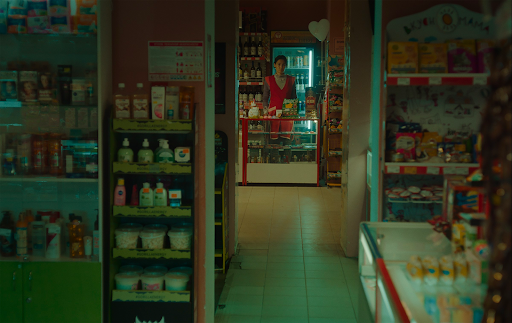
Putin's Russia has become an economic power reliant on extraction of natural resources from long-colonized territories, a consumer market reliant almost entirely on imported goods, with a “garage economy” and a labor force that has ensured cheap development during Putin's reign, consisting of citizens of Kyrgyzstan, Uzbekistan, Tajikistan and partly Kazakhstan. Former Soviet republics — each with their own economic issues, where reliance on local natural resources is either not an option or lies in the hands of Kremlin-sanctioned elites — are firmly tied to the Russian economy while the treatment of their citizens as an underclass borders on, and at times crosses over into modern-day slavery. They are at best invisible to Russians and at worst blamed for all the local ills and “population explosions” (the result of zero investments into healthcare and education infrastructure), their treatment justified by revanchism rooted in the myth of ingratitude for “civilizing” the peripheral USSR republics and allowing “nation-building” to the detriment of Russia, a trope familiar from colonial discourses around the world. Seen as even more criminal and barbaric, the republics of the Caucasus are either abandoned to anarchy or given over into the hands of authoritarians. Meanwhile, the Russian bombing campaigns of civilian populations in Syria were widely seen as a continuation of the policy of containment of radical Islamists. Much like the renaming of the second Chechen war as a “counter-terrorism operation,” the solution to the issue of increasingly violent crime and law enforcement was to stamp out those reporting on it. Although a federation on paper, the rights of Russian republics have been systematically curtailed since the early 2000s. But emerging from the shared Soviet history, the republics of Belarus and Ukraine were considered to be the most “human,” brotherly, if culturally deficient “Little Russians” and artificial agglomerations, whose attempts at cultural independence are seen exclusively through a mythologization of former nationalist movements as alternately Western puppets and resurgences of fascism. In other words, they were hostile to Russian identity, an identity in practice dependent on local shops staffed with indentured labor, as with the infamous Golyanovo Slaves story, depicted in the 2022 film Prodykti 24 (Convenience Store) by a former migrant worker from Uzbekistan, Michael Borodin.
How has the idea of the Russian World risen to such prominence then, despite these glaring discrepancies within the material underpinning of the Russian Federation? How did an ideology become gradually accepted at the same time as its most active proponents on the far right were being put in prison?
It would seem that islands of thought free from imperialist totality are possible in the darkest places, but the largely apolitical scene of contemporary art, delighting in ironic performance art since the 1980s has found itself on a consistently right-wing trajectory since the late 2000s. As the literary scene was making political visions of the absurd and grotesque seem like a natural consequence of the present, the visual arts scene has been busy competing for personal institutionalization in educational organizations in lieu of a market comparable to the global art world. The scandal of awarding the important Russian Kandinsky art prize to Eurasianist Alexey Belyaev-Gintovt for the Motherland – Daughter exhibition in 2008, came as a surprise to the Russian art scene. But despite polemics marshaled forth in the media, little has changed. The openly nationalist Belyaev-Gintovt presented an aesthetic mix of kitsch Stalinism and nationalism in massive paintings covered with luxurious gold leaf. They quickly sold out through Triumph Gallery. Part of the reason why the award to Belyaev-Gintovt wasn’t shocking outside of art circles is that he, like other dominant cultural figures of the time — for example, the eventual participant in the Russia-Ukraine war in Donbass, writer Zakhar Prilepin — was a former member of the National Bolshevik Party. The pattern of acceptance of nationalist but postmodern aesthetics would continue, as would the intertwinement of art, oligarchic capital and state power.
Previously embraced in the 1990’s by avant-garde reactionary writer Vladimir Sharov, Cosmism — a late 19th-century philosophy that presents the salvation of humanity via the umbrella of Russian Orthodox Christian messianism and thus a branch of the early Russian World imagination — became a respectable aesthetic in museums, explored by international art-world thinkers like Boris Groys and Anton Vidokle of the e-flux art platform (he has requested the closure of his exhibition in New Tretyakov Gallery in the days after the 2022 war escalated). Yet, it is still an extrapolation of Russian culture as a universal theology for solving the ills of humanity. Inside Russia, it was understood to represent an opportunity to export native ideas.
In 2014, one of the most influential artists on the Russian art scene, Arseniy Zhilyaev, had a show titled M.I.R.: Polite Guests from the Future at Kadist in San-Francisco, featuring works “which depict the rise and eventual dominance of Russian Cosmic Federation over the charted Cosmos. At the center of the exhibition was the signature uniform of the cosmic militia.” The title “MIR,” meaning “world” was a clear reference to the Russian World, and “polite guests” implied the masked Russian soldiers, in uniforms without insignia, crucial to the annexation of Crimea.
On his popular Telegram channel Black Soil and the Stars (a reference to nativist Cosmism), Zhilyaev posted an anti-war statement, subsequently republished by e-flux. In response, Belorussian artist Vladimir Gramovich criticized the docility of the Russian art scene in the face of aggressive politics, accusing it of producing statements cloaked in indirect post-colonial discourse yet excluding personal responsibility for war with Ukraine while wasting institutional opportunities which Russian artists had for decades all but spent on decorating state power.
Zhilyaev made a career with Marxist art, then with Cosmism, and ended up platforming right-wing artists, including the son of Aleksandr Dugin: Dmitry Khovorostov, who was formerly known as Arthur Dugin on the far-right scene. Dmitry is a curator at the Voznesensky Center in Moscow and a teacher at BAZA institute and the British Higher School of Art and Design. He works with artist Daria Kuznetsova, whose exhibition in Fragment Gallery was accompanied by his explicit if ironic manifesto signaling allegiance to Russian nationalism as a spiritual choice leading to the resurrection of the Third Rome. He describes kita, the old Russian version of “a bundle of sticks'' as a symbol of the ancient mythopoetic structure of Russian culture, which was nearly destroyed by the Soviets, but survives today as a hidden “hauntological trope organizing being on social, psychological and poetic levels.” Kita is, of course, the equivalent of the Italian fascio — a symbol of strength through unity, historically associated with fascism. The text and exhibition were met with rare criticism as a “failed provocation,” and to clarify his intentions, Khvorostov published the “Speculative Traditionalism Manifesto,” claiming his right to play with right wing traditions without taking responsibility for their historical connotations. Elsewhere, as if to echo the attempts of the Russian far right to establish international connections, publications and exhibition spaces like TZEVTNIK and ISSMAG appeared, collaborating and exhibiting international right-wing artists like Boyd Rice.
In “Russian Glue,” a critical review of the exhibition re:Beuys, a collective of authors called out the performative aspect of a supposedly post-colonial project shot in annexed Crimea to be “a method of mass gaslighting, an effective tool in the hands of 'informational autocracy,' a new type of authoritarianism, built not on repressions but on manipulation of public opinion and warping of the mental image of reality.”
It was followed by a response from the Russian left amounting to polemic questioning of foreign, Western dogmatic thinking and hence of decolonial discourse, returning toward the need to protect the reified concept of the Russian state. Indeed, imperialism has long become a natural state of affairs; as academic Keti Chukhrov puts it: “The problem that must be faced is that Russia’s ambitions for the geopolitical carcass of the former USSR without socialist ideas have generated the most toxic variant of imperialism,” suggesting that a more moral imperial project would have been more successful. This sentiment echoes the ideas of Russian liberal opposition and Alexei Navalny, the embattled and imprisoned leading voice, who has often been suspected of having nationalist sentiments. The thinking of this current has it that Russia should seek to become “like Canada:” a peaceful, liberal state that runs more efficiently and morally.
Propaganda is often seen as a fog that envelops people, hides intentions, confuses thought. For a singular ruler atop an autocratic system, access to information is crucial but difficult. A situation in which information is delivered only through subordinates who are in competition to present the most pleasing reports runs a very real risk of rendering the state blind. But a situation in which there is an incentive for the population to close their eyes is much more dangerous, as it is in effect an incentive for ignorance. The citizens of the naturalized Russian World are effectively living on an imaginary cloud of unknowing, trying hard not to look around. Putin's propagandistic bubble is not about telling a consistent story on anything. It is about retelling variations on a myth of Russian greatness, a convenient distraction for his citizens, not a plan for the future, but a poisonous, cruel dream.
آراء أخرى

Putin’s Eastern promises
«Much has been made about Russian President Vladimir Putin’s visit to Cairo. There has been speculation since the coup in 2013 that Egypt’s ruler Abdel Fattah…»
Your support is the only way to ensure independent, progressive journalism survives.
You have a right to access accurate information, be stimulated by innovative and nuanced reporting, and be moved by compelling storytelling. Subscribe now to become part of the growing community of members who help us maintain our editorial independence.
Join us
لا توجد تعليقات بعد