
15 years after Edward Said: A model and an adversary

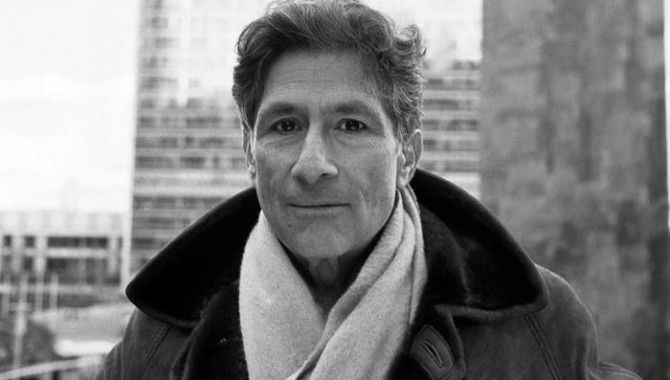
In early September 1991, while attending a London conference that brought together the cream of Palestinian intellectuals and activists, Edward Said (1935–2003) received the results of blood tests to check cholesterol levels that he made in New York before his trip. They showed he had leukemia.
The volume of work he accomplished during his years of treatment surpasses what most healthy people would be capable of in such a time span. Said continued to write, travel, lecture and debate until his departure on September 25, 2003.
It should be noted that many — it would not be an exaggeration to say thousands — let out a sigh of relief when this pillar of intellect left the cultural and political scene, taking with him an intense ability for powerful debate. As long as Said was present, wielding his bright, sharp sword to expose the feebleness of their positions, these thousands could not rest.
Signs of this relief are manifest in some of the obituaries penned by his critics (where animosity could not be concealed by the hypocrisy of their words), and in the abstention of some from commenting on his achievements. Take, for example, patriarch of contemporary orientalism Bernard Lewis, who, when asked about Said's passing, resorted to Latin to summarize his position: “De mortuis nihil nisi bonum!” — “Only good things should be said about the dead.” He did not mean this purely in the noble sense of remembering someone's virtues, or of not gloating over someone's death, but in fact the opposite: I have nothing good to say about Said, but since only good things should be said about the dead, I have no further comment!
Or take the decision by The Guardian's editors to bypass their regular contributors who had written about Said before, were familiar with his work and had reviewed it, and instead entrust his obituary to Malise Ruthven, clearly an adversary of Said and an Islamophobe. (Ruthven is said to have coined the term "Islamofascism," a superficial, offensive concept, especially from a historian who claims be an expert on the history of Islam.)
Ruthven crammed the following contradictions into Said's obituary: He was a humanist who relied on the ideas of the European Enlightenment, but also a radical who attacked the Enlightenment along with the colonial institution of orientalism; a secularist who hated fundamentalist movements, but one whose criticism of the West gave comfort to fundamentalists; he was a member of the Palestinian National Council since 1977 and author of the English draft of the Palestinian Declaration of Independence in Algiers, 1988, but he resigned from the council in 1991, rejected the Oslo Accords, and became a thorn in the side of the Palestinian Authority.
Many English-language books have been published on the opposite, perhaps more objective side of the spectrum, and these can be divided into two categories. The first consists of those that draw on Said's work in their methodology, and on his theories and applications in a variety of studies, covering broad fields of research, such as: Eqbal Ahmad: Critical Outsider in a Turbulent Age (2015) by Stuart Schaar; Conrad, Faulkner, and the Problem of NonSense (2015) by Maurice Ebileeni; W.B. Yeats and World Literature: The Subject of Poetry (2015) by Barry Sheils; Empire, Colony, Postcolony (2015) by Robert J.C. Young; and What Postcolonial Theory Doesn’t Say (2015) by Anna Bernard, Ziad Elmarsafy and Stuart Murray.
The second category consists of works about Said or in response to him, debating some of his intellectual and critical theories, particularly around the question of orientalism. Those that come to mind first are Gilbert Achkar's Marxism, Orientalism, Cosmopolitanism (2013, published in Arabic by Dar al-Adab, trans. Samah Idris); Robert T. Tally Jr's The Geocritical Legacies of Edward W. Said: Spatiality, Critical Humanism, and Comparative Literature (2015); Conor McCarthy's The Cambridge Introduction to Edward Said (2006); Edward Said: A Legacy of Emancipation and Representation (2010) by Adel Iskandar and Hakem Rustom; Edward Said and Jacques Derrida (2008) by Mina Karavanta and Nina Morgan; William V. Spanos' The Legacy of Edward Said and Exiles in the City: Hannah Arendt and Edward W. Said in Counterpoint (2012); and Edward Said: Continuing the Conversation (2005), edited by Homi K Bhabha and W.J.T. Mitchell.
It's worth taking a closer look at A Said Dictionary (2012), by Indian academic R. Radhakrishnan, a professor of English and comparative literature at the University of California and one of the most prominent critics and theorists in postcolonial studies. Contrary to what the title of the book initially suggests, Radhakrishnan does not create a comprehensive glossary of the vocabulary of Said's opus. Instead, he proposes 33 terms that he considers fundamental keys to its major aspects. "Said was a pragmatic literary and cultural critic who used and borrowed from existing vocabularies to create his own non-standard usages," writes Radhakrishnan in the preface. He adds that Said sought a balance between accessibility to ordinary readers, and developing these readers’ awareness about the rich, multi-layered concepts that lie at the basis of works like Beginnings: Intention and Method (1975), Orientalism (1978) and Culture and Imperialism (1993).
In addition to the commonly known terms associated with Said's thought, Radhakrishnan highlights more specialist terms such as "secularism," "structuralism," "democratic criticism," "oppositional criticism" and "specular border intellectual.” He also includes three important names — Erich Auerbach, Joseph Conrad and Giambattista Vico — who form pivotal axes in Said's readings on concepts ranging from exile to the role of the intellectual and the novel.
Such are the tools of a well-informed critic. He does not read "culture" on its own, as an intellectual or philosopher who claims detachment from politics might do. Nor does he read "imperialism" on its own, as a politician or sociologist who looks down on culture might do. Instead, culture and imperialism are read together and their deep and far-reaching links are examined and explored.
At this moment in time, 15 years after his departure, Said remains a vital example and role model in the critique of orientalism, and his works are an ongoing resource for a myriad of research methodologies in history, anthropology, sociology, politics, literature, criticism and culture. He also remains, by extension, an open subject for countless debates in these fields and beyond.

Subhi Hadidi
Syrian literary critic, editorialist and translator. Subhi Hadidi's recent books include Poetics of Arduous Contract, and Edward Said the Critic. He lives in Paris, France.
آراء أخرى

The Arab intellectual, past and present
«Is it too self-indulgent to call such an ill-defined group a new intellectual generation?»

Speaking truth to power – Part 1
«It is 25 January — again. A few years ago, that day would have just been a public holiday, marked as “police day” on the official…»
Edward Wadie Said: Ten Years After
«Edward Said (November 1 1935 to September 25 2003). Those were dark days. Iraq’s armies had taken Kuwait on August 2 1990 under the assumption that…»
Your support is the only way to ensure independent, progressive journalism survives.
You have a right to access accurate information, be stimulated by innovative and nuanced reporting, and be moved by compelling storytelling. Subscribe now to become part of the growing community of members who help us maintain our editorial independence.
Join us