
What is behind the wave of strikes and factory closures?

Amid rising inflation rates, workers at two private-sector companies began strikes last week to protest low annual raises. In both cases, company management responded by shutting down their factories.
Dozens of workers at German cable manufacturer Leoni Wiring Systems were referred to an internal investigation against the backdrop of the strike they began to protest wage raises being less than what was promised a year before — and far behind the skyrocketing inflation rates that have driven up cost of living as the pound’s value has fallen precipitously.
Similarly, workers at carpets manufacturer Mac began a strike after receiving a low annual raise, to which the company responded by citing financial struggles caused by the impact of Russia’s invasion of Ukraine on the economy, before announcing an indefinite shutdown.
These two factories tell a wider story of an industrial sector in crisis, as financial analysts working with the sector tell Mada Masr that the majority of factories in Egypt have been shut down for the past two months.
What is the cause of this crisis?
As much needed foreign currency exited the country, exposing the government’s risky bet on hot money, factories, both national and international, found themselves facing successive currency devaluations, rising inflation and new import restrictions that left vital inputs stranded in ports for months.
Unable to keep the wheel of production spinning, factories that had relied on a government short-term, high risk lending scheme were without revenue to pay sizable debt obligations. Industrialists scrambled to return to banks for a lifeline in order to kick the debt can down the road with new loans at higher rates, but the government had canceled its risky financing scheme per an International Monetary Fund recommendation.
In the midst of the crisis, the government announced a new financing initiative last month. Industry insiders are skeptical that this will be a solution, however, warning of a vicious debt cycle that could only deepen problems. And while industrialists may soon have some leeway to scheme their way through these debt cycles, Egyptian workers have been receiving the short end of the stick. Strikes over pay have increased throughout the past year in the industrial sector, with companies often responding with threats and penalties, unfulfilled promises, or a halt of operations altogether.
Workers at Mac, affiliated with Oriental Weavers Group, began a strike last Sunday at the company factories in 10th of October City after receiving a LE500 annual raise that was registered as a bonus, which they saw as both low and a circumvention of implementing an actual wage raise, one of the workers told Mada Masr.
The company made the same move last year, according to the worker, who explained that bonuses, the larger component of company wages, are dependent on achieving production targets. This means that the management has a way to circumvent the raises by manipulating the records of achieved targets, which is what happened, according to the worker. The average recorded production levels were 120 percent before last year’s raise, falling to 70 percent thereafter, the worker added.
When the strike began, Mac’s managing director Alaa Shehata came out to justify the decision, citing the company’s financial situation, but the workers refused to accept his rationale. In response, the management put all workers on paid leave for the rest of the week, effectively a deduction from their annual holidays.
The strike’s current demands include removing Shehata from his position and a raise of no less than LE1,500 on the basic salary.
After the week ended, the company announced shutting down work indefinitely in an internal memo, a copy of which Mada Masr obtained. Hundreds of the company workers responded by gathering on Sunday outside the Manpower Ministry offices in Cairo and at the company headquarters in 10th of October City, where they staged a sit-in for hours. Eventually, the management walked back the shutdown decision.
Despite working for a multinational company, workers at Leoni Wiring Systems are facing very similar wage cuts.
At the end of 2021, the workers organized a strike and were able to extract promises from the factory management to increase their salaries, a Leoni worker told Mada Masr.
“The company’s management announced the new wages for 2022 and 2023 at the beginning of last year,” the worker said.
But soon after the agreement with the management was sealed, the pound began to depreciate, losing half of its value to drop past LE30 to US$1 as of the time of publishing. As a result, the workers recently requested another wage re-adjustment, but they were met with silence from management.
Instead, when the workers went to ATMs to withdraw their January salaries, the money was even less than what was promised in late 2021. The worker who spoke to Mada Masr, who has worked at Leoni for 14 years, said they received the same salary as in December — LE1,000 less than the LE5,850 announced a year before.
As a result, thousands of workers began a wildcat strike in the company’s factories at the Nasr City Free Zone on January 29, the worker said.
But hours after the strike began, one of the managers informed them that the factories would be shut down indefinitely, stressing that no salary increases would be granted.
Two days later, the management referred about 65 of the striking workers to internal investigations and brought in workers from the company factories in Badr City and a number of day workers to Nasr City to fill in for the workers and restart priority operations.
The suspended workers were denied entry to the factories in the free zone on Monday, a member of the company’s trade union committee told Mada Masr, suggesting that the management will not allow them back “without a written pledge not to resume the strike. And if they do, they will bear legal consequences, which may reach the level of dismissal.” The company dealt with a previous strike at the Badr premises in a similar way, the committee member noted.
One of the suspended workers told Mada Masr that the company’s human resources department informed them that the Manpower Ministry’s local labor office is supporting the management’s position, after one of its representatives visited the company site at the start of the strike.
The company’s trade union committee, which did not participate in the wildcat strike, is also siding with the management.
“The committee rejects the strike and considers it an illegal act that harms the standing of the company’s Egyptian branch compared to other international branches,” a prominent committee member told Mada Masr. “The salary slips have not come out yet. They should have waited for them first.”
The member, who spoke to Mada Masr on condition of anonymity, suggested that only a minority of workers did not actually receive a raise, while the rest are using the anger to seek an additional raise.
But the demand made sense for the workers. Leoni is a German company, listed on the Frankfurt stock exchange, meaning that the cost of worker wages has likely declined because of the pound devaluation, a second striking worker told Mada Masr.
Another issue the workers have raised, the second worker said, is temporary labor. A minority of Leoni workers in Egypt face a constant threat of dismissal due to being hired on renewable six-month contracts that can be terminated at any time.
Workers also objected to the company’s current system of operation, a third worker told Mada Masr. The so-called “lay off” system allows the management to shut down the factories at any time for any given reason — often the lack of raw materials — and require workers to compensate later for the off days by working overtime without extra pay. The system was canceled in 2021, the worker explained, but was brought back days before the strike.
Workers and labor activists have previously told Mada Masr that the regulatory environment around private-sector wages in Egypt leaves organizers hamstrung in their battle for a living wage amid rampant inflation rates. Lack of government oversight, and the political class giving concessions to the private sector are among the chronic issues, they said.
But the recent strikes are also happening at a time when the government has been scrambling to revitalize its support system for the industrial sector, which has crumbled under the weight of the economic crisis — and its own contradictions.
Last Monday, and for the second time in one month, Prime Minister Mostafa Madbuly promised in a press conference that the Cabinet will introduce a new, subsidized 11-percent financing program next week, targeting the industrial and agricultural sectors.
The prior programs were launched in 2020 to try and prevent a wave of business closures as Egypt weathered the impact of a shutdown in global supply chains during the first year of the coronavirus pandemic, and closed in November per the recommendation of the International Monetary Fund during negotiations with Egypt over the course of 2022 regarding the new, $3 billion loan program.
The recommendation came due to the IMF believing that the CBE decision to offer low-interest loans contributed to irregularities in interest rates, a financial analyst explained to Mada Masr at the time. The analyst also noted irregularities in the implementation of the previous programs, as some investors would use the funding to purchase high-yield bonds and t-bills to make high, risk-free profit.
But despite the promise to introduce new financing programs and Madbuly’s celebratory declarations at his presser that the industrial sector is now fully operational, sources at the sector indicated that the paralysis continues.
Most factories came to a halt over the past two months, Federation of Egyptian Industries board member Mohamed al-Bahy told Mada Masr. “First came the decision to restrict imports at the beginning of last year, and then the [financing] initiatives were canceled, followed directly by the exchange rate increase. All these factors affected the industrial sector, especially since, on the other hand, the market is shrinking due to the drop in consumers’ purchasing power,” Bahy explained.
“As for companies that relied on exports, they depended on subsidized loans to carry out expansions or renew production lines, but the halting of initiatives paralyzed them as well,” he added.
A similar issue was pointed out by a financial advisor to a group of companies operating in the food industry, who spoke to Mada Masr. “One of the companies I work with took out a loan of over LE20 million through a low-interest lending initiative at 8 percent. It paid several installments, but its financial situation has now worsened. The loan was mainly to finance importing raw materials, which were sitting idle at the port,” the advisor explained.
The company, which relies on exports, is currently unable to fulfill its export obligations, the source explained. “So, it did not benefit from the low-interest financing, nor does it have the liquidity to face the sudden burden amid the production freeze and the dollar shortage,” the source added.
All these factors have made importing production inputs a very expensive endeavor. According to S&P Global’s Purchasing Managers’ Index (PMI), January saw input purchase costs for Egypt’s non-oil sector rise to a six-year high, driving down production activities and increasing output prices even further. As a result, the sector’s output levels — and new client orders — dropped significantly, with S&P expecting the inflation rate to rise above December’s 21.3 percent and remain elevated for the rest of 2023.
According to the financial adviser, the suspension of the initiative led banks to ask clients, including ones who were benefiting from the initiative, to pay the maximum interest rate, or what is known as the “corridor” rate, which the central bank raised in December to 17.25 percent. After the interest rate hike, banks add a commission of up to 3 percent, which brings the total interest paid by manufacturers on their loans to 20 percent.
Interest rate hikes are usually promoted to curb inflation, which rose throughout 2022 from 8 to 21.5 percent, according to data from the Central Agency for Public Mobilization and Statistics. But economic researcher Wael Gamal told Mada Masr that such a tool is less effective in developing economies like Egypt, especially since inflation is driven up by currency depreciation and not increasing demand.
Instead, Gamal suggests, “the most important motive for raising interest — and why it is a central policy in all IMF agreements historically and across the world — is that it is the biggest guarantee for lenders within the context of attracting hot money.”
“Of course, the result of this is disastrous for investment, because it deepens recession,” Gamal says, pointing as well to how it limits the government’s economic activity as the biggest domestic borrower itself.
According to Bahy, raising the interest rate to close to 20 percent means that the profit margin for these companies will not exceed 5 percent. “There is no industry, no matter how strong, that can achieve a return of 25 percent only to pay it in loans and get a small profit margin, especially in light of the high production costs.”
According to the financial adviser, banks offered the companies that were on the 8-percent initiative a choice between two options: either to pay the installments sequentially, but based on the new interest rate, or to pay the entirety of their debt back all at once at the previous rate.
However, payment of outstanding debt doesn’t seem to have been a prerequisite for access to new loans. United Bank of Egypt chair Ashraf al-Kady told Mada Masr that the banks had already stopped the old initiatives, in accordance with CBE instructions, and started providing new financing opportunities to their clients, including those on the old initiatives, whom the banks did not ask to pay the new rates.
Another source in the food industry believes that the banking sector’s lending services in general need better policies, arguing that most are not implemented in a way that can actually benefit industry amid the rapid economic changes of the past years. This also includes business owners playing the system by taking new loans not to purchase production requirements, but to pay back old loans.
“In the near future, we will see many companies that were on the 8-percent initiative borrowing again through the 11-percent initiative announced this January. This is usual for the vast majority whenever the state announces a lending initiative at a low interest rate,” the source said.
The government seems to share the source’s suspicions, putting a LE75-million (about $2.5 million) cap on borrowing through the upcoming initiative, in addition to prohibiting the use of the funds to pay off corporate debts. In addition, the government decided that financing for additional subsidiaries of the same borrower should not exceed 150 percent of the maximum limit to avoid having the same entity acquire multiple loans under different names.
Bahy believes it will still be difficult for banks to ensure that customers are not using the new funds to pay off old debts, but Kady disagrees, saying that the banking sector can track this data through central bank records, which include all the facilities that a customer receives.
But one thing is clear: the only solution on the table right now is more debt.
أخبار ذات صلة
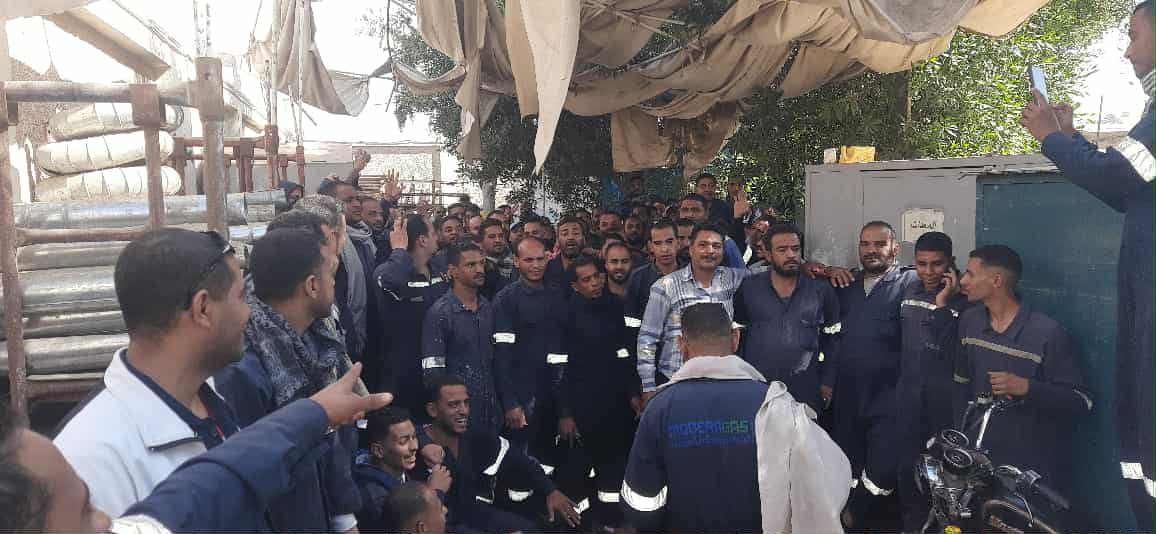
Sixteen gas workers arrested in Qena, Sohag after protesting subcontracting
The National Security Agency arrested 16 workers from branches of the Modern Gas Company in Sohag and Qena governorates on Friday after…
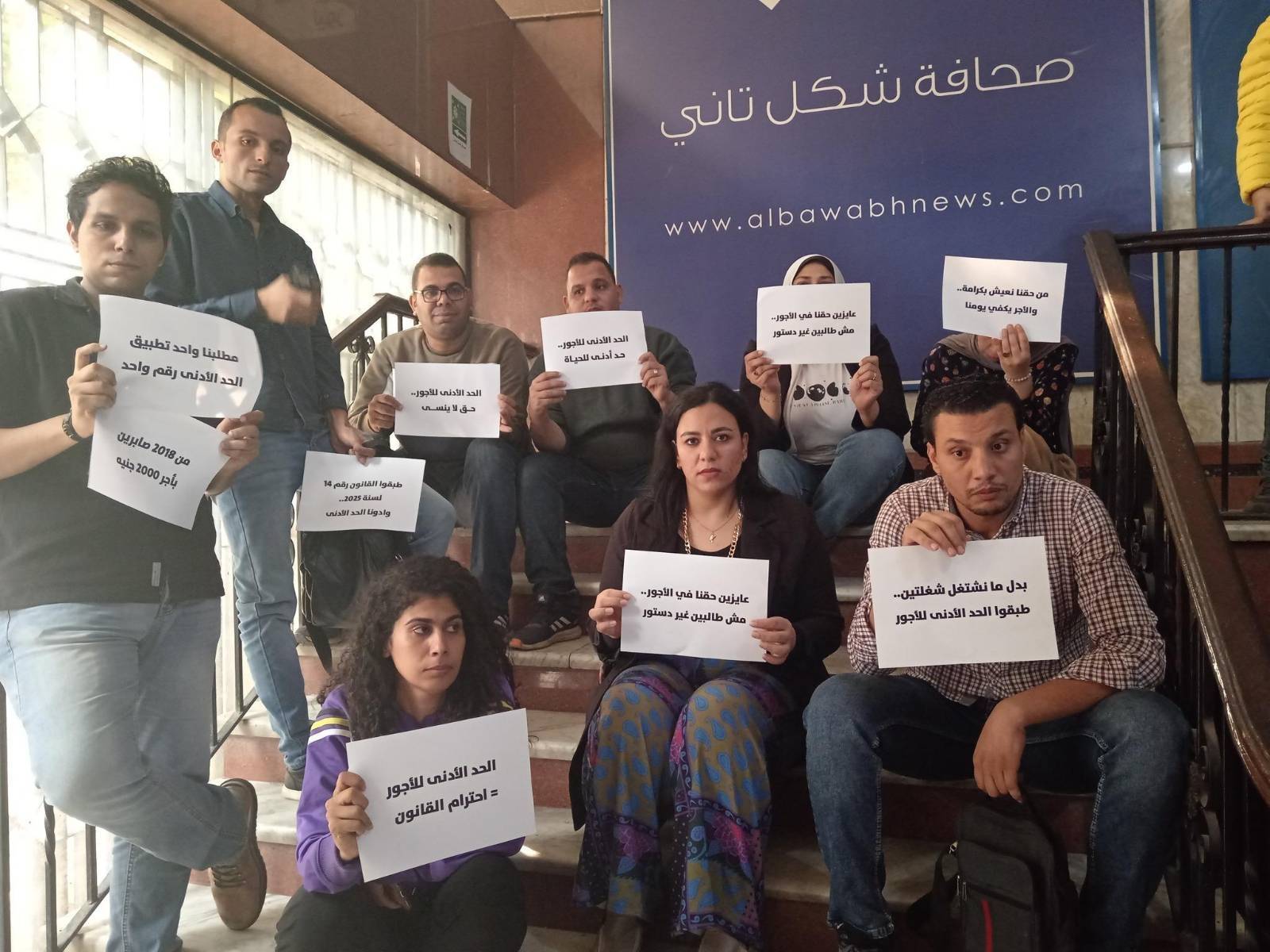
Source: Al-Bawaba News notifies striking workers it plans to liquidate company
Managers at Al-Bawaba News informed its journalists on Sunday that it intends to liquidate the company, a managing editor at the website…

Strike at Egyptian-Chinese drilling company over salaries, bonuses
The source said ECDC management has refused to raise wages since 2023

Court opposes release of arrested workers as labor action concludes at clothing supplier for Levis, UNIQLO, Tommy Hilfiger
The workers will stay in detention facilities until Wednesday morning
Your support is the only way to ensure independent, progressive journalism survives.
You have a right to access accurate information, be stimulated by innovative and nuanced reporting, and be moved by compelling storytelling. Subscribe now to become part of the growing community of members who help us maintain our editorial independence.
Join us