
US reconsiders presence in Sinai following attack on MFO troops
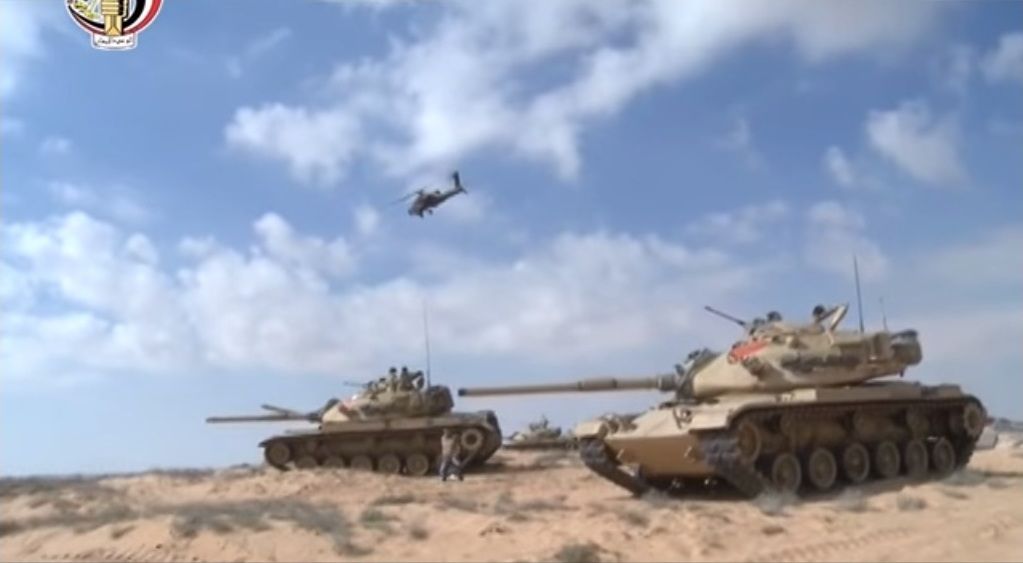
The fate of the US contribution to the Multinational Force of Observers (MFO) in the Sinai Peninsula is growing more uncertain after a bomb attack injured four American peacekeepers on Thursday.
After an “improvised explosive device” detonated next to an MFO vehicle carrying two peacekeepers from Fiji, which was part of a support and recovery convoy near a security checkpoint in North Sinai, four American peacekeepers were hit by another blast on their way to rescue them, Washington Post reported.
All six peacekeepers suffered from non-life-threatening injuries and were evacuated by air to Israel to receive medical treatment, an MFO statement said on Friday.
The attack, coupled with the deteriorating security situation in Sinai, have shaken the Obama administration's position on maintaining its contribution to peacekeeping troops in the peninsula.
On June 9, Islamist militant group Province of Sinai claimed that it fired a rocket at the MFO's Gorah air base. Two MFO vehicles were also caught in the crossfire during an attack on an Egyptian security checkpoint on June 26. An Egyptian soldier was injured during the attack, but there were no reports of injuries among MFO personnel.
After the Egypt-Israel peace treaty was signed in 1979, MFO troops were deployed to supervise the implementation of the treaty’s security provisions, and to prevent violations of its terms. The forces come from 12 countries and total approximately 1,800 military and civilian personnel, almost 700 of which are contributed by the US.
Following the latest attack on Thursday, the Pentagon expressed its concern about "deteriorating security conditions in a northeastern part of the peninsula where Egyptian troops and the MFO are exposed to risk," the Washington Post reported.
“We are considering what, if any, additional measures might be needed to ensure force protection,” it added. “This includes bringing in additional equipment if necessary.”
Any change in the number of MFO peacekeepers in Sinai, or the arms employed, would be no light matter.
In August, the Obama administration said it was “quietly reviewing the future of America's three-decade deployment to Egypt's Sinai Peninsula, fearing that the lightly equipped peacekeepers could be targets of escalating Islamic State-inspired violence," AP reported.
AP's coverage also noted that the US is considering shipping more arms to its forces in the peninsula.
In response, several Egyptian security analysts warned against any unilateral decisions by the US. Such a withdrawal would be “irrational,” claiming that the threat is an attempt to “twist Egypt’s arm,” Major General Adel al-Omda, a member of the Council for Foreign Affairs, told the privately owned newspaper Al-Watan.
Omda added that the American threats “contradict the peace treaty [between Egypt and Israel] and would lead to its cancellation." Technically, however, the US would not be in violation of the treaty by withdrawing, as the accord allows the US to temporarily withdraw their forces in cases of emergency.
Egypt purportedly plans to request changing some of the treaty’s articles to demand stronger military presence, “since the Armed Forces’ presence in the peninsula doesn’t match current events in Sinai,” Omda claimed.
In a report issued by the Washington Institute on August 26, political analyst Eric Trager argued that "while Washington does not appear to have any near-term plans to substantially alter, let alone end, its MFO deployment, the ongoing deliberations about force protection have led some outside the government ... to call for a US troop withdrawal."
Trager explained that "Cairo's outdated approach to fighting the northeastern Sinai jihadists has exacerbated these concerns." He elaborated on the Egyptian military's strategies, which "still rely on tactics that are more suitable to conventional combat than to a counterinsurgency campaign."
He also listed some of the issues that are alarming to US officials, including how "the military has alienated the local population by entering villages in large formations, targeted the enemy imprecisely by relying on standoff firepower (artillery and airstrikes), and failed to support its special forces operations with targeted intelligence."
He pointed to the Egyptian military's responsiveness to MFO security requests through increased patrols, the reinforcement of some of its checkpoints, and the establishment of a protective presence in the most dangerous areas where peacekeepers operate.
Trager noted that these efforts might not be enough to overshadow the concerns. "Whenever MFO units have faced potential attacks, the Egyptian military has not moved out of its hardened positions to engage [the Province of Sinai], leading US officials to question whether Cairo is merely trying to contain rather than defeat the jihadists," he said.
These developments have pushed MFO officials to urge Washington to alter its deployments for more than a year, while other US officials have advocated concluding the force's mission in the long-run, Tranger claimed.
Meanwhile, the MFO is reportedly reinforcing its positions and focusing on force protection. "Improved sensors and barriers as well as additional guard towers have been erected around MFO outposts over the past two years, and peacekeepers have received weapons upgrades in recent weeks."
More measures are also being considered, including MFO proposals to close isolated manned outposts and replacing them with mobile surveillance. While the US purportedly considers a prolonged drawdown, reducing the MFO to a fraction of its current size, or replacing it altogether with unmanned remote sensors that monitor the treaty between Egypt and Israel, Trager said.
"The Egyptian and Israeli governments have responded negatively to these deliberations, however," Trager claimed. "Both sides view the MFO as an important mechanism for facilitating bilateral cooperation, and they argue that 'now is not the time' for considering changes, given the region's political uncertainty."

أخبار ذات صلة

54 Sinai tribespeople granted presidential pardon after military court ruling sparks appeals
The pardons were granted following appeals made by parliamentarians and tribal leaders.
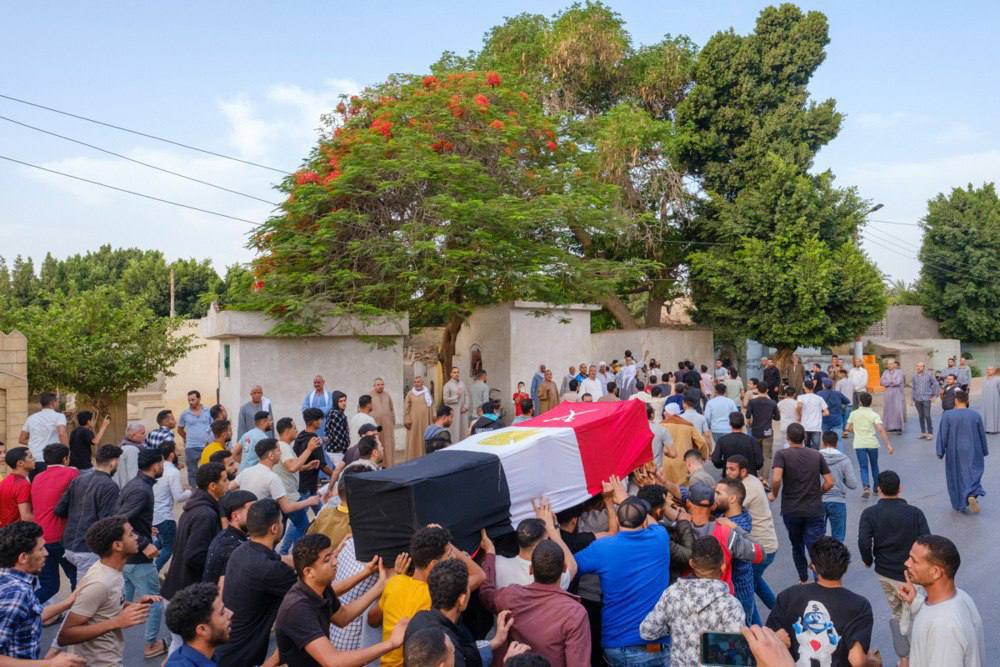
Funeral for military conscript killed in Rafah exchange of fire held amid media gag
People attend the funeral of a military conscript killed in fire exchange with Israeli forces.

In public address amid war on Gaza, Sisi warns against acting out of ‘anger,’ ‘fervor,’ ‘illusions of power’
Sisi adressed what he said “is being talked about” regarding national security

Egyptian nationals residing abroad invited to gain exemptions for military service for $5,000
Until their conscription status is settled Egyptian men residing abroad cannot renew their passports
Your support is the only way to ensure independent, progressive journalism survives.
You have a right to access accurate information, be stimulated by innovative and nuanced reporting, and be moved by compelling storytelling. Subscribe now to become part of the growing community of members who help us maintain our editorial independence.
Join us